
Article: Mascara Allergy: Why Your Eyes Itch After You Put It On
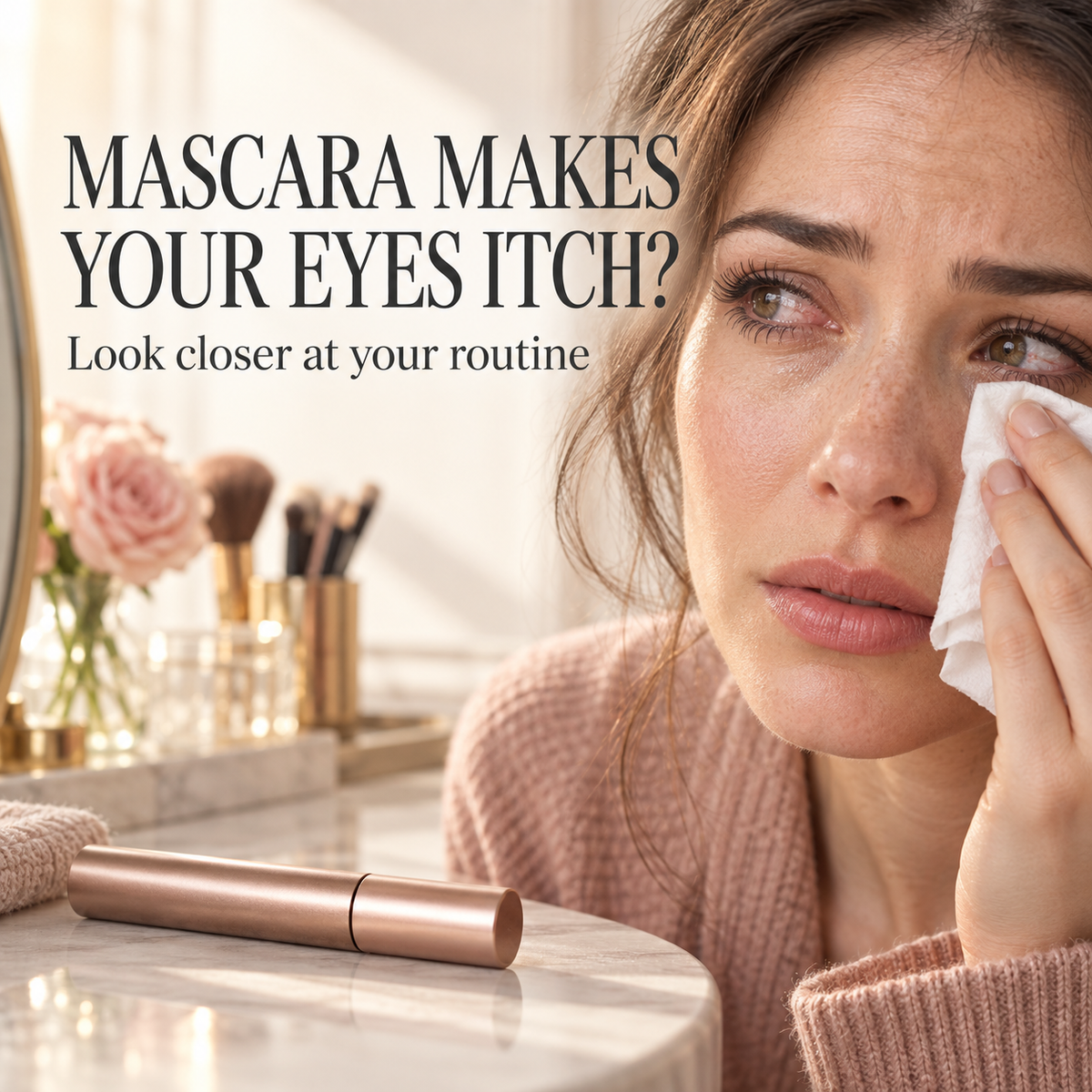
Mascara Allergy: Why Your Eyes Itch After You Put It On
Mascara sits closer to the eye than any other cosmetic and stays there for twelve hours. If anything in your routine is going to cause a reaction, statistically this is it. The good news is that mascara allergy has a short list of culprits and a straightforward fix.
The ingredients most likely responsible
- Hydrolyzed wheat protein. A conditioning and volumising agent, in a large share of mascaras. A problem for wheat allergy, and a problem for celiac disease because mascara migrates and is ingested in trace amounts. See Ingredients in Skincare That Contain Gluten.
- Shellac and beeswax. Both are insect-derived film formers, both are contact allergens for some people, and neither is vegan. I went into beeswax specifically in Why Beeswax Isn’t Always Sweet in Skincare.
- Formaldehyde-releasing preservatives. Mascara needs strong preservation because it is repeatedly exposed to bacteria. Some brands achieve that with formaldehyde releasers, which sensitise the eyelid over months.
- Nickel and cobalt traces in black pigment.
- Nylon and rayon fibres in "fibre" or "false lash effect" mascaras. These flake into the eye and cause mechanical irritation that people mistake for allergy.
- Fragrance. Less common in mascara than elsewhere, but present, and always worth checking.
Why waterproof formulas cause more trouble
Waterproof mascara is not inherently more allergenic. The problem is removal. Because it resists water by design, people scrub — and repeated mechanical trauma to the lid margin damages the meibomian glands, thins the skin, and creates the chronic redness and flaking that then gets blamed on the product. If you wear waterproof mascara, remove it by soaking, never by rubbing.
Signs it is allergy rather than irritation
- Irritation: immediate, stinging, resolves within an hour of removal, same intensity every time.
- Allergy: delayed 12 to 72 hours, itchy rather than stinging, gets progressively worse with repeated exposure, may spread to the surrounding skin, eyelid may thicken and flake.
Delayed and worsening means see an allergist and ask for patch testing. That pattern will not resolve on its own.
The hygiene rules nobody follows
- Replace mascara every three months. Not six. The wand reintroduces bacteria into the tube every single use.
- Never pump the wand. It drives air and bacteria in and dries the formula out.
- Never share it, and never use a tester at a counter.
- Do not add water or drops to extend it. That is how you culture pseudomonas next to your cornea.
- Remove it every night. Sleeping in mascara is how lashes break and how blepharitis starts.
What a hypoallergenic mascara should actually contain
No wheat protein, no shellac, no beeswax, no formaldehyde releasers, no loose fibres, no fragrance. It should also come off with gentle cleanser and warm water rather than requiring solvent. Both of ours are built to that spec.
What I actually reach for
- Mega Volume Vegan Mascara — volume without wheat protein or shellac.
- Magic Lengthening & Volumizing Mascara — lighter formula, smudge-resistant.
- No-Glue Lash Kit — for anyone reacting to lash adhesive rather than mascara.
- Ultra Renewal Depuffing Eye Cream
Related reading
Educational information from a pharmacist, not medical advice.