Teen Skin and Allergen Awareness: Why Your Teenager's Acne Products Might Be Causing Allergies
Teenage skincare has become big business. Where a previous generation's "skincare routine" was a bar of soap and occasionally some moisturiser, today's teenagers are navigating multi-step routines, toners, essences, retinols, acids, and serums — often influenced by social media content that is not designed with their specific skin biology in mind.
The result: a significant and growing number of teenagers are developing contact dermatitis, sensitised skin, and paradoxically worsening acne — not from neglecting their skin, but from using too many products with too many allergens too young.
This guide is for teenagers managing acne and sensitive skin — and for the parents helping them navigate it.
Why Teen Skin Is Different
During puberty, the hormonal surge — primarily androgens — dramatically increases sebum production. More sebum creates the conditions for the bacterial and inflammatory processes that cause acne. This is the primary driver of teenage acne and why it is so much more common in adolescence than at other life stages.
But teenage skin also has characteristics that make it more susceptible to product reactions than adult skin in different ways. The immune system is still calibrating during adolescence. Sensitisation to contact allergens established in the teenage years can persist for life. And the skin microbiome — still developing during the teenage years — is disrupted by the harsh surfactants, acids, and antibacterials that dominate conventional teen acne products.
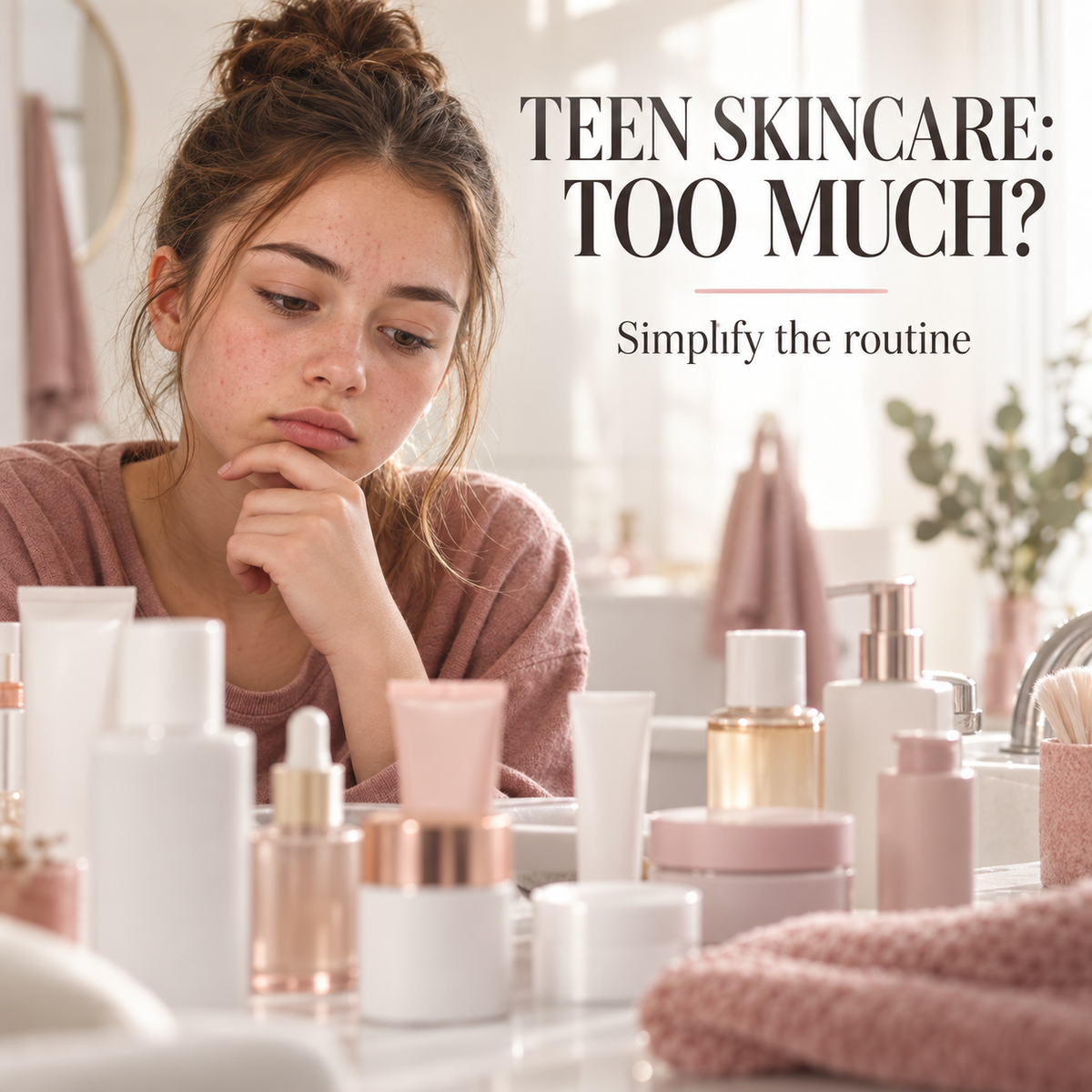
Add to this the fact that teenagers are typically using more products than at any previous stage of their lives, changing them frequently as they respond to trends, and you have a recipe for sensitisation, barrier disruption, and the frustrated cycle of treating breakouts that lead to reactions that lead to more breakouts.
The Most Common Allergens in Teen Skincare and Acne Products
Benzoyl Peroxide
Benzoyl peroxide is one of the most effective over-the-counter acne treatments, with genuine evidence for reducing P. acnes bacterial burden. It is also a skin irritant at the concentrations used in most products (2.5–10%) and a sensitiser in a small but meaningful percentage of users. Contact allergy to benzoyl peroxide is well-documented — and sensitisation established in the teenage years persists into adulthood.
Start with 2.5% (as effective as 10% with significantly less irritation) and apply only to affected areas, not as a face wash.
Fragrance
Teen skincare and body care products are marketed heavily around pleasant scents — "fresh," "clean," "energising" fragrances are built into the category positioning. Body washes, face washes, toners, and spot treatments for teenagers routinely contain synthetic fragrance blends or essential oils that are common contact allergens.
For teenagers already experiencing acne — where the skin barrier is disrupted by both the acne itself and the treatments for it — fragrance exposure is a particularly high sensitisation risk.
Alcohol Denat
Many toners and astringents marketed for teen and acne-prone skin use high concentrations of alcohol to create a "clean" feeling and visible pore-tightening effect. Denatured alcohol strips sebum — which temporarily looks like it is working — while simultaneously disrupting the skin barrier and triggering compensatory sebum overproduction. The result is a cycle of over-drying and reactive breakouts.
Tea Tree Oil
Tea tree oil is widely presented as a natural, effective acne treatment. It does have documented antimicrobial activity. It is also a significant contact allergen, with sensitisation rates increasing significantly over the past two decades as its use in consumer products has grown. Tea tree oil is not regulated for concentration in cosmetics, meaning products can contain concentrations far higher than those studied in clinical acne trials.
For teenagers with atopic tendency or known allergies, tea tree oil carries a meaningful sensitisation risk.
Salicylic Acid (at high concentrations)
Salicylic acid is well-tolerated at the concentrations used in most over-the-counter products (0.5–2%). At higher concentrations found in some chemical exfoliants and "professional-grade" products increasingly available through social media recommendations, salicylic acid can cause significant barrier disruption and irritation in teen skin — particularly when combined with other actives.
Retinol in Teen Products
Retinol and retinoid-containing products are being marketed increasingly to teenagers following social media skincare trends. For teenage skin that is already undergoing significant hormonal and structural change, the barrier disruption caused by retinoids before the skin has stabilised is unnecessary and potentially harmful. Teenagers under 18 do not need retinoids in their skincare routines.
The "Skinfluencer" Problem
Social media has created a generation of teenage skincare consumers who are following routines designed for and by adults — often adults with different skin concerns, different budgets, and different skin biology. Multi-step Korean beauty routines, tret-and-moisturise regimes, acid layering protocols — these are not designed with teen skin in mind.
The teenagers experiencing the worst skin outcomes are frequently those following the most complex social-media-influenced routines. Each additional product is an additional potential trigger. Routine complexity and sensitisation risk scale together.
The most useful skincare advice for teenagers is the least exciting: use fewer products, choose simpler formulas, and let the skin do most of the work.
What Teen Acne-Prone Sensitive Skin Actually Needs
A gentle, non-stripping cleanser
The most common mistake in teen skincare is using a cleanser that is too harsh. Stripping the barrier triggers compensatory sebum production — the skin produces more oil to compensate for the oil removed, creating a cycle that worsens oiliness and breakouts. Choose a SLS-free, fragrance-free cleanser that removes dirt and excess oil without leaving skin feeling tight.
The EpiLynx Gentle Foaming Facial Cleanser uses a mild formula with aloe, apple, and ashwagandha — suitable for acne-prone skin without the barrier disruption of conventional acne washes.
A lightweight, non-comedogenic moisturiser
Teenagers with oily, acne-prone skin often skip moisturiser entirely, believing it will worsen breakouts. This is counterproductive. An intact skin barrier regulates sebum production more effectively than a compromised one. Choose a lightweight, fragrance-free, non-comedogenic moisturiser.
Mineral SPF
Teenagers need sun protection — acne treatments increase photosensitivity and any PIH from breakouts will worsen significantly without UV protection. Mineral SPF (zinc oxide, titanium dioxide) is the safest choice for acne-prone sensitive skin as it does not block pores and carries no contact allergen risk.
Targeted acne treatment — simple and evidence-based
For mild-to-moderate acne:
- Salicylic acid 0.5–2% as a spot treatment or leave-on treatment — helps unclog pores
- Niacinamide 4–5% — reduces inflammation, controls sebum, supports barrier repair; can be used all over
- Benzoyl peroxide 2.5% — for inflammatory lesions specifically, not as a whole-face product
That is it. A teenager does not need six actives, a retinoid, an AHA, a BHA, and an essence. They need a well-chosen cleanser, a lightweight moisturiser, mineral SPF, and one or two targeted treatments.
The EpiLynx Teen Acne Range
EpiLynx formulates for acne-prone skin with the same allergen-aware principles applied to all skin types — free from fragrance, parabens, nickel, gluten, and all 14 common contact allergens. For teenagers whose skin is sensitised from conventional acne products, the EpiLynx approach offers a restart that supports the barrier while addressing the breakouts.
- Gentle Foaming Facial Cleanser — mild, SLS-free, suitable for daily use on acne-prone teen skin
- Kojic Acid Brightening Face Cream — addresses post-acne hyperpigmentation alongside skin tone improvement
- Pore Refining and Redness Relief Serum — niacinamide-based, reduces breakout-associated redness
- SPF 50 Mineral Moisturiser — photosensitivity protection essential with any acne treatment
For teenagers navigating acne and sensitive skin, EpiLynx offers a simpler, allergen-free approach that actually works with the skin barrier rather than against it. Shop at epilynx.com/collections/acne or take the Skin Quiz for personalised recommendations.