
Article: Concealer for Dark Circles on Thin, Mature Skin
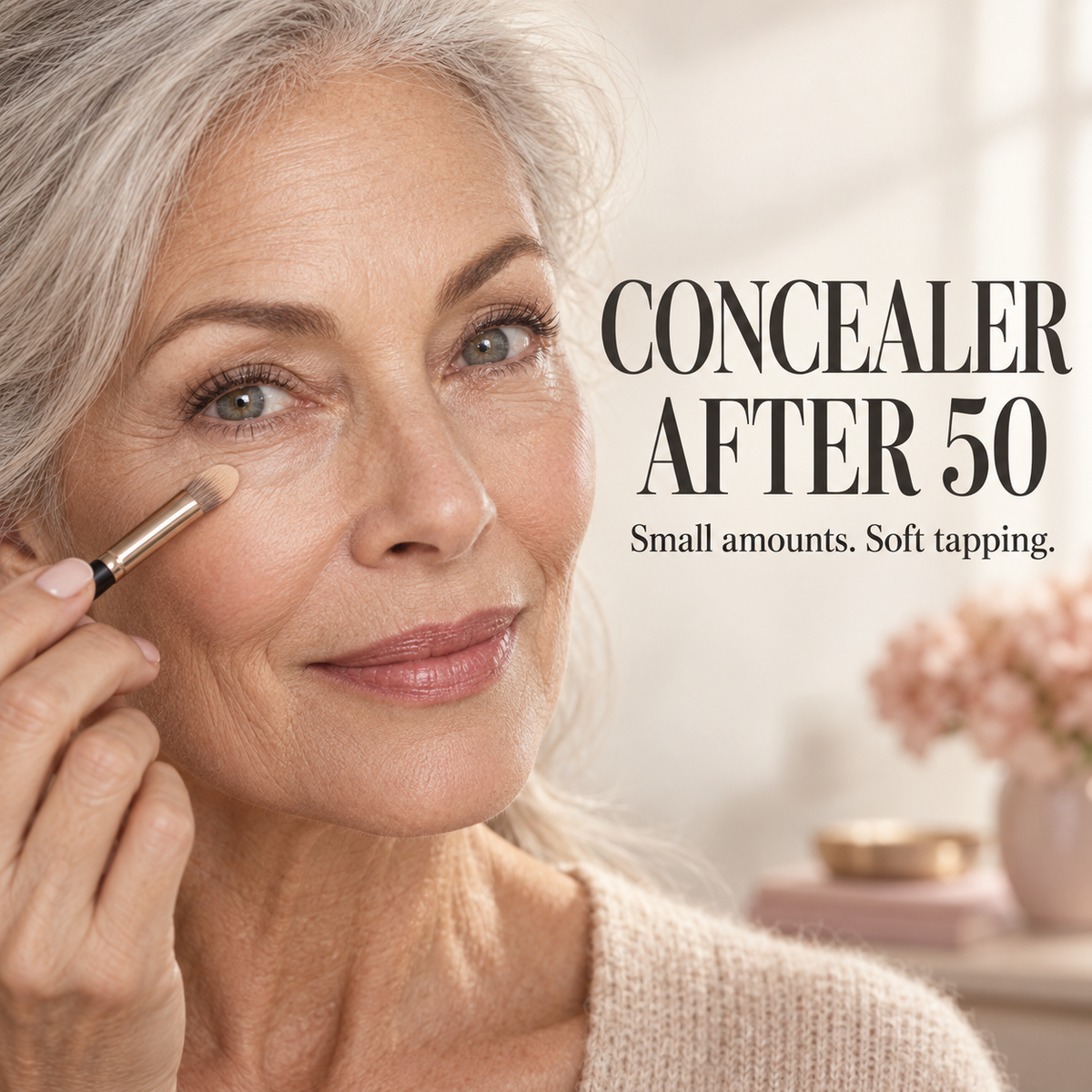
Concealer for Dark Circles on Thin, Mature Skin
The most common under-eye mistake is packing on light-reflecting concealer, which settles into every line within an hour. On skin that is thinner than it used to be, less product applied differently works better than more product applied harder.
Written by Dr. Liia Ramachandra, PharmD, PhD — pharmacist, formulator and founder of EpiLynx.
First: work out what you are actually covering
Under-eye darkness has three different causes, and only one responds to concealer alone.
- Pigment. Brown-toned, often genetic or post-inflammatory. Responds to concealer and, over months, to brightening actives.
- Vascular. Blue-purple, from vessels showing through thinning skin. More visible with age because the skin above thins. Colour correction helps; nothing removes it.
- Structural shadow. A hollow casting a shadow. No cream and no concealer will fix this — light has to be reflected into the hollow, which is technique, not product.
Pull the skin gently taut. If the darkness lightens, it is pigment. If it stays, it is vascular. If it disappears when you tilt toward a light, it is shadow.
The technique that stops it creasing
- Hydrate first and wait. Eye cream, then a full three to five minutes. Concealer over half-absorbed cream is why it slides. Our Ultra Renewal Eye Cream is the step underneath.
- Use less than feels right — genuinely about half.
- Apply in a small triangle, point down toward the cheek, not a half-moon along the lash line. The half-moon puts product exactly where it creases.
- Press, do not swipe. Swiping drags thin skin and moves product off target.
- One shade lighter than your foundation, no more. Two shades reads as a white patch in daylight.
- Powder only if you must, and then the barest press on the outer corner alone.
Colour correction, briefly
For blue-purple vascular darkness, a peach or salmon tone under your concealer neutralises it far better than more concealer. Use a whisper — over-applied corrector turns grey. Skip it for shadow, where it does nothing.
What makes it worse
- Heavy, thick formulas — nowhere to go but into lines.
- Full-coverage matte concealer on crepey skin.
- Skipping eye cream to stop creasing. It causes creasing.
- Rubbing at removal. Most under-eye damage happens here.
- Fragrance. Thin, occluded, reactive skin — the last place for it.
The part concealer cannot do
If darkness came on suddenly, is one-sided, or comes with swelling, see a doctor rather than buying a better concealer. Persistent puffiness can relate to thyroid function, allergy or sleep apnoea. And with celiac disease it is worth mentioning — iron and B12 deficiency from malabsorption show under the eyes first.
What I actually reach for
- Luminous Under-Eye Concealer — creamy, buildable, does not set hard.
- Concealer Stick and Colour Corrector — for blue-toned vascular darkness.
- Ultra Renewal Eye Cream — the hydration step that prevents creasing.
- Brightening & Radiant Under-Eye Cream — over months, for pigment.
All fragrance-free and free of our 14 excluded allergens. Shipping is free over $39, and EPILYNXGLOW25 takes 25% off.
Frequently asked questions
Why does my concealer crease under my eyes? Too much product, applied as a half-moon, over half-absorbed eye cream. Use half as much, apply in a downward triangle, and wait three to five minutes after moisturising.
What shade should under-eye concealer be? One shade lighter than your foundation. Two shades photographs as a pale patch.
Can eye cream get rid of dark circles? It helps pigment-based darkness over months. It cannot fix vascular darkness or a structural shadow.
Should I use colour corrector? Only for blue-purple tones, and sparingly. Over-applied it turns the area grey.
Why are my dark circles worse than at 30? Skin thins with age, so vessels beneath show through more. It is a transparency change as much as a pigment one.
Keep reading
- Dark Circles Under Your Eyes: What Works
- Best Eye Cream for Sensitive Skin and Dark Circles
- Makeup After 50
Educational information from a pharmacist, not medical advice.