
By Dr. Liia, PharmD & Cancer Researcher — Founder, EpiLynx by Dr. Liia | June 1, 2026 | 5 min read
Best Eye Cream for Sensitive Skin, Dark Circles & Puffiness in 2026 — A Pharmacist's Complete Guide
The eye area is where many people with sensitive skin first notice reactions to new products — because it's the thinnest, most permeable, and most allergen-vulnerable skin on the face. Yet most eye creams are formulated with fragrance, lanolin, or undisclosed preservatives that cause exactly the reactions they're meant to prevent. Here's what actually works.
Why the Under-Eye Area Needs Its Own Allergen-Free Formula
The skin around the eyes is anatomically and functionally different from the rest of the face:
- Approximately 0.5mm thick — compared to 2mm on the cheeks; this means any ingredient in an eye cream penetrates to deeper layers faster, with less barrier filtering
- Adjacent to mucosal tissue — products applied within 5mm of the lash line can wick into the eye's mucosal surface through capillary action during blinking
- Highly vascularized — the fine capillary network under the eyes makes this area particularly responsive to vascular allergen reactions (periorbital edema) and systemic inflammation (histamine-driven puffiness)
- Least sebaceous gland density — naturally drier than anywhere else on the face; moisture loss is faster and barrier repair is slower
This is why eye cream is not optional — and why the allergen standard for eye area products is the most critical on the face. A fragrance allergen that causes mild redness on the cheek can cause significant periorbital dermatitis, puffiness, and even conjunctival irritation when applied to the eye area.
For women in perimenopause: estrogen decline causes collagen loss and skin thinning throughout the face — most visible in the under-eye area where the skin was already thinnest. The blue-tinged dark circles that deepen during perimenopause are partly structural (thinner skin over blood vessels), partly vascular (histamine dysregulation causing vessel dilation), and partly pigmentary (post-inflammatory from repeated contact reactions). A targeted, allergen-free eye cream addresses all three dimensions.
Eye Cream Ingredients That Actually Deliver Results
Peptide Technology — The Three-Part Under-Eye System
The most advanced eye cream formulas use multiple peptides simultaneously, each targeting a different aspect of under-eye aging:
- Eyeseryl (Acetyl Tetrapeptide-5) — reduces fluid accumulation and puffiness by improving lymphatic drainage and reducing glycation of capillary walls; one of the most evidence-supported peptides specifically for periorbital puffiness
- Argireline NP (Acetyl Hexapeptide-8) — a neuropeptide that reduces the muscle contraction patterns that deepen crow's feet; topical alternative to neurotoxin-based injectable treatments for relaxing expression lines
- Plankton extract / Marine peptides — contain amino acid profiles that support collagen synthesis and skin thickness in the thin periorbital skin
Caffeine — Immediate Vascular Depuffing
Caffeine is one of the only ingredients with genuine rapid-onset effect on under-eye puffiness. It constricts blood vessels, reducing the vascular congestion that makes puffy eyes appear darker. It also has mild lymphatic drainage-stimulating properties. The effect is temporary (hours) but immediate — which is why it's valuable in morning eye cream formulas.
Hyaluronic Acid + Glycerin — Volume and Hydration
The "hollow" appearance of under-eye dark circles is often partly dehydration and partly collagen loss making the skin less opaque. HA and glycerin plump the thin under-eye skin, creating more opacity over the dark vessels beneath — visibly improving the appearance of dark circles without addressing the underlying vessel color directly.
Vitamin C (Stable Form) — Pigmentation-Type Dark Circles
For dark circles primarily caused by pigmentation (brownish rather than bluish, common in deeper skin tones), stable Vitamin C inhibits melanin synthesis in the periorbital area over time. Results are gradual (8–12 weeks) but accumulate with consistent use.
EpiLynx Ultra Renewal Depuffing Eye Cream — Three Peptide Technologies, Zero Allergens
👁️ Ultra Renewal Depuffing Eye Cream for Sensitive Skin
Three advanced peptide technologies — Eyeseryl, Argireline NP, and Plankton Extract — working simultaneously to reduce puffiness, relax crow's feet, and support collagen in the thinnest skin on your face.
- Gluten-free, allergen-free, fragrance-free — safe for the most reactive periorbital skin
- Includes an electric massage applicator tip for lymphatic drainage stimulation
- Vegan, cruelty-free, pharmacist-formulated in Los Angeles
- Safe for celiac disease, food allergies, and perimenopause-related eye area changes
Use code EPILYNXGLOW25 for 25% off · Free shipping on orders $54+
How to Apply Eye Cream Correctly on Sensitive Skin
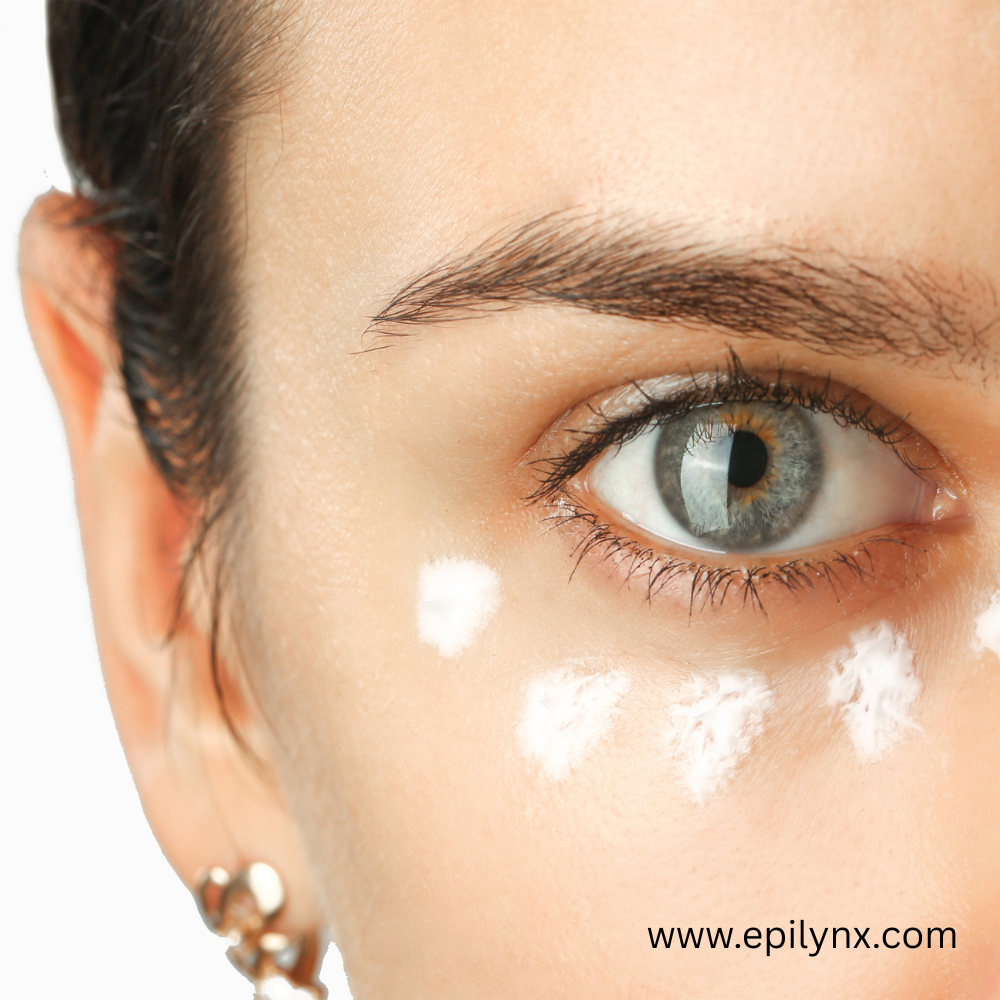
- Rice grain amount — use the smallest amount possible for both eyes combined; over-application increases the risk of product migrating into the eye
- Ring finger only — the weakest finger on the hand; using index or middle finger applies too much pressure to the fragile periorbital skin
- Pat, never rub — use gentle tapping motions from the inner to outer corner of the eye; rubbing stretches the skin and worsens fine lines over time
- Orbital bone, not lid — apply along the orbital bone (the bony edge of the eye socket) rather than on the lid itself; product migrates upward during warming
- Morning and evening — peptide function benefits from consistent twice-daily delivery; morning application before SPF, evening application as the last step before sleep
Frequently Asked Questions
What ingredients in eye cream actually work for dark circles and puffiness?
Eyeseryl (puffiness), Argireline NP (crow's feet), plankton/marine peptides (collagen support), caffeine (vascular depuffing), hyaluronic acid (volume), and stable Vitamin C (pigmentation-type circles). All in a fragrance-free, allergen-free formula. EpiLynx's Ultra Renewal Depuffing Eye Cream combines the first three peptide technologies in a fully allergen-free base. Shop →
Why do eye creams cause reactions on sensitive skin?
The periorbital skin is 0.5mm thick — the thinnest on the face. Allergens penetrate faster, directly adjacent to mucosal tissue. Fragrance (including rose, jasmine, citrus), methylisothiazolinone, and lanolin are the most common causes of periorbital contact dermatitis. Allergen-free and fragrance-free is essential.
Does perimenopause make dark circles and puffiness worse?
Yes — estrogen-driven collagen loss makes under-eye skin more translucent (vessels more visible), histamine dysregulation causes inflammatory puffiness, and sleep disruption from hot flashes worsens vascular congestion. A peptide-rich, allergen-free eye cream addresses all dimensions. Shop Eye Care →
Your Eyes Deserve the Most Careful Formula on Your Face
EpiLynx Eye Care: three peptide technologies, zero allergens, zero fragrance — pharmacist-formulated for the most sensitive skin on your face.
Shop Eye Care →Use code EPILYNXGLOW25 for 25% off · Free shipping on orders $54+