Dark Circles Under Your Eyes: The Four Causes, and What Actually Works for Each
There are four distinct causes of dark under-eyes and they need completely different treatments. Using a brightening cream on a structural shadow does nothing at all — which is why so many people conclude that eye creams do not work. Work out which type you have first. It takes thirty seconds.
The thirty-second self-test
- Stretch the skin gently sideways. If the darkness stays, it is pigment. If it fades, it is vascular.
- Tilt your face up toward a light. If the darkness disappears, it is structural — a shadow, not a colour.
- Do you have hay fever, dust mite allergy, eczema or asthma? Then some of it is allergic, and the others will not improve until this is addressed.
1. Pigmented — melanin in the skin itself
Most common in medium to deep skin tones and often genetic. It can also follow rubbing, eczema around the eyes, or sun exposure. It looks brown rather than blue.
What works: daily SPF including on the eyelids, and a gentle brightening active — vitamin C, niacinamide, kojic acid. Do not use strong hydroquinone or high-strength acids around the eye. Expect three to six months. This one genuinely responds to topicals if you are patient.
2. Vascular — blood vessels showing through
Looks blue or purple. The skin under the eye is 0.5mm thick, so the venous plexus beneath it shows through, and it shows through more when you are tired, dehydrated, or when the skin has thinned with age.
What works: caffeine to constrict vessels temporarily, peptides and retinoids to thicken the dermis over time, sleep, hydration, and reducing salt. Cold application in the morning helps for a few hours. Topicals help but will not eliminate it — this is partly anatomy.
3. Structural — a shadow, not a pigment
Caused by the tear trough hollow, mid-face volume loss, or a prominent orbital rim. It gets more pronounced with age as fat pads descend. No cream reaches this, because there is nothing wrong with the skin — light is simply not reaching it.
What works: concealer, properly. Use a shade one step lighter than your foundation with a peach or orange undertone to counteract blue, apply in a small triangle beneath the eye rather than a half-moon directly under the lash line, and press rather than swipe. Beyond makeup, filler is the only real intervention, and that is a conversation for a qualified injector.
4. Allergic shiners — the one nobody mentions
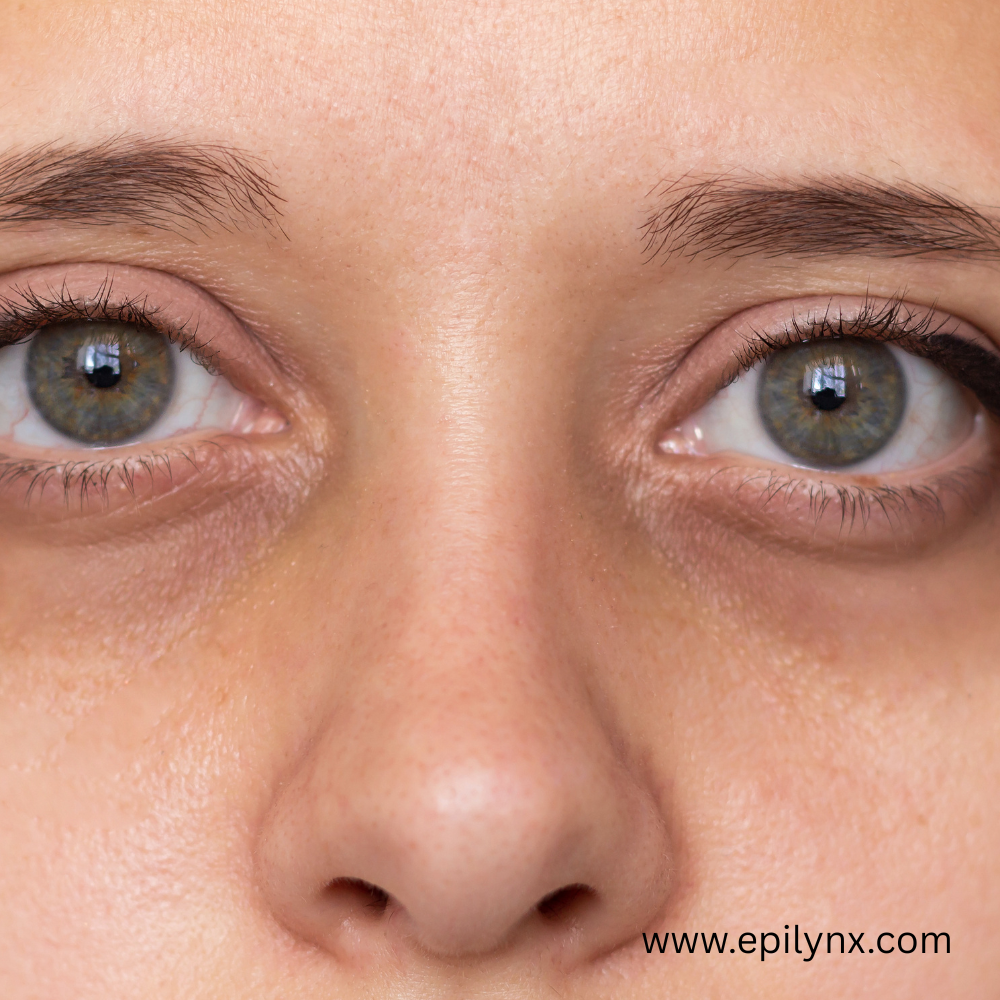
Chronic nasal and sinus congestion causes venous stasis under the eyes, which produces a characteristic dark, slightly puffy discolouration. It is called an allergic shiner and it is extremely common in people with hay fever, dust mite allergy, food allergy and atopic dermatitis — which means it is extremely common among the people who read this blog.
Rubbing itchy eyes compounds it: repeated rubbing causes post-inflammatory hyperpigmentation, so allergic shiners frequently become pigmented circles over years.
What works: treating the allergy, not the skin. Antihistamines, nasal steroid if your doctor recommends one, dust mite covers, and — critically — stopping the rubbing. Then treat any residual pigment. If you have never had allergy testing and you have persistent dark circles plus congestion, that is worth raising with your doctor.
What to skip
- Cucumber slices and tea bags. Cold helps. The cucumber is irrelevant.
- Anything with fragrance near the eye — see Fragrance-Free vs Unscented.
- Strong acids and high-percentage vitamin C on eyelid skin.
- Aggressive rubbing at makeup removal. This is a leading cause of the thinning that makes vascular circles worse. Soak, do not scrub — as covered in Why Your Eyeliner Stings.
What I actually reach for
- Anti-Aging Peptide Eye Cream — peptides for vascular and structural, brightening for pigment.
- Ultra Renewal Depuffing Eye Cream — for morning puffiness and allergic shiners.
- Flawless Matte Concealer — for the structural shadow no cream will fix.
- Illuminating Concealer Stick — colour correction for blue-toned circles.
- All Eye Care
Related reading
Educational information from a pharmacist, not medical advice.