Article: How to Build a Coconut-Free Makeup Routine Without Guesswork
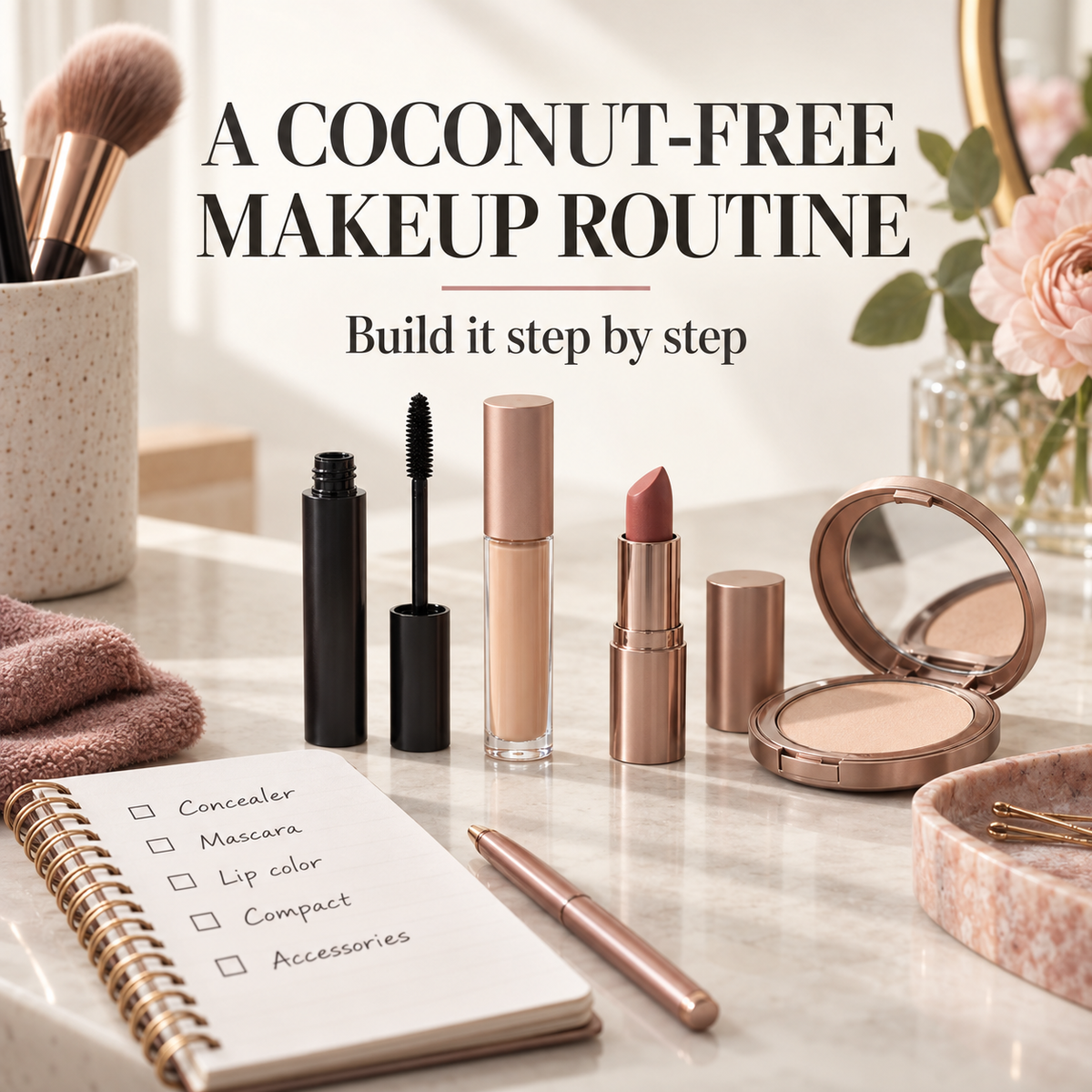
How to Build a Coconut-Free Makeup Routine Without Guesswork
Quick answer: A coconut-free makeup routine works best when it is organized by category, not by a single brand claim. Concealer, mascara, lip color, and accessories can have different formulas, different manufacturers, and different ingredient updates.
Why this search matters
Cosmetic labels can help you make better decisions, but they cannot diagnose allergy or guarantee that a product will suit every person. The FDA’s cosmetics-allergen guidance advises consumers to read ingredient declarations and contact manufacturers when questions remain.
Begin with your most-used product
Choose one category—often base makeup or lip color—and review the exact product and shade. Write down its ingredient list, product URL, date checked, and whether you have used it comfortably. A small verified routine is more valuable than a large unverified collection.
Treat shades as separate formulas
Pigments, waxes, and base ingredients can differ by shade. Never assume that a different color in the same product family has the same ingredient panel. If a retailer page lacks the list, check the brand’s official page or contact the manufacturer.
Add eye makeup last
Eye-area products are harder to troubleshoot because irritation can have many causes, from ingredients to removal technique to old products. Use clean applicators, do not share eye makeup, and discontinue products that cause burning, swelling, or persistent watering.
Use a buy/no-buy decision tree
Buy only when the current label and brand response match your personal plan. Pause if the formula is unavailable or unclear. Skip if you see a known avoid ingredient. This approach is slower at first and much faster when repurchasing.
How to use this guide while shopping
- Check the exact current ingredient list and shade.
- Compare it with your personal clinician-approved avoid list.
- Ask the brand targeted questions if anything is unclear.
- Keep a dated record of the formula you reviewed.
Relevant product pages to review
These direct product pages are included to make formula review easier. Read each current label before choosing; a link is not a personal-suitability guarantee.
Frequently asked questions
Can I use a coconut-free product from a brand that also sells coconut products?
That depends on your individual avoidance plan and what the company can confirm about the exact finished product.
What should I keep in my shopping log?
Product name, shade, current INCI list, date checked, manufacturer response, and your own experience.
Sources and medical note
For label and allergen context, see the FDA. This educational guide does not diagnose, treat, or replace advice from an allergist or dermatologist. For severe symptoms, seek urgent medical care.