By Dr. Liia, PharmD — Pharmacist & Founder, EpiLynx by Dr. Liia | 8 min read
Latex allergy is one of the most widely known contact allergies — and almost nobody thinks about it when reaching for a makeup sponge, a tube of moisturiser, or a face mask.
That is a problem, because latex and latex-derived proteins appear in a surprising number of beauty products and tools, and latex allergy carries a higher anaphylaxis risk than most contact allergens.
What latex allergy actually is
Natural rubber latex comes from the sap of the rubber tree, Hevea brasiliensis. It contains proteins — primarily the Hev b family — that trigger IgE-mediated immune responses in sensitised people. Latex allergy affects roughly 1–6% of the general population and up to 17% of healthcare workers, who are exposed through gloves.
There are two distinct reactions:
Type I, IgE-mediated. The immediate response — hives, swelling, runny nose, difficulty breathing, and in severe cases anaphylaxis — within minutes of contact. This is the dangerous form, and the one that warrants an epinephrine auto-injector.
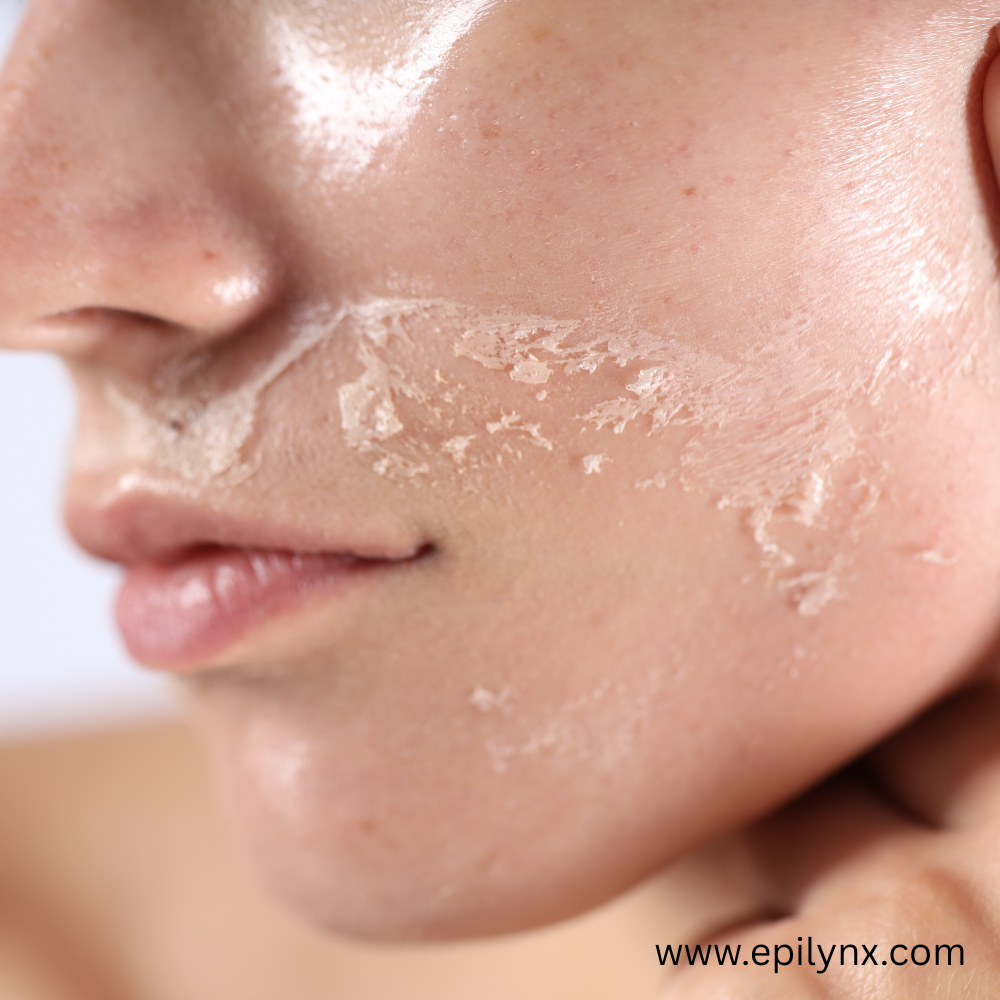
Type IV, allergic contact dermatitis. A delayed T-cell reaction 12–72 hours after exposure: redness, itching, blistering at the contact site. Less immediately dangerous, but it can be severe and chronic.
Many people have Type IV without Type I — and Type IV is the form most relevant to beauty products.
If you are reacting and cannot work out why, the single most useful thing you can do is change what touches your face most often. Before auditing every bottle, look at your tools — and at the one product you leave on all day. The Gluten-Free Vegan Moisturizer for Sensitive & Dry Skin contains no latex-derived ingredients and none of the botanical cross-reactives explained below — no avocado oil, no papaya enzyme.
How latex gets into beauty products
Makeup sponges — the biggest and most overlooked source
Many beauty sponges, blenders and budget foam wedges are natural rubber latex. Applying foundation with one means repeated latex contact with facial skin, which is an efficient route to sensitisation — especially on eczema-prone or barrier-compromised skin.
How to tell: significant stretch and bounce-back, a faintly rubbery smell, and a yellowish or beige tone all suggest natural latex. “Latex-free” sponges are made from thermoplastic rubber, silicone or polyurethane foam.
Gloves
Latex examination and cosmetic gloves are widely used, at home and in professional makeup settings. If an artist applies your makeup with gloved hands, the glove exterior is in contact with your skin throughout.
Packaging components and botanical extracts
Elastic bands, elasticated packaging and some seals can contain latex. Separately, some formulations use Hevea Brasiliensis seed oil as a botanical ingredient. Processed seed oil carries far less allergenic protein than raw latex, but anyone with significant latex IgE allergy should treat it with caution.
Latex-fruit syndrome: the cross-reactives nobody labels
This is the part with real skincare consequences. Certain plant foods contain proteins structurally similar to the Hev b proteins in latex, so the immune system mistakes one for the other.
- Avocado — the strongest and most common cross-reactive
- Banana, kiwi, chestnut — highly cross-reactive
- Papaya — moderately cross-reactive
- Apple, carrot, celery, potato — lower-level
Now look at that list as an ingredient list. Avocado oil is one of the most widely used emollients in “natural” skincare. Banana extract is in hair products. Kiwi extract, papain (papaya enzyme) and chestnut extract are all used as actives in exfoliants and brightening products.
What to scan for:
- Persea Gratissima (Avocado) Oil or Extract
- Musa Sapientum (Banana) Extract
- Actinidia Chinensis (Kiwi) Extract
- Castanea Sativa (Chestnut) Extract
- Carica Papaya Extract / Papain
- Hevea Brasiliensis in any form
Avocado oil deserves particular attention because it is everywhere — moisturisers, face oils, hair masks, body butters, eye creams. The cross-reactive protein is present in the oil, particularly cold-pressed and unrefined forms. The industry does not label it as a latex cross-reactive, and there is no requirement to. The burden sits entirely with you.
Building a latex-safe routine
- Replace your tools first. Switch to silicone sponges, synthetic polyurethane foam or brushes. Ask explicitly for latex-free tools and gloves at any professional appointment. Replace the foam applicators that come in palettes.
- Cleanse with the Gluten-Free Vegan Facial Cleanser — aloe and cucumber, no fruit enzymes, no papain.
- Moisturise with the Gluten-Free Vegan Moisturizer, or the richer Calming Face Cream if your skin is dry as well as reactive — neither contains avocado oil.
- Avoid fruit-enzyme exfoliants entirely. Papain and bromelain are the common ones.
Safe emollients with no latex cross-reactivity: squalane, sunflower seed oil, jojoba, dimethicone, glycerin and ceramides.
Frequently Asked Questions
Can makeup sponges cause a latex reaction?
Yes — and they are the most overlooked source. Many foam sponges and blenders are natural rubber latex, and using one means repeated contact between latex and facial skin. Silicone and polyurethane alternatives are widely available.
Why does avocado oil matter if I am allergic to latex?
Because of latex-fruit syndrome. Avocado contains a protein structurally similar to a latex protein, so a latex-allergic immune system can react to it. Avocado oil is in a very large share of “natural” moisturisers, and it is never flagged as a cross-reactive.
What foods cross-react with latex?
Avocado most strongly, then banana, kiwi and chestnut, then papaya. Apple, carrot, celery and potato cross-react at lower levels. The same proteins turn up in skincare as extracts and enzymes.
Should I see a doctor about suspected latex allergy?
Yes. Latex is one of the conditions where self-management without medical input carries real risk. Skin prick testing and specific IgE blood testing confirm the diagnosis and help judge your anaphylaxis risk, which determines whether you need an auto-injector.
🧪 Latex-safe places to start:
- Gluten-Free Vegan Moisturizer — no avocado, no fruit enzymes
- Gluten-Free Vegan Facial Cleanser — no papain or bromelain
- Complete Glow Ritual Set — the whole routine in one box
Free from latex cross-reactive botanicals, tree nut oils and fragrance. Gluten-free, nut-free and vegan. Free US shipping on orders over $39. Use code EPILYNXGLOW25 for 25% off.
Keep reading: How to Read Skincare Ingredient Labels · The Hidden Tree Nut Oils in Skincare


