Article: Soy-Derived Ingredients in Cosmetics: A Label Guide for Soy-Free Shoppers
Soy-Derived Ingredients in Cosmetics: A Label Guide for Soy-Free Shoppers
Quick answer: Soy can appear on a cosmetic label through botanical names rather than the word “soy.” That makes a soy-free routine a label-literacy project: identify the names relevant to you, check the exact formula, and avoid treating general safety information as individual allergy guidance.
Why this search matters
Cosmetic labels can help you make better decisions, but they cannot diagnose allergy or guarantee that a product will suit every person. The FDA’s cosmetics-allergen guidance advises consumers to read ingredient declarations and contact manufacturers when questions remain.
Know the botanical terms
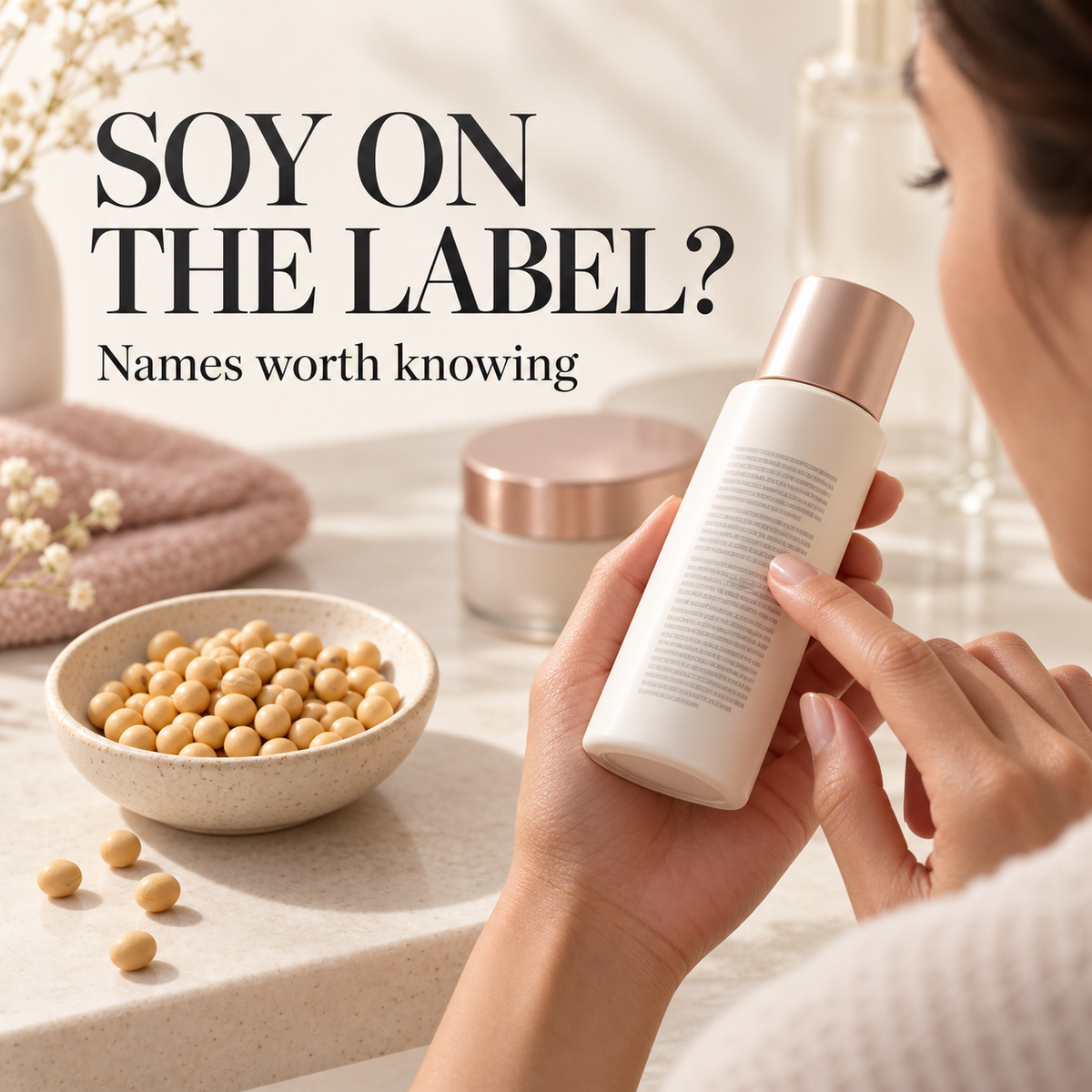
Common soy-related names can include Glycine max (soybean) seed extract, seed oil, seedcake extract, germ extract, sprout extract, or fiber. Keep the exact names supplied by your allergist in your notes; this prevents broad online lists from overriding your personal plan.
Separate cosmetic safety reviews from personal tolerance
A 2025 Cosmetic Ingredient Review safety assessment considered multiple soy-derived cosmetic ingredients in the reported conditions of use. That is useful industry-level context, but it does not tell a particular person with soy allergy whether a specific product is appropriate.
Check every product in the routine
Do not assume a soy-free cleanser makes a face cream, concealer, lip product, or eye product soy-free. Review each current formula separately, including shades and seasonal sets.
Use manufacturer contact strategically
Ask for the full INCI list, whether the formula is current, and whether the ingredient you are asking about is present under another name. Save the reply and recheck when you repurchase.
How to use this guide while shopping
- Check the exact current ingredient list and shade.
- Compare it with your personal clinician-approved avoid list.
- Ask the brand targeted questions if anything is unclear.
- Keep a dated record of the formula you reviewed.
Relevant product pages to review
These direct product pages are included to make formula review easier. Read each current label before choosing; a link is not a personal-suitability guarantee.
Frequently asked questions
Does “vegan” mean soy-free?
No. Vegan addresses animal-derived ingredients, not soy or other personal allergens.
Should I avoid every botanical extract?
Follow your own clinician-approved avoid list. A botanical name alone is not a diagnosis.
Sources and medical note
For label and allergen context, see the FDA. This educational guide does not diagnose, treat, or replace advice from an allergist or dermatologist. For severe symptoms, seek urgent medical care.