
By Dr. Liia, PharmD & Cancer Researcher — Founder, EpiLynx by Dr. Liia | June 15, 2026 | 7 min read
Skin Cycling for Sensitive & Allergic Skin — The Modified Protocol That Actually Works Without Destroying Your Barrier
Skin cycling — the 4-night rotation of exfoliation, retinol, and recovery nights — became one of the biggest skincare trends of 2023-2026. The concept is good: building mandatory rest into active skincare prevents the over-exfoliation and barrier damage that aggressive routines cause. But the standard protocol was designed for resilient, healthy-barrier skin. For people with eczema, food allergies, or celiac disease, the standard cycle needs significant modification. Here is the pharmacist version.
Why Standard Skin Cycling Doesn't Work on Reactive Skin
The standard 4-night cycle assumes: (1) the skin can tolerate glycolic acid at standard concentrations on Night 1; (2) retinol produces manageable retinoid dermatitis that resolves in two recovery nights; (3) two barrier-repair nights are sufficient recovery time. For sensitive, allergic, and eczema-prone skin, all three assumptions are wrong.
On eczema or celiac-compromised barrier skin: glycolic acid at 5-10% on Night 1 can trigger a barrier disruption event that takes 4-7 days to resolve — not 2 nights. Retinol on Night 2 adds retinoid dermatitis to already-disrupted barrier from Night 1. And two recovery nights cannot compensate for the compounding barrier damage of Nights 1+2 when the baseline barrier is already IL-4/IL-13-compromised below the tolerance threshold.
The result: people with reactive skin try standard skin cycling, experience progressively worse skin over 2-3 cycles, and conclude either that "skin cycling doesn't work for me" or that they're doing it wrong. Neither is accurate — the protocol simply wasn't designed for their skin biology.
The Modified 5-Night Skin Cycling Protocol for Sensitive Skin
This modified protocol preserves the core principle of skin cycling (structured rotation with built-in recovery) while adjusting for reactive skin biology:
Night 1 — Gentle Exfoliation
Replace glycolic acid with one of: 0.5% salicylic acid (gentler BHA, lipid-soluble so it penetrates follicles without aggressive surface exfoliation); or 5% lactic acid (a gentler AHA with humectant properties that don't strip barrier lipids as aggressively as glycolic). Apply after cleansing, followed by ceramide moisturizer. If your skin is very reactive, start this step every other cycle (skip Night 1 on alternate cycles) until tolerance is established.
Night 2 — Barrier Repair
Ceramide moisturizer + niacinamide serum. This is the recovery night after exfoliation — the niacinamide provides anti-inflammatory support and NAD+ replenishment for ceramide synthesis while the ceramide cream restores barrier lipids. No active ingredients beyond niacinamide (which is barrier-supportive, not barrier-challenging).
EpiLynx Niacinamide Serum →Night 3 — Barrier Repair
Ceramide moisturizer only. A second consecutive recovery night — this is the additional night that sensitive skin requires beyond the standard protocol. The barrier is actively rebuilding ceramide stores depleted by Night 1's exfoliation.
EpiLynx Ceramide Face Cream →Night 4 — Peptide Night (Replaces Retinol)
This is the critical modification: peptide serum replaces retinol. Palmitoyl tripeptide-1 activates the TGF-beta/Smad2/3 collagen synthesis pathway — delivering the anti-aging stimulus that retinol provides, through a different receptor pathway, with zero barrier disruption. Peptides are safe on sensitive skin including during the cycling protocol. Apply peptide serum, followed by ceramide moisturizer.
For skin that tolerates bakuchiol: use bakuchiol on this night instead of or in addition to peptides — it provides retinoid-receptor activation without retinoid dermatitis.
EpiLynx Epilinkage Rejuvenation Serum →Night 5 — Barrier Repair
Final recovery night before the cycle restarts. Ceramide moisturizer. The barrier has now had two consecutive repair nights after the peptide/bakuchiol night — ensuring full stabilization before the next exfoliation.
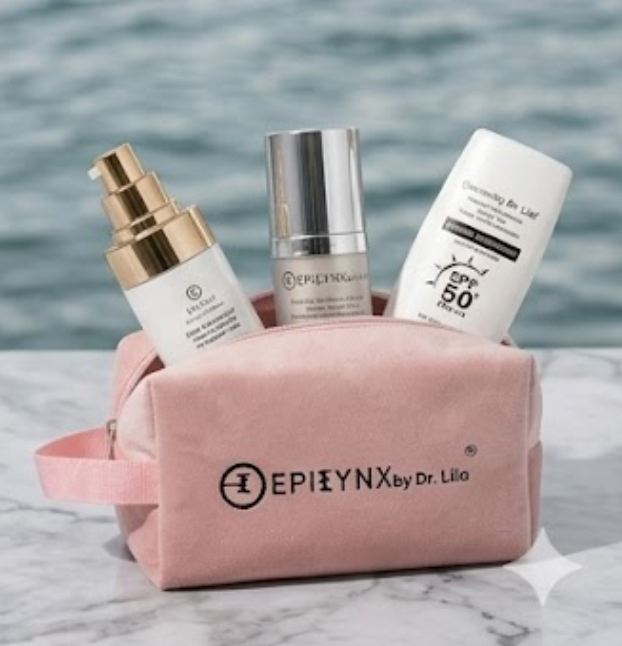
🌿 EpiLynx Skin Cycling Kit — All Allergen-Free:
- Exfoliation night: Gentle Exfoliating Face Scrub (your #10 seller — 33 orders last month)
- Recovery nights: Lightweight Ceramide Moisturizer + Niacinamide Serum
- Peptide night: Epilinkage Rejuvenation Serum + Anti-Aging Gold Infusion Cream
- Every morning: Tinted CC Moisturizer SPF 55
Use code EpiLynxglow25 for 25% off · Free shipping on orders $54+
Frequently Asked Questions
What is skin cycling and is it safe for sensitive skin?
Skin cycling (4-night rotation of exfoliation, retinol, recovery) is sound in principle but the standard protocol is too aggressive for eczema, celiac, and allergy-compromised skin. Glycolic acid and retinol on consecutive nights compound barrier disruption faster than two recovery nights can repair. The modified 5-night protocol with gentler exfoliation, peptides replacing retinol, and three barrier repair nights preserves the cycling benefit without the barrier destruction.
How should skin cycling be modified for sensitive and allergic skin?
5-night cycle: gentle exfoliation (0.5% salicylic or 5% lactic acid) → barrier repair (ceramide + niacinamide) → barrier repair (ceramide only) → peptide night (peptide serum + ceramide) → barrier repair. Three repair nights instead of two. Peptides instead of retinol. Gentler exfoliant at lower concentration. Skip exfoliation night entirely during unstable barrier periods.
Can I do skin cycling during an eczema flare?
No — barrier repair only during flares. Ceramide 3-4x daily, niacinamide if established, petrolatum overnight. Resume modified cycling after one week of stable barrier-only routine post-flare resolution. Find Your Personalized Routine →