
Article: How to Patch-Test Skin Care Products: A 7–10 Day Method
How to Patch-Test Skin Care Products: A 7–10 Day Method
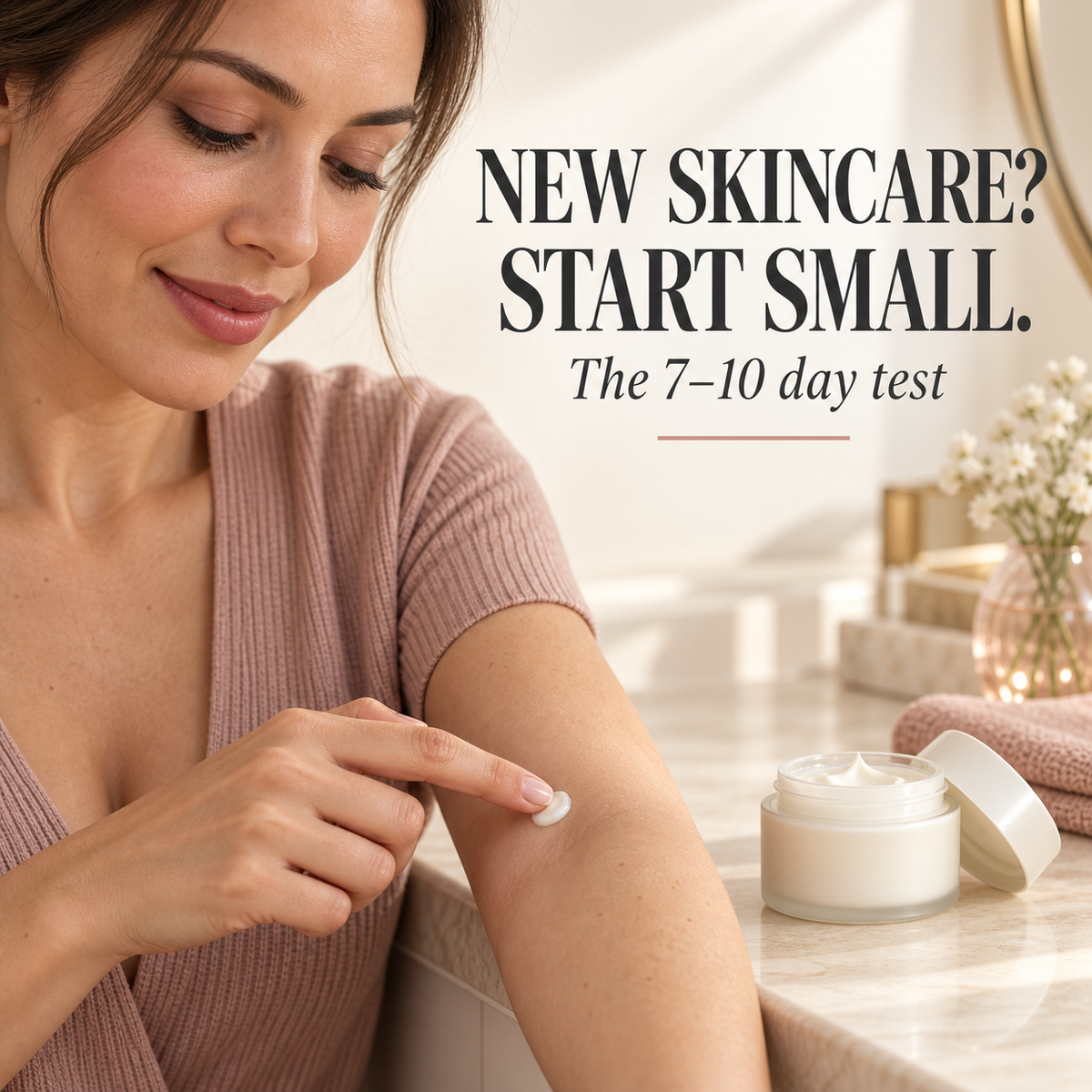
Quick answer: This guide addresses How to patch test skin care with a formula-first, education-first approach. The AAD recommends applying an appropriate product to a small test spot twice daily for seven to ten days, using it as directed. For wash-off products, follow the normal contact-time instructions.
Start with the exact product—not the marketing claim
A home patch test can help flag irritation but cannot diagnose an allergy or clear a product for someone with a known food allergy or history of severe reactions. Follow an allergist’s advice in those cases.
What to do before first use
- Read the current ingredient declaration for the exact product and shade.
- Compare it with your clinician-approved avoid list.
- Keep a dated photo of the label and any manufacturer answer.
- Introduce one new item at a time when appropriate.
Common mistake to avoid
Stop use if redness, itch, swelling, or other symptoms develop. Persistent or unexplained reactions are a reason to ask about professional patch testing.
Products to review by current formula
When to seek medical advice
Seek urgent care for breathing trouble, faintness, throat or mouth swelling, or other severe symptoms. For persistent rash, swelling, or unexplained reactions, seek advice from a qualified clinician.
Sources
See FDA cosmetic-allergen guidance and AAD patch-test guidance. Educational information only; not medical advice.