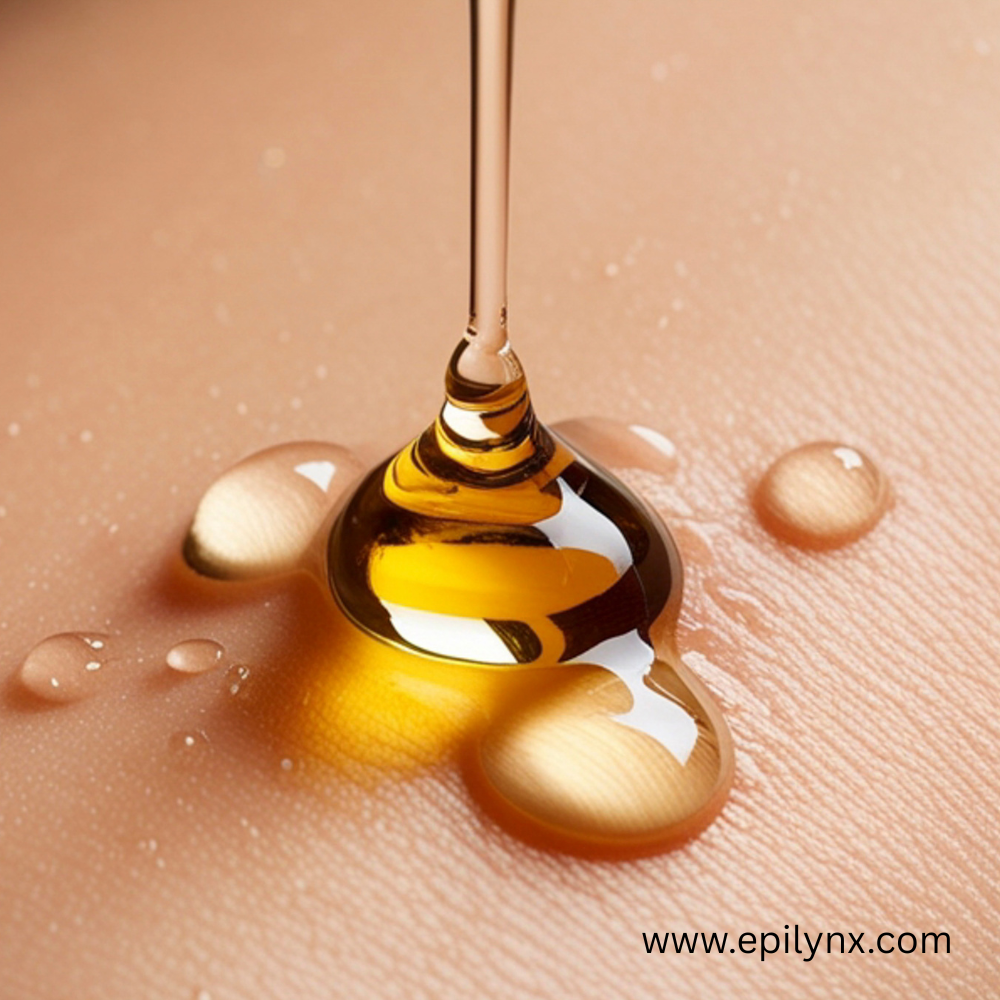

Is Glycerin Good for Your Skin? A Pharmacist on Benefits, Side Effects and Allergy
Yes — glycerin is one of the best-tolerated and best-evidenced ingredients in skincare, and it is unusually safe for reactive skin. It is also one of the most misunderstood, because of a single real caveat that gets exaggerated online into "glycerin dries you out."
Here is what it actually does, the one situation where it works against you, and what a glycerin reaction usually turns out to be.
Written by Dr. Liia Ramachandra, PharmD, PhD — pharmacist, formulator and founder of EpiLynx.
What glycerin is and how it works
Glycerin (INCI: glycerin, also written glycerol or glycerine) is a small three-carbon molecule with three hydroxyl groups. Those groups are what let it bind water — it is a humectant, meaning it attracts and holds moisture in the outer layer of the skin.
It does more than that, which is why it has stayed in formulation for over a century:
- Draws water into the stratum corneum from the deeper layers and from humid air.
- Mimics natural moisturising factor, the mix of water-binding compounds your own skin produces.
- Supports barrier repair — glycerin has been shown to help restore barrier function rather than just sitting on top of it.
- Improves the feel and spread of a formula, which is why it appears in almost everything.
- Non-comedogenic — it does not clog pores, so it suits acne-prone skin.
It is in nearly every product we make, including our Gentle Hydrating Facial Cleanser, precisely because it is effective without being sensitising.
The one real caveat: humectants need water and a seal
This is the kernel of truth behind "glycerin can dry your skin out."
A humectant pulls water from wherever it can get it. In humid conditions, or on damp skin, that means from the air and the surface — which is what you want. But applied undiluted or at very high concentration to dry skin in very dry air, it can draw water up from the living layers beneath, where it then evaporates. You end up marginally drier than you started.
Two rules remove the problem entirely:
- Apply to damp skin, not dry. Straight after cleansing, while the face is still visibly moist.
- Seal on top with a moisturiser containing lipids or occlusives, within about a minute.
Note that this applies to humectants generally, hyaluronic acid included — it is not a glycerin-specific flaw. And it essentially never happens with a normal cosmetic product, where glycerin sits at a modest percentage in a balanced formula. It is a risk of DIY use of neat glycerin from a bottle.
Glycerin allergy and side effects — what is actually going on
True allergic contact dermatitis to glycerin is rare. It appears only occasionally in patch-testing literature, and glycerin is not part of standard baseline patch test series because the yield is so low. For an ingredient this ubiquitous, that is telling.
So when someone reacts to a glycerin-containing product, the glycerin is usually not the cause. The far more likely culprits sitting in the same bottle:
- Fragrance or parfum — consistently a top-three contact allergen.
- Essential oils — lavender, citrus, tea tree.
- Preservatives — methylisothiazolinone, formaldehyde releasers.
- Propylene glycol — a different molecule with a genuinely higher allergy rate, and easy to confuse with glycerin by name. More in Propylene Glycol Allergy.
- Botanical extracts added for marketing rather than function.
The realistic side effects of glycerin itself are cosmetic rather than medical: at higher concentrations it feels sticky or tacky, particularly in humid weather, and it can make makeup slide. That is a texture complaint, not a safety one.
If you genuinely suspect glycerin, the way to settle it is patch testing rather than guesswork — see Patch Testing: What to Expect. Given how common glycerin is, an unnecessary avoidance would rule out most of the gentle products available to you.
Vegetable versus synthetic glycerin
Chemically identical. Glycerin is a single simple molecule; it does not carry a fingerprint of its origin. Plant-derived glycerin (usually from palm, soy, coconut or rapeseed) and synthetic glycerin behave the same way on skin.
Where source does matter is allergen sourcing and ethics — coconut-derived glycerin is relevant if you have a coconut allergy and want full supply-chain transparency, and plant origin matters for vegan certification. Those are legitimate reasons to ask a brand. Performance is not one of them.
How to use glycerin properly
- On damp skin, always. This single habit accounts for most of the difference between glycerin working and glycerin doing nothing.
- Seal within a minute with a cream or lotion.
- Do not use it neat. DIY glycerin at full strength is where the stickiness and the water-pulling problem come from. In a formulated product it is already at a sensible level.
- Layer it under, not over, your moisturiser.
- In very dry air, humidify. Humectants work better when there is water in the room to draw on.
Who it suits
Almost everyone, which is unusual for a skincare active. It is appropriate for dry skin, oily skin, acne-prone skin, eczema-prone skin, rosacea, and skin recovering from over-exfoliation. It does not sting, it does not photosensitise, and it is safe in pregnancy.
If you have reacted to a lot of products, glycerin is one of the ingredients least likely to be the reason.
What I actually reach for
- Gentle Hydrating Facial Cleanser — glycerin-based, no sulfates, no fragrance.
- Sunrise Nourishing Firming Serum — the humectant layer, applied to damp skin.
- Lightweight Face Moisturizer — the seal, for normal to combination skin.
- Miracle Face Cream — the seal, if you are genuinely dry.
- Skin Relief Body Cream — same principle, for the body.
All fragrance-free with no essential oils, gluten-free, and free of our 14 excluded allergens — so if you do react, the list of suspects is short. Shipping is free over $39, and EPILYNXGLOW25 takes 25% off.
Frequently asked questions
Is glycerin good for your skin? Yes — it is one of the most effective and best-tolerated humectants available, non-comedogenic, non-irritating, and it actively supports barrier repair.
Can glycerin be bad for your skin? Only if applied neat or very concentrated to dry skin in dry air, where it can draw water upward to evaporate. Apply to damp skin and seal on top and it cannot happen.
Is glycerin allergy real? True contact allergy to glycerin is rare. Most reactions blamed on it come from fragrance, preservatives or propylene glycol in the same product.
What are glycerin’s side effects on skin? Realistically, stickiness at higher concentrations, especially in humid weather. It does not sting, clog pores or cause photosensitivity.
Is vegetable glycerin better than synthetic? No — chemically identical and identical in performance. Source matters for vegan certification and allergen transparency, not for results.
Can I use glycerin every day? Yes, morning and night, on damp skin, under a moisturiser.
Keep reading
- Dehydrated Skin vs Dry Skin
- Skin Flooding: Does It Work for Sensitive Skin?
- Propylene Glycol Allergy
- How to Repair Your Skin Barrier
Educational information from a pharmacist, not medical advice. Persistent skin reactions should be assessed by a dermatologist, ideally with patch testing.