Article: Is Caprylic/Capric Triglyceride Coconut? What the Label Can Tell You
Is Caprylic/Capric Triglyceride Coconut? What the Label Can Tell You
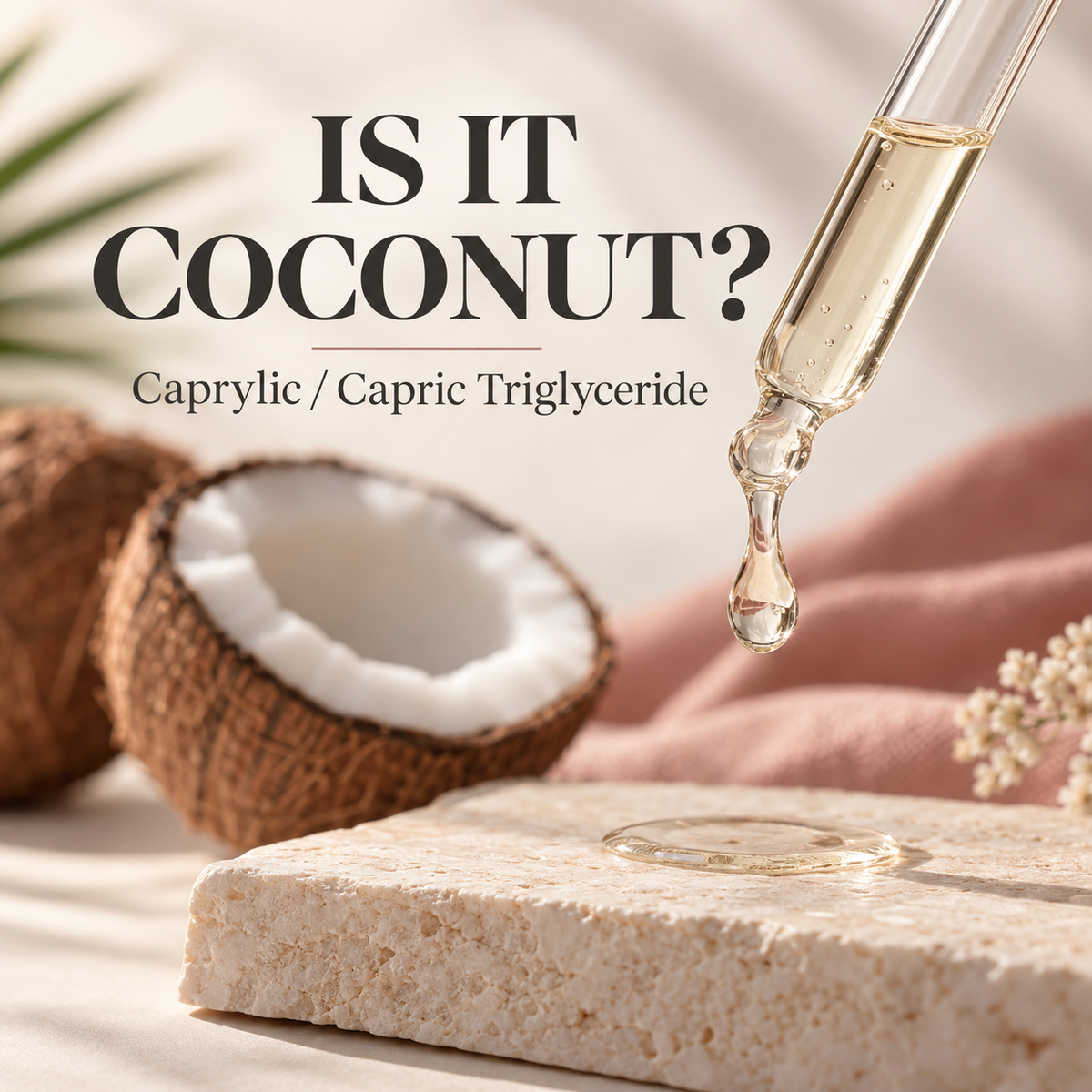
Quick answer: “Is caprylic/capric triglyceride coconut?” is an excellent example of why ingredient education must be more precise than a yes-or-no list. The ingredient may be made from fatty acids associated with coconut or palm sources, but the name alone does not establish source, processing, or individual suitability.
Why this search matters
Cosmetic labels can help you make better decisions, but they cannot diagnose allergy or guarantee that a product will suit every person. The FDA’s cosmetics-allergen guidance advises consumers to read ingredient declarations and contact manufacturers when questions remain.
What caprylic/capric triglyceride does in cosmetics
It is commonly used as an emollient: an ingredient that helps a formula spread and gives it a soft feel. It may appear in complexion makeup, creams, and lip products. Its function in a formula does not tell you its botanical source or whether a person with an allergy will react.
Why online answers conflict
Some answers focus on the usual commercial source; others focus on allergen proteins and refining; others discuss a documented contact-allergy case. Those are different questions. A search result cannot replace your own allergy history, the finished formula, or advice from an allergist or dermatologist.
Use an “ask, don’t assume” protocol
If caprylic/capric triglyceride is on your avoid list, contact the brand before purchase. If it is not on your list but you have reacted to a product, do not assume this one ingredient caused it. Preserve the label and discuss a pattern with a clinician, who can decide whether medical patch testing is appropriate.
Avoid accidental overtesting
Adding three new products in one week creates noise. Keep a stable baseline; change one product at a time only when your clinician considers it reasonable. Home-use testing cannot diagnose or rule out an allergy.
How to use this guide while shopping
- Check the exact current ingredient list and shade.
- Compare it with your personal clinician-approved avoid list.
- Ask the brand targeted questions if anything is unclear.
- Keep a dated record of the formula you reviewed.
Relevant product pages to review
These direct product pages are included to make formula review easier. Read each current label before choosing; a link is not a personal-suitability guarantee.
- Color-Correcting Concealer for Dark Circles
- Calming Moisturizer for Reactive, Dry Skin
- Color-Changing Lip Gloss
Frequently asked questions
Is caprylic/capric triglyceride always made from coconut?
No single label term establishes the source for every product. Ask the manufacturer about the exact formula.
Does “coconut-free” settle the question?
It may be a useful starting claim, but check the current ingredient list and ask what the brand means by the claim.
Sources and medical note
For label and allergen context, see the FDA. This educational guide does not diagnose, treat, or replace advice from an allergist or dermatologist. For severe symptoms, seek urgent medical care.