Article: Best Makeup for Eczema-Prone Skin in 2026: What to Use (and Avoid)
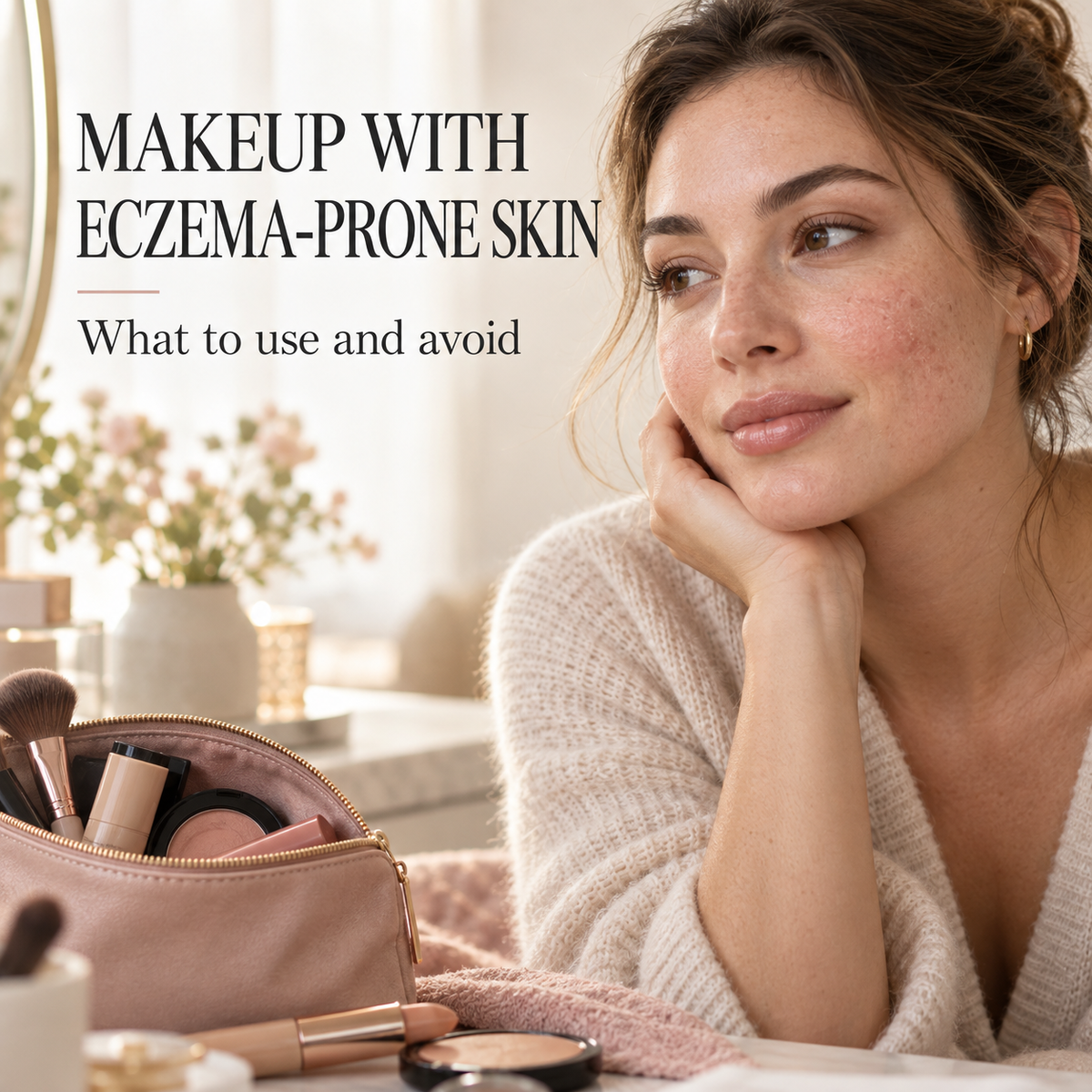
Best Makeup for Eczema-Prone Skin in 2026: What to Use (and Avoid)
If you live with eczema, you probably have a complicated relationship with makeup. On good skin days, you reach for concealer to cover the redness and rough patches. On bad skin days, you skip it entirely because you know certain products will make things worse. And somewhere in between, you have spent too much money on products that promised "sensitive skin" and delivered nothing but a new flare.
The good news: you absolutely can wear makeup with eczema. The key is understanding what makes eczema skin different, knowing which ingredients are the common triggers, and building a routine specifically designed around your skin's needs.
Why Eczema Skin Reacts Differently to Makeup
Atopic dermatitis (the most common form of eczema) is fundamentally a skin barrier disorder. In healthy skin, the outermost layer — the stratum corneum — acts like a tight-fitting brick wall, keeping moisture in and irritants out. In eczema skin, mutations in the filaggrin gene and related proteins mean this barrier is structurally compromised. The bricks are looser. The mortar is thinner.
What this means practically: ingredients that sit harmlessly on normal skin can penetrate eczema skin much more readily, reaching immune cells in deeper layers and triggering inflammatory responses. Your skin literally absorbs more of what you put on it.
Additionally, eczema skin tends to be chronically low in ceramides, produces fewer natural moisturising factors, and is in a state of low-grade immune activation. Makeup that further dehydrates or irritates this environment is fuel on a fire.
Makeup Ingredients to Avoid with Eczema
Fragrance and Parfum Fragrance is the leading cause of allergic contact dermatitis in cosmetics globally. It appears under dozens of names and is present in the vast majority of conventional makeup products. For eczema skin, fragrance-free is non-negotiable.
Alcohol Denat (Denatured Alcohol) Used in foundations and primers to create a quick-drying, mattifying finish, denatured alcohol strips the already-compromised eczema skin barrier. It evaporates rapidly and takes moisture with it.
Synthetic Dyes (FD&C and D&C Colours) Artificial colour pigments are common sensitisers, particularly in eye makeup and lip products. Look for FD&C Red 4 or D&C Yellow 10 on labels — these are high on the avoidance list.
Preservatives: MI, MCI, and Formaldehyde Releasers Methylisothiazolinone and methylchloroisothiazolinone are potent skin sensitisers. Choose products preserved with phenoxyethanol or ethylhexylglycerin instead.
Talc A common filler in powder makeup. It can be drying and irritating on compromised skin, and eczema skin generally tolerates talc poorly.
Coconut Oil This one surprises people. Coconut oil has a comedogenic rating of 4 out of 5 and has been shown in some studies to worsen eczema by disrupting the skin microbiome. Avoid makeup products with coconut oil if your eczema skin also tends toward acne or follicular irritation.
Foundation and Concealer: What Actually Works
Go Mineral, Water-Based, or Both
Mineral foundations — those based on zinc oxide, titanium dioxide, and iron oxides — are among the most tolerated options for eczema skin. They do not penetrate the skin, they are free from most common irritants, and zinc oxide specifically has anti-inflammatory properties.
Water-based foundations are another strong choice. They are lighter, less occlusive, and generally contain fewer irritating film-forming polymers. Look for aqua (water) as the first ingredient.
Avoid silicone-heavy foundations on actively flaring eczema — they create a film that can trap heat and sweat against inflamed skin.
Coverage Strategy for Eczema
On flaring areas, less is more. A light, skin-evening tinted moisturiser or SPF tint as a base, with targeted concealer only where needed, is more effective than heavy coverage. Blend with a damp sponge rather than a brush for less mechanical friction.
Eye Makeup for Eczema: Safer Choices
Eyeliner Gel-based or kohl-style pencil liners tend to be gentler than liquid eyeliners, which often contain higher concentrations of film-forming polymers and preservatives. Avoid liners with fragrance, nickel-containing shimmer pigments, and harsh waxes. The EpiLynx Soft-Glide Kajal Eyeliner is specifically formulated free from nickel, fragrance, parabens, and gluten, and tested for sensitive eye compatibility.
Mascara Mascara is high-risk for eczema eyes. The bristle applicator brushes product into the lash line, where the skin is extremely thin and permeable. Choose mascaras free from fragrance, carbon black, shellac, and colophony (rosin). Waterproof mascaras require oil- or solvent-based removal, which is more traumatic for eczema skin — go for water-resistant over waterproof unless you specifically need the longevity.
Eye Shadow Skip any shade with heavy shimmer or metallic finish if you have nickel allergy (extremely common in eczema patients). Loose powder shadows can scatter into the eye; pressed formulas are safer. Matte and satin formulations in mineral-based palettes are the gold standard for eczema eyes.
Lip Products: The Overlooked Eczema Trigger
Eczema of the lips (eczematous cheilitis) is more common than most people realise — often mistaken for dehydration or cold weather. The usual culprits are fragrance, lanolin, propylene glycol, and beeswax.
For eczema-prone lips: choose fragrance-free lip balms with simple ingredient lists. Avoid peppermint, menthol, and citrus-derived products. Long-wear liquid lipsticks with high alcohol content are generally the worst tolerated. Sheer, hydrating lip glosses or balms are the gentlest option.
How to Apply and Remove Makeup Without Worsening Eczema
Application
- Always start with a good moisturiser as a barrier layer. Let it absorb for 3–5 minutes before applying makeup
- Use clean, soft tools — wash brushes weekly with fragrance-free soap
- Damp beauty sponges are gentler than brushes over rough or sensitive areas
- Do not apply makeup over actively broken, oozing, or crusted eczema
- Avoid heavy setting powders over dry eczema patches — they emphasise texture rather than conceal it
Removal
- Use a fragrance-free micellar water or jojoba-based cleansing balm to dissolve makeup gently
- Never use makeup wipes as a standalone remover — mechanical rubbing and high preservative content make them a significant eczema trigger
- The EpiLynx Jojoba Oil Makeup Remover Balm is designed specifically for sensitive skin — it melts away makeup without surfactants or fragrance
- Follow makeup removal immediately with your moisturising routine
When to Give Your Skin a Makeup Break
Certain signs indicate your skin needs a break from all products, including gentle ones:
- Active weeping or crusting eczema on the face
- New contact rash that you have not identified the cause of yet
- Post-procedure skin (after steroid treatment, chemical peels, or laser)
- Infected eczema (yellow crust, warm to touch, spreading redness) — see a dermatologist
A makeup-free period of even 5–7 days can allow a flaring skin barrier to begin rebuilding.
EpiLynx Eczema-Safe Makeup Picks
- Flawless Matte Concealer — full coverage, fragrance-free, free from 14 allergens
- Soft-Glide Kajal Eyeliner — nickel-free, ophthalmologist-tested, smudge-resistant
- Mega Volume Vegan Mascara — fragrance-free, no harsh film formers, gentle on sensitive lash lines
- Luminous Matte Powder Foundation — mineral-based, no talc, no fragrance
- Color-Changing Flower Lip Gloss — hydrating, fragrance-free, free from common lip allergens
Shop the full EpiLynx Eczema-Safe Makeup collection at epilynx.com/collections/makeup — every product is formulated free from fragrance, parabens, nickel, gluten, and all 14 most common contact allergens.