By Dr. Liia, PharmD & Cancer Researcher — Founder, EpiLynx by Dr. Liia | June 15, 2026 | 7 min read
Best Allergen-Free Foundation for Sensitive Skin — What to Look For, What to Avoid, and Why Most "Sensitive Skin" Foundations Aren't
Foundation is the product that covers the largest skin surface area, stays on the longest (8-12 hours), and is applied closest to the mouth of any non-lip cosmetic. For people with food allergies, celiac disease, or reactive skin, it is also the product most likely to contain hidden allergens — wheat starch in the base, fragrance in the formula, chemical sunscreen in the SPF version. Here is how to find one that actually works for allergic skin.
The Three Hidden Allergen Categories in Foundation
1. Wheat Starch — The Most Common Hidden Gluten Source in Makeup
Triticum Vulgare (Wheat) Starch is used in the vast majority of pressed powder foundations and many liquid foundations as a texture-smoothing agent that gives foundation its silky, pore-blurring feel. It is extremely common, listed under its Latin INCI name, and represents direct gluten exposure for celiac patients — applied across the entire face, near the mouth, with continuous hand-to-mouth transfer throughout the day.
For people with wheat allergy: wheat starch retains wheat protein residues that can trigger IgE-mediated reactions when applied to barrier-compromised facial skin. The full-face, long-duration exposure makes wheat-containing foundation one of the highest-volume daily wheat allergen exposures outside of food.
2. Fragrance — 8-12 Hours of Continuous Contact Allergen Exposure
Foundation worn all day represents the longest-duration fragrance exposure in any cosmetic category — significantly longer than a cleanser (30 seconds contact), a serum (applied but sealed under other products), or even a moisturizer (which may be partially occluded by SPF and foundation). For people with fragrance sensitivity or mast cell hyperreactivity, 8-12 hours of continuous fragrance contact with full-face coverage is a sustained mast cell activation event that drives chronic periorbital and facial reactivity.
3. Chemical SPF in Foundation
Many foundations marketed as "SPF 15" or "SPF 30" use chemical UV filters — oxybenzone, avobenzone, octinoxate — as their SPF active. On sensitive and rosacea-prone skin, these chemical filters generate heat through UV photochemical conversion that triggers flushing and mast cell activation under the foundation layer. Oxybenzone specifically is a documented photoallergen — producing UV-triggered contact dermatitis that appears only in sun-exposed areas. The solution: mineral SPF (zinc oxide) in foundation provides UV protection without heat generation or photoallergen risk.
The Format Question: Traditional Foundation vs CC Moisturizer
For sensitive and allergic skin, the format of foundation coverage matters as much as the ingredients. Traditional liquid or powder foundations are designed for maximum coverage and staying power — often using occlusive film-formers and mattifying agents that can trap heat and irritants against the skin for hours.
A tinted CC (color-correcting) moisturizer with mineral SPF offers a fundamentally different approach: it combines moisturizing barrier support with light-to-medium buildable coverage and mineral sun protection in a single product. This format is specifically advantageous for reactive skin because it hydrates while covering (rather than mattifying and potentially drying), it eliminates the need for separate moisturizer + primer + foundation + SPF (reducing total product count and allergen exposure sources from four to one), and the moisturizing base stays comfortable on dry, eczema-prone skin throughout the day.
🌿 EpiLynx Foundation Options — All Allergen-Free:
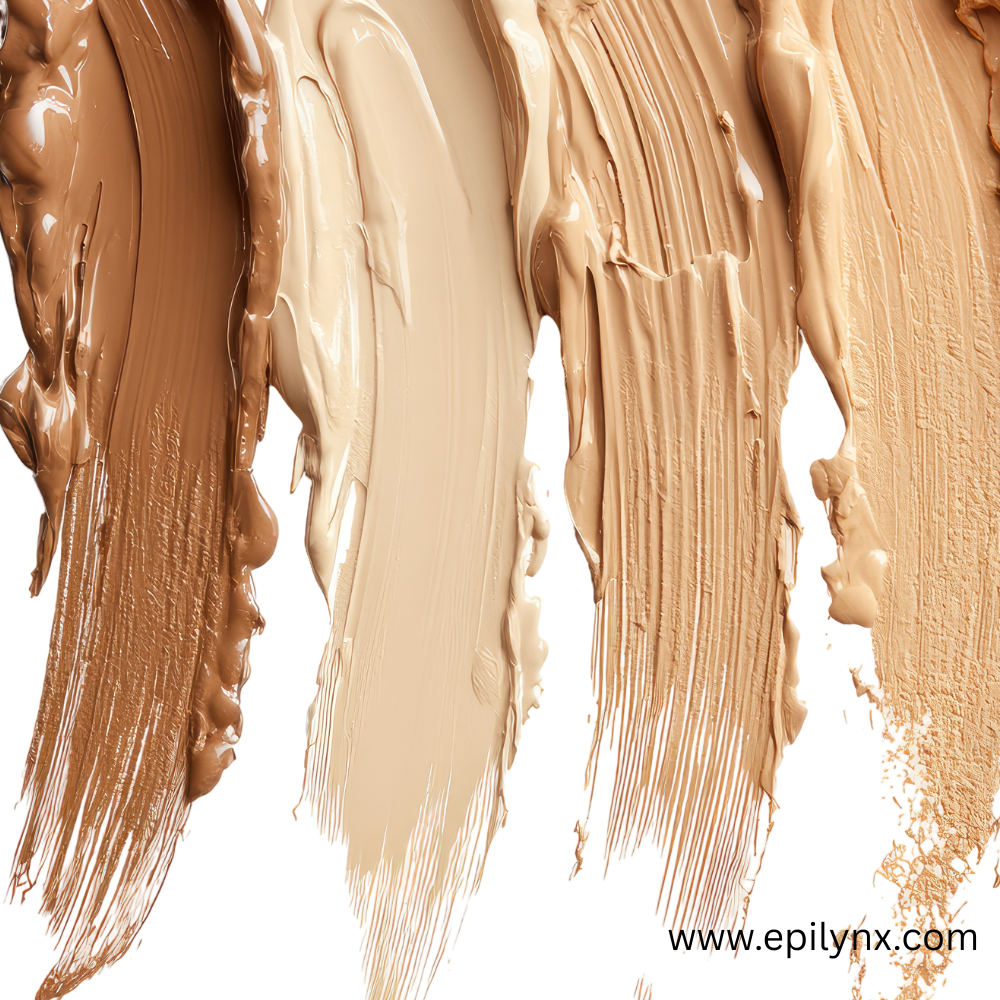
- Tinted CC Moisturizer SPF 55 — the all-in-one for sensitive skin: coverage + hydration + mineral SPF in one allergen-free formula. Available in multiple shades. Replaces foundation + moisturizer + SPF.
- Breathable Full-Coverage Foundation SPF 15 — for when you need more coverage; dewy finish, hydrating, vegan, gluten-free
- Luminous Matte Powder Foundation — pressed powder format; allergen-free base (no wheat starch), vegan
- Flawless Matte Concealer — for targeted coverage of rosacea redness, eczema marks, or PIH; allergen-free, gluten-free
Use code EpiLynxglow25 for 25% off · Free shipping on orders $54+
Frequently Asked Questions
Why does foundation cause reactions on sensitive skin?
Wheat starch (hidden gluten in most foundation bases), fragrance (8-12 hours continuous contact allergen exposure), and chemical SPF actives (heat generation triggering rosacea flushing and mast cell activation). All three are present in the majority of foundations marketed as "sensitive skin friendly."
What should a foundation for allergic skin contain?
Non-wheat texture base (silica or rice starch), fragrance-free formula, mineral SPF only (zinc oxide), free from food-derived allergens and MI/MCI preservatives. A tinted CC moisturizer with mineral SPF is the most efficient format — combining coverage, hydration, and SPF in one allergen-verified product.
Is a CC cream better than traditional foundation for sensitive skin?
For most people, yes — it reduces total product count (fewer allergen sources), hydrates while covering (no mattifying dryness on eczema skin), and when formulated with mineral SPF, provides UV protection without chemical filter heat. EpiLynx CC Moisturizer SPF 55 →