Article: Why Your Eyeliner Smudges by Lunchtime, and How to Stop It
Why Your Eyeliner Smudges by Lunchtime, and How to Stop It
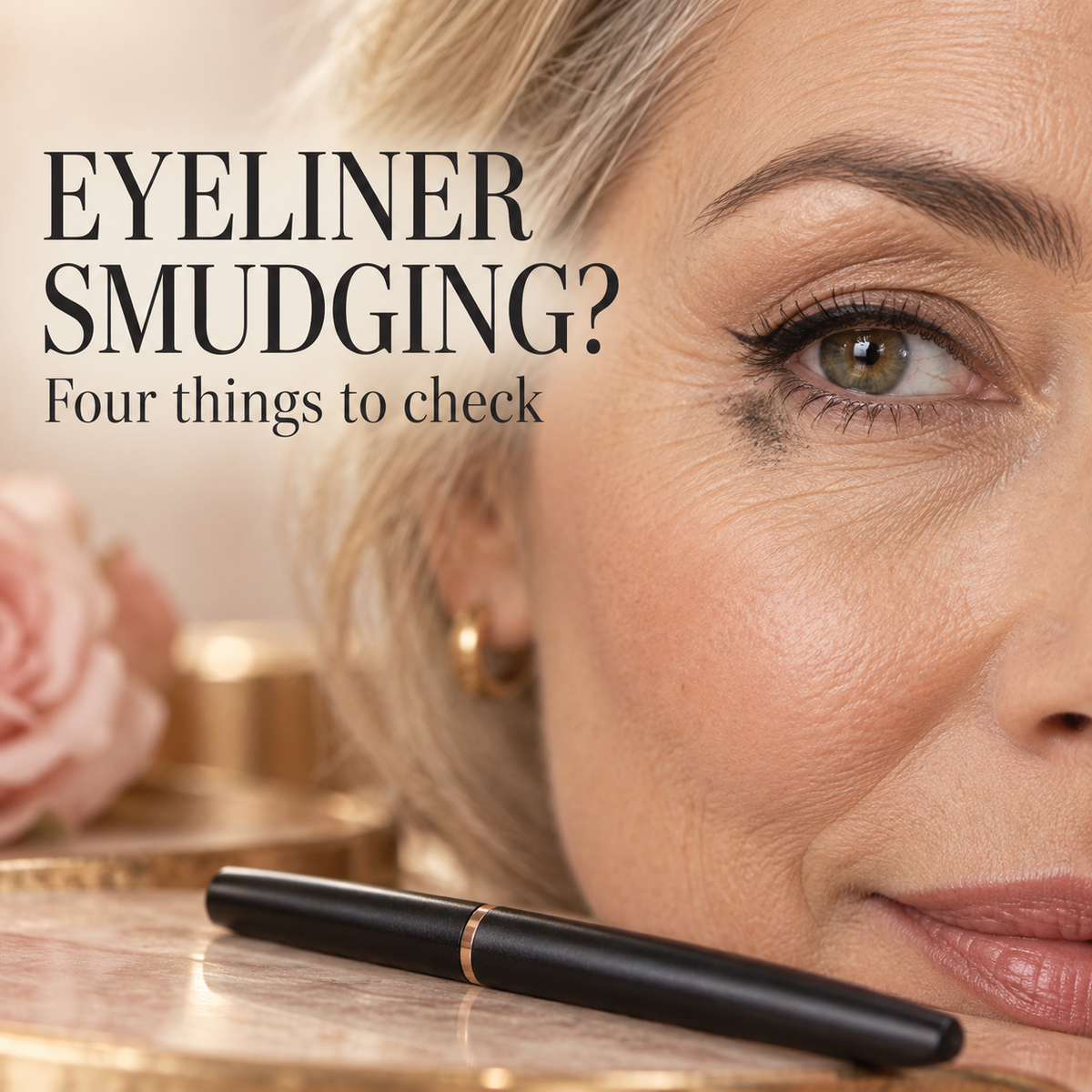
Eyeliner smudges for four reasons: oil from the lid, a watering eye, the wrong formula, and application on the waterline. Only one of those is fixed by buying a better pencil.
Written by Dr. Liia Ramachandra, PharmD, PhD — pharmacist, formulator and founder of EpiLynx.
1. Oil migration from the lid
Sebum from the lid and brow area travels downward through the day and lifts pigment with it. Oilier lids smudge faster, and so do lids that have had a rich eye cream applied right before makeup.
Fix: apply eye cream at night rather than in the morning, or give it a full ten minutes before liner. A thin layer of concealer set with the barest touch of powder gives pigment something dry to grip. Then a felt-tip liquid formula, which sits on the surface rather than melting — our Waterproof Liquid Eyeliner Pen is the one I use for exactly this problem.
2. Your eye is watering, and that is a symptom
If your eyes water through the day, the liner was never going to survive. The question is why they are watering — and the most common cause is tightlining, drawing liner along the waterline over the openings of the meibomian glands. Those glands produce the oil layer of your tear film. Block them and the film destabilises, the eye compensates by watering, and your liner floats off.
Fix: stay above the lash line, never on the waterline. This is the single most effective change on this page, and it also helps the burning-by-evening feeling.
3. The formula is wrong for your lid
- Soft kohl pencils are the most likely to migrate — they are designed to be blendable, which is the same property as smudgeable.
- Gel pencils set firmer and hold better, with a softer line than liquid.
- Liquid felt tips hold best and give the cleanest line, but demand a steadier hand on a lid that is no longer taut.
- Waterproof holds longest but must be removed by soaking, not scrubbing.
4. Hooded or crepey lids fold the liner away
As lid skin loses elasticity it rests differently, and a line drawn with the eye open transfers onto the skin above when you blink. Draw with your eye open, looking straight ahead into a mirror, and keep the line thin at the inner corner, thickening only slightly outward. A wing drawn on a closed lid will not sit where you expect it to.
What actually causes irritation, if that is also happening
If your liner stings as well as smudges, there are only about six likely culprits: fragrance, shellac, latex, nickel traces in dark pigment, formaldehyde-releasing preservatives, and propylene glycol. A formula built without all of them removes the guesswork.
Removal is where the damage happens
- Saturate a pad, hold against the closed lid for 20 seconds, then wipe.
- Never drag outward toward the temple.
- Follow with a gentle cleanser, then eye cream on damp skin.
What I actually reach for
- Waterproof Liquid Eyeliner Pen — felt tip, non-smudge, fragrance-free.
- Glide-On Gel Eyeliner Pencil — a softer line that still sets.
- Luminous Concealer — as a lid primer.
- Ultra Renewal Eye Cream — at night, not before liner.
No fragrance, no shellac, no latex. Shipping is free over $39, and EPILYNXGLOW25 takes 25% off.
Frequently asked questions
Why does my eyeliner smudge under my eye? Usually oil migrating down from the lid, or a watering eye. Prime the lid, apply eye cream at night instead of morning, and use a felt-tip liquid formula.
Does tightlining cause watering eyes? It can. Liner on the waterline blocks the glands that make the oil layer of your tear film, which destabilises it and makes the eye water.
Which eyeliner lasts longest? Waterproof liquid felt tip. Just remove it by soaking rather than rubbing, because most lid damage happens at removal.
How do I line a hooded lid? Draw with the eye open, looking straight ahead. A line drawn on a closed lid transfers upward when you blink.
Why does my eyeliner sting? Most often fragrance, shellac, latex, formaldehyde releasers, or nickel traces in dark pigment.
Keep reading
- Why Your Eyeliner Stings
- Why Tightlining Irritates Your Eyes
- Best Waterproof Eyeliner for Sensitive Eyes
Educational information from a pharmacist, not medical advice.