
Article: Coconut-Derived Ingredients in Skin Care: A Practical Label Guide
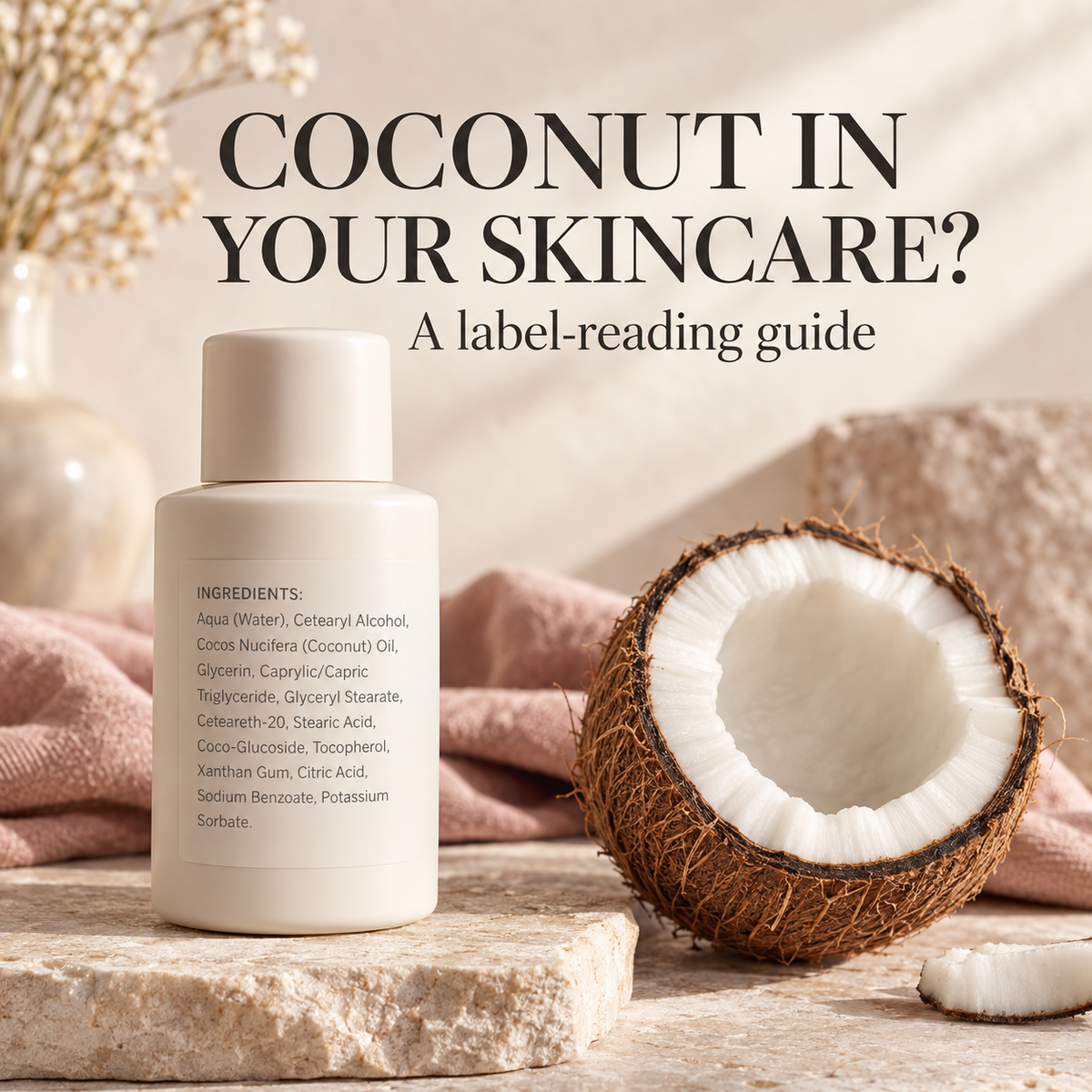
Coconut-Derived Ingredients in Skin Care: A Practical Label Guide
Quick answer: Searches for coconut derivatives list are often really searches for certainty: “Can I identify coconut in a cosmetic label?” The honest answer is that a label is essential, but ingredient origin and personal medical advice matter too. This guide helps you build a repeatable label-review process without making assumptions about whether a particular processed ingredient is safe for a particular person.
Why this search matters
Cosmetic labels can help you make better decisions, but they cannot diagnose allergy or guarantee that a product will suit every person. The FDA’s cosmetics-allergen guidance advises consumers to read ingredient declarations and contact manufacturers when questions remain.
Why “coconut-free” is not a universal shortcut
Cosmetic ingredient names describe the ingredient used in a formula; they do not always explain feedstock, processing, trace amounts, or whether the final product fits an individual allergy plan. A label that says “natural,” “clean,” or “hypoallergenic” does not resolve those questions. The FDA specifically notes that there is no federal definition for “hypoallergenic,” and recommends reading the actual ingredient declaration and contacting the manufacturer when you need clarification.
What to look for on an ingredient panel
Start with the exact names your allergist has asked you to avoid. Next, flag obvious coconut-related wording such as Cocos nucifera (coconut), coconut oil, coconut fruit extract, coconut water, and coconut alkanes. Then flag names that deserve a manufacturer question rather than an internet verdict, including coco- compounds and caprylic/capric triglyceride. “Flag” does not mean “automatically unsafe”; it means “verify source and medical relevance before buying.”
A four-question email for brands
Ask: (1) What is the full current INCI list for this exact product and shade? (2) Is the ingredient I am asking about derived from coconut, palm, or another source? (3) Has the product been reformulated since the online list was posted? (4) Can you confirm whether the finished formula is manufactured with the controls relevant to my avoidance plan? Save the answer with the date.
Build a personal ingredient archive
Photograph labels of products you tolerate, record the shade and lot if available, and recheck upon repurchase. This reduces guesswork when a formula changes. For reactions, note the product, application site, timing, and other new exposures; that is more useful to a clinician than trying to identify a cause from memory.
How to use this guide while shopping
- Check the exact current ingredient list and shade.
- Compare it with your personal clinician-approved avoid list.
- Ask the brand targeted questions if anything is unclear.
- Keep a dated record of the formula you reviewed.
Relevant product pages to review
These direct product pages are included to make formula review easier. Read each current label before choosing; a link is not a personal-suitability guarantee.
- Color-Correcting Concealer for Dark Circles
- Oil-Free Foaming Face Wash
- Calming Moisturizer for Reactive, Dry Skin
Frequently asked questions
Can a label tell me whether an ingredient is coconut-derived?
Sometimes, but not always. Use the label to identify what requires a brand question; do not infer source or safety from a similar product.
Should I patch-test a product if I have a coconut allergy?
A home patch test is not a way to clear a product for a known food allergy. Follow your allergist’s instructions. Seek urgent care for breathing trouble, faintness, swelling of the mouth or throat, or other severe symptoms.
Sources and medical note
For label and allergen context, see the FDA. This educational guide does not diagnose, treat, or replace advice from an allergist or dermatologist. For severe symptoms, seek urgent medical care.