Article: The Eczema Inflammation Epidemic: Why 32 Million Americans Are Scratching Themselves Raw (And How Allergen-Safe Beauty Can Break the Itch-Scratch Cycle)
The Eczema Inflammation Epidemic: Why 32 Million Americans Are Scratching Themselves Raw (And How Allergen-Safe Beauty Can Break the Itch-Scratch Cycle)
Shocking statistic: Eczema cases have TRIPLED in industrialized countries over the past 30 years – and your "gentle, dermatologist-recommended" moisturizer might be the reason you're still itching at 3 AM.
Picture this: You've tried every cream, lotion, and potion on the market. You've spent hundreds of dollars on products labeled "eczema-safe," "dermatologist-tested," and "clinically proven." You follow your routine religiously. And yet, you're still waking up with bloody scratches on your arms, your skin is weeping, and you're wondering if you'll ever feel comfortable in your own body again.
Here's the plot twist that dermatology doesn't always tell you: Up to 80% of people with eczema also have contact allergies to ingredients in their "treatment" products – meaning the very products prescribed to help you are actively making you worse.
Welcome to the fascinating world of eczema science, where understanding the atopic march, the filaggrin gene mutation, and the allergen connection could be the difference between a lifetime of suffering and finally achieving comfortable skin.
The Eczema Explosion: A Modern Epidemic
The numbers are staggering, and they're getting worse every year.
The Prevalence Statistics That Should Alarm Everyone:
Current eczema rates:
- United States: 31.6 million people (10.1% of population)
- Children: 1 in 5 infants and young children
- Adults: 1 in 10 adults (often persisting from childhood)
- Increase since 1970: 300% rise in developed nations
- Mind-blowing fact: Eczema now costs the US healthcare system $5.3 billion annually
The geographic pattern:
- Industrialized nations: 15-20% of children affected
- Developing nations: 5-10% of children affected
- Urban vs. rural: Urban children have 2x higher rates
- Shocking correlation: The more "developed" the country, the worse the eczema epidemic
The age distribution surprise:
- 60% of cases begin in first year of life
- 85% of cases begin before age 5
- Adult-onset eczema: Increasing at 15% per decade
- Persistence rate: 40-60% of childhood eczema continues into adulthood
The Environmental Trigger Explosion:
Why eczema is skyrocketing:
- Chemical exposure: 85,000+ chemicals in consumer products (most untested for skin safety)
- Air pollution: PM2.5 particles increase eczema risk by 12% per 10 μg/m³ increase
- Hygiene hypothesis: Too-clean environments prevent normal immune development
- Microbiome disruption: Antibiotics and antimicrobials alter skin bacteria
- Climate change: Temperature extremes and humidity shifts trigger flares
The Filaggrin Gene Mutation: Your Genetic Skin Barrier Defect
Here's a genetic bombshell: 20-30% of people with eczema have mutations in the filaggrin gene – and this changes everything about how your skin functions.
The Filaggrin Science Breakdown:
What filaggrin actually does:
- Protein function: Binds keratin filaments together in skin cells
- Barrier formation: Creates the "bricks and mortar" structure of stratum corneum
- Natural moisturizing factors: Breaks down into amino acids that hydrate skin
- pH regulation: Filaggrin breakdown products maintain skin's acidic pH
- Antimicrobial defense: Acidic pH and physical barrier prevent bacterial invasion
When filaggrin is defective:
- Barrier permeability: Increases by 400-600% (massive allergen entry point)
- Water loss: Trans-epidermal water loss (TEWL) increases 300%
- pH elevation: Skin becomes more alkaline (pH 6-7 vs. normal 4.5-5.5)
- Bacterial colonization: Staphylococcus aureus colonizes 90% of eczema patients
- Allergen sensitivity: Increased by 1000% due to barrier dysfunction
The genetic inheritance:
- One mutated gene: 42% chance of developing eczema
- Two mutated genes: 79% chance of developing eczema
- Additional risk: 3-4x higher risk of food allergies, asthma, allergic rhinitis
- The atopic march: Progression from eczema → food allergies → asthma → hay fever
The Filaggrin Testing Reality:
Should you get tested?
- Genetic testing availability: Commercial tests available ($100-300)
- Practical value: Knowing your status helps predict treatment response
- Treatment implications: Filaggrin-deficient patients need different approaches
- Family planning: Genetic counseling for inheritance patterns
What positive results mean:
- Barrier focus: Aggressive barrier repair is essential, not optional
- Allergen avoidance: More critical than in regular eczema
- Prophylactic treatment: Early aggressive treatment may prevent atopic march
- Lifetime management: This is a genetic condition requiring ongoing care
The Staphylococcus Aureus Colonization Crisis
Here's a bacterial nightmare: 90% of eczema patients have Staph aureus colonization on their skin – and it's both a cause and effect of inflammation.
The Staph Aureus Vicious Cycle:
How Staph colonizes eczema skin:
- Barrier dysfunction: Filaggrin defects create entry points
- Alkaline pH: Higher pH favors Staph growth
- Reduced antimicrobial peptides: Immune deficiency allows bacterial overgrowth
- Biofilm formation: Bacteria create protective communities
- Toxin production: Staph releases superantigens that worsen inflammation
The inflammatory cascade:
- Superantigens: Activate 20% of all T-cells (massive immune response)
- Cytokine storm: IL-4, IL-13, IL-31 flood the system
- Itch amplification: IL-31 directly triggers itch neurons
- Barrier damage: Inflammation further compromises skin integrity
- More bacterial entry: Cycle intensifies exponentially
The bacterial load numbers:
- Normal skin: 1,000-10,000 bacteria per cm²
- Eczema flare: 1,000,000-100,000,000 bacteria per cm² (up to 10,000x increase!)
- Methicillin-resistant Staph (MRSA): Found in 30% of severe eczema cases
- Shocking reality: Your skin is a bacterial battleground
The Antimicrobial Treatment Dilemma:
Why bleach baths work (but aren't a solution):
- Mechanism: 0.005% bleach solution reduces bacterial load
- Clinical evidence: 50% improvement in eczema severity in studies
- Limitations: Temporary effect, doesn't address root cause
- Frequency: 2x weekly recommended, but inconvenient
- Controversy: Some dermatologists question long-term safety
The antibiotic paradox:
- Topical antibiotics: Reduce bacteria but cause resistance
- Oral antibiotics: Disrupt gut microbiome, temporary relief
- Resistance rates: Increasing rapidly for common antibiotics
- Rebound effect: Bacteria return more aggressive after treatment stops
The Contact Allergy Comorbidity Catastrophe
Here's the hidden epidemic within the epidemic: Eczema patients develop contact allergies at 3-5x the rate of normal population.
The Contact Allergy Prevalence in Eczema:
Staggering statistics:
- 50-80% of eczema patients have at least one contact allergy
- Multiple allergies: Average of 3.2 allergens per eczema patient
- Diagnostic challenge: Contact dermatitis looks identical to eczema flares
- Treatment failure: 30-40% of "resistant eczema" is actually contact allergy
The most common eczema contact allergens:
- Fragrance mix: Affects 40% of eczema patients (vs. 8% general population)
- Nickel: 33% of eczema patients (jewelry, makeup pigments)
- Preservatives: Methylisothiazolinone (MI), formaldehyde releasers (25-30%)
- Lanolin: 20% of eczema patients (common in "healing" ointments)
- Propylene glycol: 18% (penetration enhancer in many products)
The sensitization mechanism:
- Broken barrier: Allows allergens to penetrate 400-600% more than normal skin
- Immune dysregulation: Already overactive immune system primed for reactions
- Hapten formation: Small molecules bind to skin proteins, creating allergens
- Memory formation: One exposure sensitizes, subsequent exposures react
- Progressive worsening: Each reaction increases sensitivity to more allergens
The Patch Testing Imperative:
Why eczema patients NEED patch testing:
- Identification: Discover hidden allergens sabotaging treatment
- Avoidance: Eliminate triggers allowing skin to heal
- Treatment optimization: Choose products compatible with your allergies
- Cost savings: Stop wasting money on products that worsen your condition
The patch testing protocol:
- Duration: 3-4 days of testing (applied Monday, read Wednesday/Thursday/Friday)
- Number of allergens: Standard panel tests 70-80 common allergens
- Eczema-specific panels: Additional testing for skincare ingredients
- Positive results: 50-80% of eczema patients have at least one positive
- Important timing: Must be done when eczema is controlled, not during flare
The Allergen-Safe Skincare Requirements for Eczema
"Fragrance-free" and "hypoallergenic" aren't enough – eczema skin needs specific formulation requirements.
The Essential Formulation Criteria:
pH Requirements:
- Target pH: 4.5-5.5 (matches healthy skin's acid mantle)
- Why it matters: Acidic pH inhibits Staph aureus growth by 99%
- Eczema reality: Most eczema skin has pH 6-7 (too alkaline)
- Product testing: Use pH strips to verify your products
- Shocking discovery: Many "eczema" products have pH 6-8 (making things worse)
Lipid Barrier Requirements:
- Ceramide ratio: 3:1:1 (ceramides:cholesterol:free fatty acids)
- Ceramide types: Must include Ceramide 1, 3, and 6 (not just one type)
- Concentration: Minimum 2% total ceramides for therapeutic effect
- Supporting lipids: Cholesterol and fatty acids essential for lamellar structure
- Scientific basis: This ratio mimics natural skin barrier composition
Humectant Selection:
- Glycerin: Gold standard, 5-10% concentration optimal
- Hyaluronic acid: Low molecular weight penetrates better
- Sodium PCA: Part of natural moisturizing factor
- Avoid: Propylene glycol (common allergen in eczema patients)
- Application timing: Apply to damp skin for maximum effect
Occlusives for Severe Eczema:
- Petrolatum: 41% reduction in water loss, clinically proven
- Dimethicone: Non-comedogenic, hypoallergenic alternative
- Mineral oil: Inexpensive but effective barrier
- Avoid: Lanolin (high allergen rate), natural waxes (can contain allergens)
The Ingredient Exclusion List:
Must avoid in eczema-prone skin:
- All fragrances: Synthetic and "natural" essential oils
- Drying alcohols: SD alcohol, denatured alcohol, isopropyl alcohol
- Harsh surfactants: Sodium lauryl sulfate, sodium laureth sulfate
- Common preservatives: Methylisothiazolinone, formaldehyde releasers
- Botanical extracts: Often contain multiple unknown allergens
- Exfoliants (during flares): AHAs, BHAs, physical scrubs
- Penetration enhancers: Propylene glycol, urea (in high concentrations)
The preservative challenge:
- Need preservation: Water-containing products must be preserved
- Sensitivity issue: Many eczema patients react to preservatives
- Safer options: Phenoxyethanol, sodium benzoate, potassium sorbate
- Combination approach: Multiple mild preservatives better than one strong one
- Alternative: Anhydrous (no water) products don't need preservation
The Bathing Science for Eczema
How, when, and what you bathe with can make or break your eczema management.
The Bath Controversy Resolved:
The old advice (WRONG):
- "Don't bathe frequently, it dries out skin"
- "Quick showers only"
- "Avoid water as much as possible"
The new science (CORRECT):
- Frequent bathing actually HELPS when done properly
- Soak and seal method: Reduces flares by 35-50%
- Bacterial reduction: Daily bathing reduces Staph colonization
- Hydration delivery: Water is the ultimate humectant
The proper bathing protocol:
- Temperature: Lukewarm, not hot (90-95°F/32-35°C)
- Duration: 5-10 minutes (not too long)
- Additives: Colloidal oatmeal, dilute bleach (2x/week), or bath oil
- Cleansing: Minimal soap, only where necessary
- Pat dry: Don't rub, leave skin slightly damp
- Immediate moisturization: Within 3 minutes (critical timing!)
The Cleansing Product Science:
What makes a cleanser eczema-safe:
- Syndets (synthetic detergents): Gentler than soap
- pH 5.5: Maintains acid mantle
- No sulfates: SLS-free formulations
- Minimal ingredients: Fewer allergen exposures
- Fragrance-free: Absolutely no fragrance compounds
The cleansing frequency:
- Daily bathing: Safe and beneficial with proper technique
- Affected areas: Cleanse gently with appropriate products
- Unaffected areas: Water-only cleansing often sufficient
- Post-exercise: Rinse sweat immediately to prevent irritation
The water quality factor:
- Hard water: Higher mineral content worsens eczema (15% severity increase)
- Chlorine: Can irritate but not as harmful as believed
- Solution: Shower filters can help in hard water areas
- Temperature regulation: Consistent lukewarm temperature crucial
The Clothing and Textile Science
What touches your skin 24/7 matters as much as what you apply.
The Fabric Chemistry Impact:
Best fabrics for eczema:
- 100% cotton: Breathable, soft, low allergen risk
- Bamboo fabric: Naturally antimicrobial, moisture-wicking
- Silk: Smooth, reduces friction, anti-inflammatory properties
- Modal/Tencel: Soft, breathable, sustainable options
Worst fabrics for eczema:
- Wool: Irritating fibers, common allergen
- Synthetic blends: Trap heat and moisture
- Rough textures: Physical irritation triggers inflammation
- Tight-fitting: Friction and sweat accumulation
The textile treatment problem:
- Formaldehyde resins: "Wrinkle-free" and "permanent press" treatments
- Flame retardants: Chemical treatments on children's pajamas
- Dyes: Especially dark colors, may contain allergens
- Fabric softeners: Leave residues that can trigger reactions
- Solution: Wash new clothes 2-3 times before wearing, use fragrance-free detergents
The Laundry Science for Eczema:
Detergent selection:
- Free and clear formulas: No dyes, fragrances, or enzymes
- Double rinse: Removes residual detergent
- Avoid: Fabric softeners (leave coating on fabric)
- Hot water washing: Kills dust mites and bacteria
- Drying: High heat also kills mites
The detergent allergen testing:
- Common allergens: Fragrances, methylisothiazolinone, enzymes
- Testing protocol: Patch test with your detergent
- Hidden allergens: "Unscented" may contain masking fragrances
- Safe brands: Limited options truly allergen-free
The Diet-Eczema Connection Science
Food allergies complicate eczema in 30-40% of cases, especially in children.
The Food Allergy-Eczema Overlap:
Prevalence statistics:
- Infants with severe eczema: 70% have food allergies
- All childhood eczema: 30-40% have food allergies
- Adult eczema: 10-20% have food allergies
- The relationship: Broken skin barrier allows food allergen sensitization
The most common food triggers:
- Milk: 50-70% of food-allergic eczema patients
- Egg: 30-50% affected
- Peanuts: 25-35% affected
- Tree nuts: 15-25% affected
- Wheat/gluten: 10-20% affected (higher with celiac overlap)
- Soy: 10-15% affected
- Fish/shellfish: 10% affected
The testing controversy:
- IgE testing: Identifies immediate allergies (useful)
- IgG testing: NOT scientifically validated for eczema
- Oral food challenge: Gold standard but must be supervised
- Elimination diet: 4-6 weeks trial of suspected foods
- Important note: Don't eliminate foods without professional guidance
The Anti-Inflammatory Diet for Eczema:
Foods that may help:
- Omega-3 fatty acids: Reduce inflammatory markers by 30-40%
- Probiotics: May improve eczema in 40% of cases
- Vitamin D: 80% of eczema patients are deficient
- Quercetin: Natural antihistamine in onions, apples, berries
- Zinc: Supports barrier function and immune regulation
Foods that may worsen:
- High histamine foods: Aged cheeses, fermented foods, alcohol
- Inflammatory foods: Trans fats, excessive omega-6, processed foods
- Individual triggers: Vary person to person
- Sugar: May worsen inflammation in some patients
The elimination diet protocol:
- Baseline period: 2 weeks documenting symptoms
- Elimination phase: Remove suspected triggers for 4-6 weeks
- Reintroduction: Add back one food every 3-5 days
- Documentation: Detailed tracking of skin response
- Professional guidance: Work with allergist and dietitian
The Stress-Eczema Bidirectional Nightmare
Stress triggers eczema, and eczema causes stress – breaking this cycle requires understanding the neuroscience.
The Stress-Skin Connection:
How stress triggers eczema:
- Cortisol elevation: Impairs barrier function by 35%
- Immune dysregulation: Shifts toward inflammatory response
- Neuropeptide release: Substance P and other itch mediators increase
- Barrier permeability: Stress increases TEWL by 50%
- Timeline: Flares typically 2-4 weeks after major stress
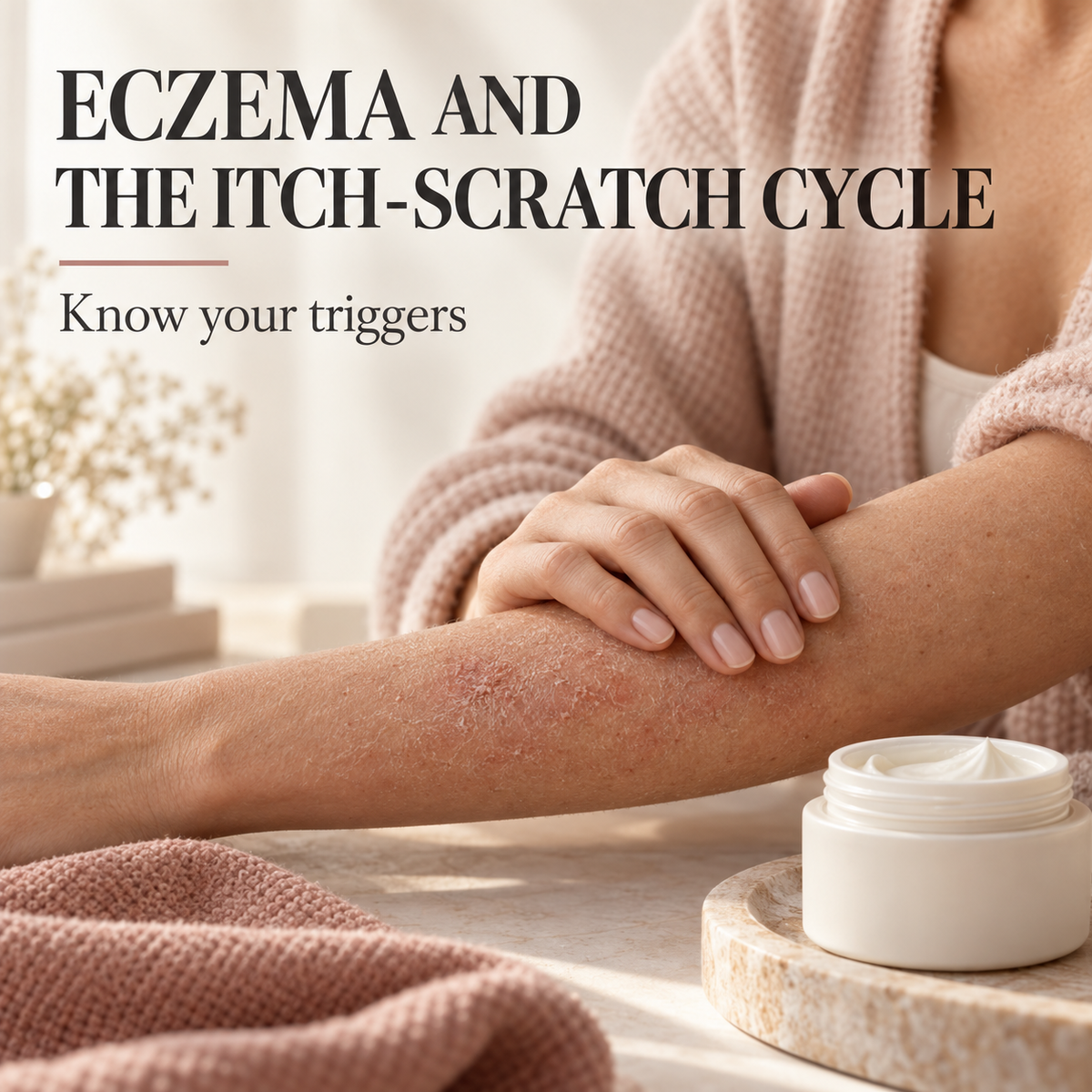
The itch-scratch cycle neuroscience:
- Itch pathway: C-fibers transmit itch signals to brain
- Scratch response: Provides temporary relief (endorphin release)
- Damage creation: Scratching damages skin, worsens inflammation
- Heightened sensitivity: Each scratch lowers itch threshold
- Addiction cycle: Brain craves scratch-induced endorphin release
The psychological burden:
- Sleep disruption: 60% of eczema patients have poor sleep quality
- Depression rates: 2-3x higher in eczema patients
- Anxiety rates: 2.5x higher than general population
- Social isolation: 40% report avoiding social situations due to eczema
- Quality of life: Similar impact to diabetes or heart disease
The Stress Management Integration:
Evidence-based stress reduction:
- Cognitive behavioral therapy: 40% reduction in eczema severity
- Mindfulness meditation: Reduces inflammatory markers
- Habit reversal training: Breaks itch-scratch cycle
- Biofeedback: Teaches physiological stress control
- Sleep optimization: 7-9 hours essential for skin healing
The scratch prevention strategies:
- Wet wrap therapy: Physical barrier prevents scratching
- Cotton gloves: Especially at night
- Nail care: Keep nails short and smooth
- Cold compresses: Reduces itch without damage
- Distraction techniques: Replace scratch urge with alternative behavior
The Microbiome Restoration Revolution
Emerging science shows restoring skin's bacterial balance may be key to eczema treatment.
The Microbiome Disruption in Eczema:
Normal skin microbiome:
- Diversity: 1,000+ different species
- Balance: Beneficial bacteria keep pathogens in check
- Stability: Relatively consistent over time
- Function: Produces antimicrobial peptides, maintains barrier
Eczema skin microbiome:
- Diversity: 60-70% reduction in species richness
- Imbalance: Staph aureus overgrowth, loss of beneficial species
- Instability: Dramatic shifts during flares
- Dysfunction: Reduced antimicrobial protection
The microbiome restoration approach:
- Probiotics (topical): Live bacteria applied to skin
- Prebiotics: Feed beneficial skin bacteria
- Postbiotics: Beneficial bacterial metabolites
- Microbiome transplant: Experimental but promising
The Probiotic Science for Eczema:
Clinical evidence:
- Lactobacillus rhamnosus: 20-30% improvement in some studies
- Roseomonas mucosa: 50% improvement in NIH clinical trial
- Nitrosomonas eutropha: Converts ammonia to nitric oxide (anti-inflammatory)
- Application challenges: Keeping beneficial bacteria alive on skin
The prebiotic approach:
- Glycerol: Feeds beneficial Staphylococcus species
- Xylitol: Inhibits Staph aureus colonization
- Colloidal oatmeal: Prebiotic and anti-inflammatory
- Research stage: Early but extremely promising
The Treatment Hierarchy for Eczema
Understanding treatment steps helps you make informed decisions with your dermatologist.
The Step-Up Treatment Approach:
Step 1: Barrier repair and avoidance
- Core routine: Gentle cleansing + intensive moisturization
- Frequency: 2-4x daily moisturizer application
- Allergen avoidance: Eliminate identified contact allergens
- Success rate: Controls mild eczema in 30-40% of patients
Step 2: Topical anti-inflammatories
- Mild topical steroids: Hydrocortisone 1-2.5%
- Calcineurin inhibitors: Tacrolimus, pimecrolimus (steroid-sparing)
- PDE4 inhibitors: Crisaborole (newer, non-steroidal)
- Duration: 2-4 week courses as needed
Step 3: Moderate-potency treatments
- Mid-strength steroids: Triamcinolone, mometasone
- Combination therapy: Steroids + calcineurin inhibitors
- Phototherapy: UVB light therapy 3x weekly
- Success rate: Controls moderate eczema in 60-70%
Step 4: Systemic treatments
- Dupilumab (Dupixent): Biologic targeting IL-4/IL-13
- JAK inhibitors: Upadacitinib, abrocitinib (oral medications)
- Immunosuppressants: Cyclosporine, methotrexate
- Reserved for: Severe, recalcitrant eczema
The Topical Steroid Science:
How steroids work:
- Mechanism: Suppress inflammatory gene expression
- Potency: Ranges from ultra-mild to ultra-potent
- Onset: Improvement within 3-7 days
- Duration: Should see significant improvement in 2-4 weeks
The steroid fear reality:
- Skin atrophy: Real risk with ultra-potent steroids or extended use
- Appropriate use: Low-moderate potency on body, ultra-mild on face
- Tachyphylaxis: Tolerance development with continuous use
- Solution: Pulse therapy (2 days on, 5 days off)
The steroid-free alternatives:
- Tacrolimus (Protopic): As effective as mid-potency steroids
- Pimecrolimus (Elidel): Similar efficacy, milder option
- Advantages: No atrophy risk, can use long-term
- Disadvantages: Initial burning sensation, black box warning (likely overblown)
Your Complete Eczema-Safe, Allergen-Free Action Plan
Phase 1: Assessment and Diagnosis (Weeks 1-4)
Medical evaluation:
- Dermatologist visit: Confirm eczema diagnosis
- Patch testing: Identify contact allergens
- Allergy testing: Screen for food allergies (if indicated)
- Filaggrin testing: Consider genetic testing
- Photography: Document baseline severity
Environmental audit:
- Skincare inventory: Check all products for allergens
- Household products: Review detergents, cleaners
- Clothing assessment: Evaluate fabric choices
- Air quality: Consider purifiers for bedroom
Phase 2: Barrier Repair Foundation (Weeks 5-12)
Core routine establishment:
- Gentle cleanser: pH 5.5, fragrance-free, SLS-free
- Immediate moisturization: Within 3 minutes of bathing
- Barrier repair cream: Ceramide-based, 3:1:1 ratio
- Occlusive layer: Petroleum jelly on problem areas
- Frequency: Morning and night minimum, more as needed
Lifestyle modifications:
- Bathing optimization: Soak and seal protocol
- Clothing changes: 100% cotton next to skin
- Laundry adjustments: Free and clear detergent, double rinse
- Temperature control: Keep home cool and humid (68-72°F, 40-50% humidity)
Phase 3: Treatment Optimization (Months 3-6)
Medical treatment integration:
- Topical treatments: As prescribed by dermatologist
- Wet wrap therapy: For severe flares
- Bleach baths: 2x weekly if bacterial colonization confirmed
- Antihistamines: For itch control, especially nighttime
Progress monitoring:
- Weekly photos: Document improvement or worsening
- Symptom diary: Track itch, sleep quality, flares
- Trigger identification: Note patterns
- Treatment response: Assess what's working
Phase 4: Long-Term Management (6+ Months)
Maintenance routine:
- Consistent moisturization: Even when skin looks good
- Proactive therapy: Apply anti-inflammatories at first sign of flare
- Seasonal adjustments: Intensify routine in winter
- Regular follow-up: Quarterly dermatologist visits
Quality of life optimization:
- Support groups: Connect with eczema community
- Mental health: Therapy if needed for stress/anxiety
- Education: Stay informed about new treatments
- Advocacy: Share your journey to help others
The Eczema-Allergen Truth: Understanding that eczema is a complex condition involving genetic predisposition, barrier dysfunction, immune dysregulation, microbial imbalance, and environmental triggers helps you approach treatment holistically. Eliminating allergens from your skincare routine is just one piece – but it's often the missing piece that allows everything else to work.
Your eczema isn't a personal failing or something you did wrong. It's a chronic condition that requires comprehensive management, patience, and the right combination of barrier repair, allergen avoidance, and medical treatment.
Because comfortable skin isn't just possible – it's achievable when you understand the science and commit to a comprehensive, allergen-safe approach.
Ready to experience skincare specifically formulated for eczema-prone, allergen-sensitive skin? Discover our dermatologist-developed, clinically-tested, hypoallergenic collection designed to repair your barrier, reduce inflammation, and restore your skin's comfort without the allergens that have been holding you back.