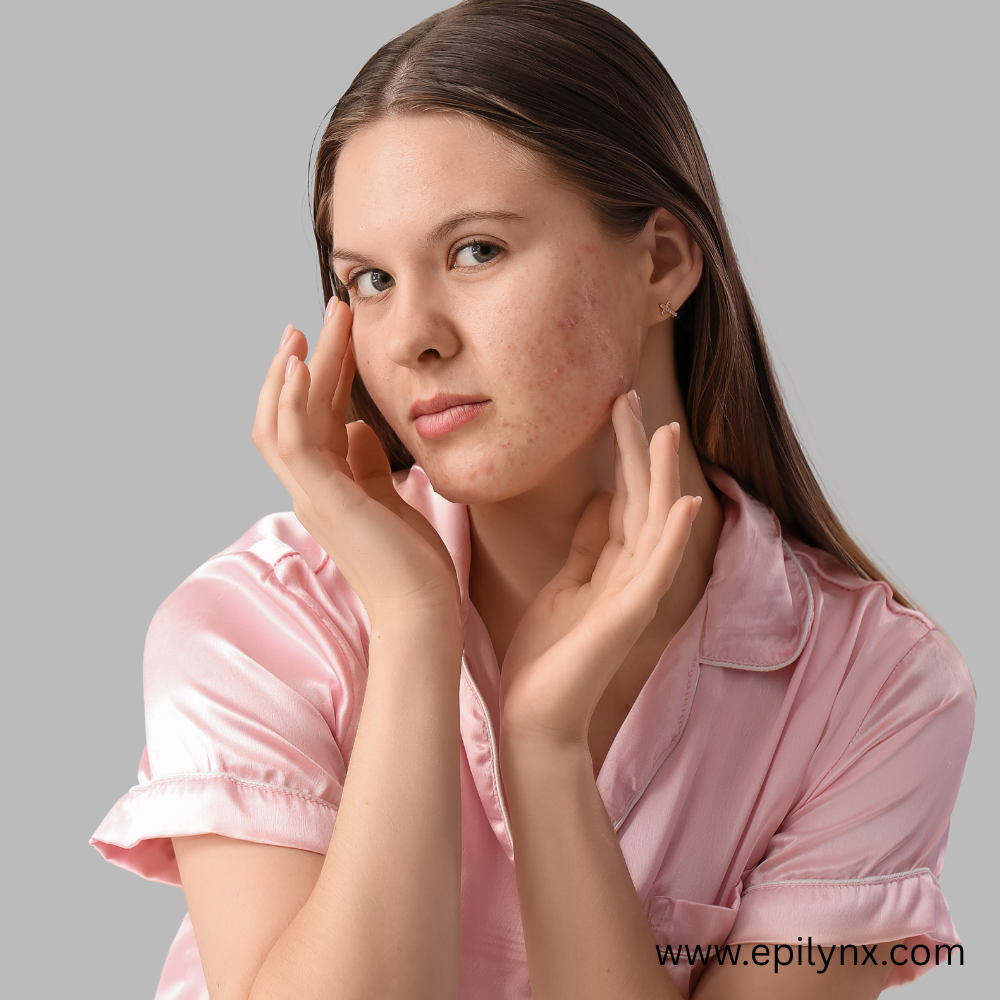

Psoriasis is the condition that keeps rewriting the rules. Just when you think you've found a routine that works, your skin decides to flare — often for no obvious reason, or for a reason you didn't see coming. The well-known triggers get plenty of attention: stress, strep infections, certain medications, alcohol. What gets far less attention is the continuous low-level trigger that lives in most people's skincare routines — the fragrance in the moisturizer, the almond oil in the face cream, the wheat derivative in the serum. For a condition driven by immune system overactivation, applying products containing known immunological triggers twice daily is working directly against the management goal.
I'm Dr. Liia, pharmacist, founder of EpiLynx, and someone with personal experience navigating psoriatic arthritis. This is the guide to psoriasis skincare I wish had existed when I started.
Understanding psoriasis: the immune and barrier picture
Psoriasis is an autoimmune condition in which the immune system — specifically T helper cells and various cytokines including IL-17, IL-23, and TNF-alpha — mistakenly attacks skin cells, dramatically accelerating the skin cell production cycle. In healthy skin, cells mature and shed over approximately 28 days. In psoriatic plaques, this cycle is compressed to 3–5 days, causing immature cells to pile up on the surface as the characteristic silvery-white scale over inflamed, thickened skin.
Beyond the overactive immune response, psoriasis also involves significant barrier dysfunction. The skin barrier in psoriatic plaques — and even in non-lesional psoriatic skin — shows measurable defects in ceramide composition, increased transepidermal water loss (TEWL), and impaired barrier function. This means psoriatic skin is simultaneously overreacting immunologically AND losing moisture faster than it should — requiring both anti-inflammatory intervention and intensive barrier support.
The psoriasis-celiac disease connection
The relationship between psoriasis and celiac disease is one of the most clinically relevant links in dermatology that most patients never hear about. Multiple large-scale studies have found that people with psoriasis have significantly elevated rates of celiac disease compared to the general population — with some research suggesting the rate may be 2–3 times higher.
The mechanism involves shared immune pathways: both conditions involve dysregulation of the same inflammatory cascade (involving IL-17, IL-23, and TNF-alpha in psoriasis; IL-15 and related pathways in celiac disease). There's evidence that a strict gluten-free diet improves psoriasis symptoms in patients who also have celiac disease or positive anti-gliadin antibodies.
The practical takeaway: if you have psoriasis, particularly if you also have gastrointestinal symptoms or a family history of celiac disease, a gluten-free evaluation with your physician is worth pursuing. And regardless of your celiac status, using gluten-containing skincare products continuously applies a potential inflammatory trigger to already-compromised skin — a variable worth eliminating.
Why conventional skincare makes psoriasis worse
The barrier dysfunction and immune hyperreactivity of psoriasis skin creates a specific set of requirements that most conventional skincare fails to meet:
Fragrance
Fragrance is the most common contact allergen globally and one of the most reliable psoriasis triggers. Even in non-lesional (unaffected) psoriatic skin, the barrier is abnormal — allergen penetration and contact sensitization happen more readily. Applying fragrance-containing products to skin that already has an overactive immune response is like adding kindling to a fire.
Harsh surfactants (SLS, SLES)
Stripping the already-compromised psoriatic skin barrier with sulfate-based cleansers increases TEWL, worsens dryness, and potentially exposes the immune-sensitized dermis to environmental triggers. Sulfate-free cleansers are not a luxury for psoriatic skin — they're essential.
High-concentration chemical exfoliants
Psoriasis plaques are already undergoing dramatically accelerated cell turnover. Applying exfoliating acids to plaque-affected skin can disrupt the barrier further and trigger the Koebner phenomenon — the tendency of psoriasis lesions to appear at sites of skin trauma or irritation. Never apply aggressive exfoliants to active psoriatic plaques.
Allergen-containing emollients
Almond oil, macadamia oil, oat extract, and wheat derivatives appear constantly in the "rich, nourishing" moisturizers that are often recommended for dry psoriatic skin. For psoriasis patients with overlapping sensitivities — common given the shared immune pathology — these ingredients can trigger localized contact reactions that worsen the inflammatory burden.
The ingredient wishlist for psoriasis skin
- Ceramides — directly replace the depleted ceramide content of psoriatic barrier; the most important moisturizing ingredient class for psoriasis management
- Glycerin and Hyaluronic Acid — address the elevated TEWL of psoriatic skin; hold moisture in the outer layers
- Niacinamide — anti-inflammatory effects are directly relevant to psoriasis management; stimulates ceramide synthesis; barrier-strengthening
- Aloe Vera — well-documented anti-inflammatory and wound-healing properties; particularly valuable for inflamed, irritated psoriatic skin
- Borage Seed Oil — high GLA (gamma-linolenic acid) content; research suggests GLA deficiency plays a role in psoriasis pathology; barrier-supportive
- Sea Buckthorn Oil — rich in omega-7 fatty acids with specific barrier repair properties; anti-inflammatory
- Allantoin — promotes healing of damaged skin; reduces irritation; safe for compromised psoriatic skin
- Hemp Seed Oil — contains both omega-6 and omega-3 fatty acids in a ratio that mirrors the skin's own lipid profile; mirrors the barrier lipids that psoriatic skin is deficient in
What to avoid on psoriatic skin
| Ingredient/Practice | Why to Avoid |
|---|---|
| Fragrance / Parfum / Essential oils | Contact allergen; triggers immune response in barrier-compromised psoriatic skin |
| SLS / SLES | Strips barrier; increases TEWL; worsens dryness and barrier dysfunction |
| Almond oil / nut oils | Potential allergen; contact reactions add to inflammatory burden |
| High-concentration AHAs on active plaques | Can trigger Koebner phenomenon; worsens barrier disruption on active lesions |
| Retinol on active plaques | Can initially worsen irritation on active lesions; introduce only on cleared skin |
| Hot water / hot showers | Worsens TEWL; increases inflammatory response in psoriatic skin; use lukewarm water |
| Alcohol in skincare (ethanol, SD alcohol) | Strips barrier; deeply drying on already-dry psoriatic skin |
| Gluten-containing ingredients (triticum vulgare, hydrolyzed wheat protein) | Particularly relevant for those with celiac-psoriasis overlap; potential inflammatory trigger |
The complete allergen-free psoriasis skincare routine
Morning routine
Cleanse
Morning cleansing for psoriasis skin should be brief and barrier-preserving. Cool to lukewarm water only — hot water worsens TEWL and triggers flushing in psoriatic vessels.
Use: Gentle Hydrating Facial Cleanser — Aloe Vera, Cucumber Seed Oil, sulfate-free. The Aloe Vera actively soothes during cleansing; the sulfate-free formula doesn't strip the already-compromised psoriatic barrier.
Serum
Use: Vitamin C Glow Serum — fragrance-free; antioxidant protection with Chamomile and Centella Asiatica for additional anti-inflammatory support. Alternatively, the EpiSilk Crystal Serum for its peptide and ceramide content.
Eye cream
Periorbital psoriasis — psoriatic involvement of the eyelids and surrounding skin — is more common than often acknowledged. The Anti-Aging Peptide Eye Cream is fragrance-free and allergen-free; the Rose Water base is specifically calming for inflamed periorbital skin.
Moisturize (the most critical step)
Moisturizer selection for psoriasis depends on current skin state:
For daily maintenance / non-lesional skin: Lightweight Calming Face Moisturizer — Borage Seed Oil, Sea Buckthorn, Aloe Vera, Ashwagandha. 48-hour hydration claim. The Borage Seed Oil GLA content specifically addresses the psoriasis-related fatty acid imbalance in the barrier.
For highly reactive / inflamed skin: Miracle Face Cream — Hemp Seed Oil with omega-6 and omega-3 fatty acids in the skin-matching ratio, Ashwagandha for calming redness, Ceramides for barrier repair. This is the product for the days when psoriatic skin is at its angriest.
For severely dry / plaque-affected skin: Super Nourishing Calming Cream — Ceramides, Allantoin, Borage Seed Oil, Sea Buckthorn. Most intensive formula in the range; appropriate for periods of active flare when the skin needs maximum barrier support.
SPF
UV phototherapy is a legitimate psoriasis treatment under medical supervision — but uncontrolled UV exposure is also a trigger for some psoriasis patients (approximately 5% have photosensitive psoriasis), and UV exposure on already-inflamed skin worsens barrier damage. Mineral SPF is the appropriate choice for psoriatic skin.
Use: Tinted CC Moisturizer SPF 55 — mineral zinc oxide + titanium dioxide; anti-inflammatory properties of zinc oxide are specifically beneficial for psoriatic skin; no chemical filters that can trigger contact reactions.
Evening routine
Cleanse
Use: Gentle Hydrating Facial Cleanser. For psoriatic skin, evening cleansing should remove sunscreen and environmental pollution without stripping. Never use mechanical cleansing tools on psoriatic skin — the friction of brushes and devices can trigger Koebner phenomenon.
Treatment serum
Use: Ageless Rejuvenate Face Serum for mature psoriatic skin, or EpiSilk Crystal Serum for comprehensive peptide and barrier support. During active flares, skip the serum and go straight to the repair moisturizer — minimizing the product burden on actively irritated skin.
Rich repair moisturizer
Use: Apply your chosen barrier moisturizer generously — more generously than in the morning. Overnight application allows maximum contact time for barrier lipid absorption. The Miracle Face Cream or Super Nourishing Calming Cream applied to psoriasis-prone areas before sleep is one of the most effective non-prescription approaches to reducing overnight TEWL and scaling.
Eye cream
Use: Ultra Renewal Depuffing Eye Cream — targeted peptides for overnight periorbital repair.
Managing psoriasis flares: the acute approach
During an active psoriasis flare on the face or neck:
- Minimize product load. Cleanser, barrier moisturizer, and SPF only. Remove all actives, serums with multiple ingredients, and any new products until the flare calms.
- Apply moisturizer more frequently. Every 2–3 hours if possible on actively scaling areas. The goal is to prevent the scale from drying and cracking.
- No hot water. Lukewarm or cool water only during flares. Hot water dramatically worsens TEWL and increases inflammation.
- No scratching or picking at plaques. This triggers Koebner phenomenon — new psoriasis lesions appear at sites of skin trauma. The itch is real, but scratching extends the flare.
- Contact your dermatologist. Moderate to severe flares, particularly of facial psoriasis, benefit from prescription intervention. Topical corticosteroids, vitamin D analogues, or calcineurin inhibitors may be appropriate. Your skincare routine is support, not a replacement for medical care.
Psoriasis and makeup: looking great during and between flares
Makeup during psoriasis flares requires specific consideration. Active plaques should ideally be allowed to heal without makeup coverage — foundation applied over scaling skin can crack, look patchy, and potentially introduce irritants to already-compromised skin. Between flares, or for mild facial psoriasis on stable skin, allergen-free, fragrance-free makeup is absolutely appropriate.
The Tinted CC Moisturizer SPF 55 is specifically good for psoriasis skin because it provides both coverage and mineral SPF in a lightweight, non-occlusive formula that won't exacerbate scaling. For additional coverage, the Flawless Matte Concealer can address specific areas without heavy all-over coverage.
Frequently asked questions
I have psoriasis on my scalp, not my face. Does this routine apply?
The facial skincare principles apply to any area of psoriatic involvement — fragrance-free, allergen-free, barrier-supportive moisturizer, and gentle cleansing. Scalp psoriasis specifically often benefits from medicated shampoos (coal tar, salicylic acid, ketoconazole) prescribed by a dermatologist, alongside fragrance-free general hair care. The systemic allergen burden from hair products reaching the scalp and face is also worth addressing.
Can psoriasis go into remission with skincare alone?
Skincare can significantly extend remission periods and reduce flare severity, but moderate-to-severe psoriasis typically requires medical management — topical prescriptions at minimum, and biologics or systemic treatments for severe cases. Skincare's role is to minimize the triggers and allergen load that can precipitate flares, and to support barrier function between medical treatments. It's complementary to, not a replacement for, dermatological care.
Should I apply moisturizer before or after my prescription topical?
Always check with your prescribing dermatologist. Generally: apply prescription topicals first to affected areas, wait 10–15 minutes for absorption, then apply moisturizer over the top. Some prescriptions specifically recommend the reverse order. The moisturizer helps maintain the barrier and reduce the irritation that some prescriptions (particularly stronger corticosteroids) can cause with prolonged use.
Is there a link between psoriasis and food allergies beyond gluten?
Research is ongoing, but there are documented associations between psoriasis and food sensitivities beyond gluten — including dairy and nightshades in some patients. The shared underlying thread is inflammatory pathway activation. Reducing total inflammatory burden through both dietary choices and allergen-free topical products is the integrative approach many psoriasis patients find most effective for flare management.
The bottom line
Psoriasis management is a long game — and the skincare routine is one of the most controllable variables in it. Removing allergens and inflammatory ingredients from your daily product use, consistently supporting the barrier with the right lipids and ceramides, and using mineral-only SPF are all within your control and can meaningfully reduce flare frequency and severity.
EpiLynx was built for exactly this community. Gluten-free, nut-free, fragrance-free, and formulated by a founder who has lived the psoriasis-autoimmune experience personally. Shop the full collection and use code EPILYNXGLOW35 for 35% off. Take the free Skin Quiz for personalized recommendations.
— Dr. Liia, PharmD, Founder of EpiLynx by Dr. Liia