Article: Powder or Liquid Foundation for Sensitive Skin?
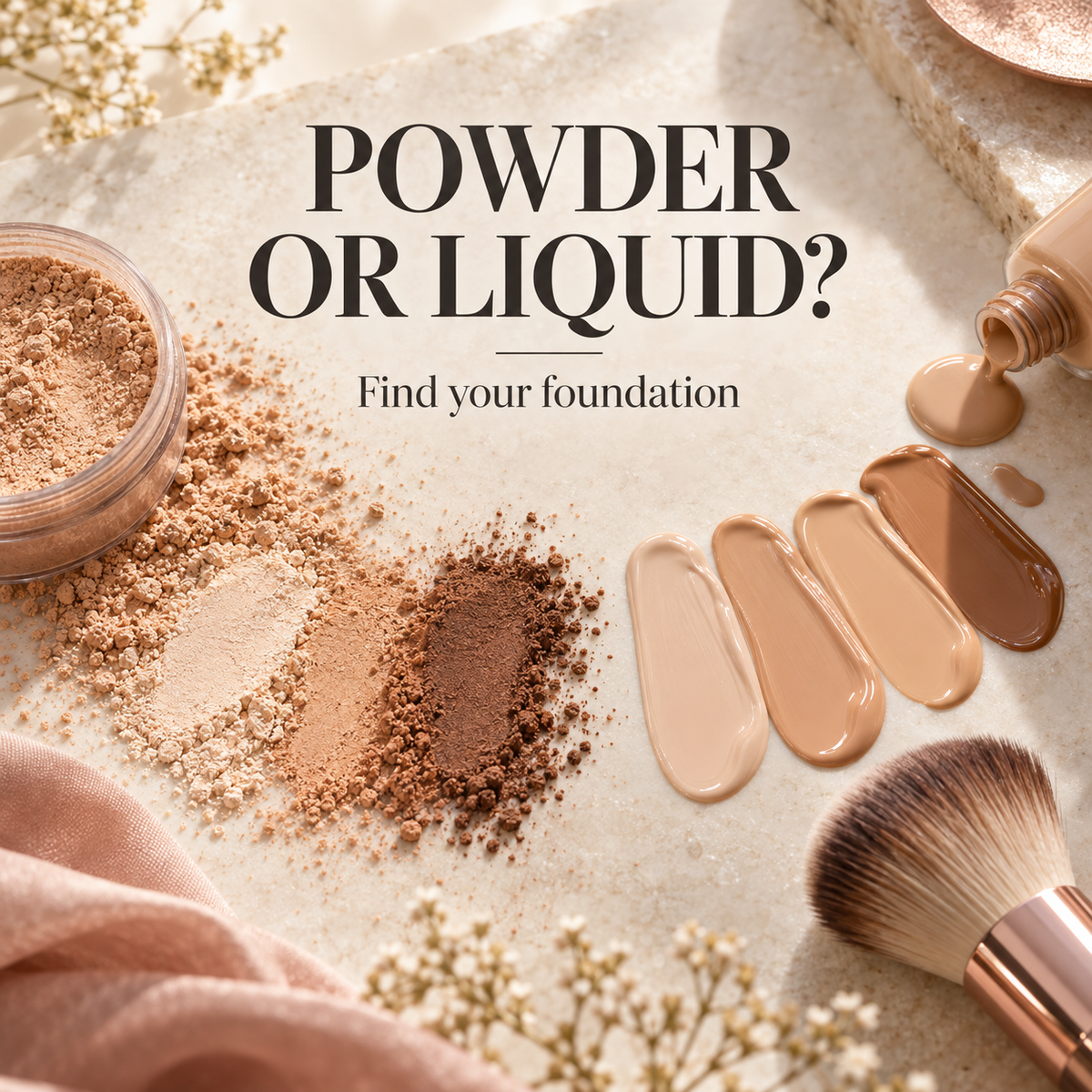
Powder or Liquid Foundation for Sensitive Skin?
Powder is usually the lower-risk format for reactive skin, because it needs fewer preservatives and no emulsifiers — but liquid is usually the better choice for dry or mature skin. The right answer depends on which problem you actually have.
Written by Dr. Liia Ramachandra, PharmD, PhD — pharmacist, formulator and founder of EpiLynx.
Why format changes the allergen picture
This is the part rarely explained. Water is what makes a formula need preservatives. Anhydrous powder contains no water, so it needs far less preservation — and preservatives are among the most common cosmetic allergens there are, particularly methylisothiazolinone and the formaldehyde releasers.
Powder also needs no emulsifier to hold oil and water together, which removes another category of common sensitisers.
So for someone whose reactions trace back to preservatives, our Powder Foundation removes a whole class of ingredients rather than swapping one for another.
Where powder loses
- It clings to dry patches and flaking, which mature and eczema-prone skin has more of.
- It emphasises texture rather than smoothing it, and settles into fine lines.
- It flattens the light, and mature skin already reflects less. This is the main reason all-over powder reads as ageing.
- Loose powder means airborne particles — relevant if you have asthma or reactive airways.
Where liquid wins
- It moves with the skin instead of sitting on top of it.
- Satin and luminous finishes restore reflection.
- It can carry SPF, hydration and coverage in one step.
- It is easier to sheer out — and less coverage almost always looks better after 40 than more.
The trade-off is a longer ingredient list with preservatives and emulsifiers in it.
How to choose
- Oily, acne-prone, and reactions trace to preservatives → powder.
- Dry, mature, crepey, or eczema-prone → liquid or a tinted moisturiser.
- Rosacea → liquid, ideally with a green-toned corrector beneath, and never a mattifying formula containing alcohol.
- You genuinely do not know → start with a tinted SPF. It is the lightest option, it does two jobs, and it has the shortest list of the three.
What matters more than format
- Fragrance-free. Non-negotiable, whichever you choose.
- Skin prep. Moisturise, then wait three to five minutes. Base applied over half-absorbed cream pills and slides, and people blame the foundation.
- Press, do not drag. A damp sponge or fingers, pressed in.
- Less coverage than you think. Sheer base everywhere, concentrated concealer only where needed. Full coverage on textured skin makes texture more visible, not less.
- Clean your tools. A sponge used for a month on reactive skin is a genuine problem.
The allergen check, whichever you pick
Cosmetics are not required to declare food allergens in plain language, so scan the INCI list for: hydrolyzed wheat protein, Triticum vulgare, tocopherol without a stated non-wheat source, Prunus amygdalus (almond), Cocos nucifera (coconut), Glycine soja (soy), carmine, lanolin, and any fragrance or essential oil name.
What I actually reach for
- Powder Foundation — fewest preservatives, best for oily and preservative-reactive skin.
- Tinted CC Moisturizer SPF 55 — the lightest option, and it carries the SPF.
- Full-Coverage Foundation with SPF 15 — when you want more coverage with a dewy finish.
- Luminous Concealer — so you can keep the base sheer.
All fragrance-free, gluten-free and free of our 14 excluded allergens, with full INCI lists published. Shipping is free over $39, and EPILYNXGLOW25 takes 25% off.
Frequently asked questions
Is powder foundation better for sensitive skin? Often, yes — it contains no water, so it needs far fewer preservatives, and no emulsifiers. Both are common allergen categories.
Is powder bad for mature skin? It clings to dry patches, settles into lines and flattens the light. A liquid or tinted moisturiser usually looks better after 40.
Which foundation is best for rosacea? A liquid with a green-toned corrector underneath. Avoid mattifying formulas containing alcohol denat.
Does foundation SPF count as sun protection? Not on its own. Nobody applies it thickly enough to reach the stated figure. Wear a proper SPF underneath.
What should I check on a foundation label? Fragrance, plus hydrolyzed wheat protein, Triticum vulgare, unspecified tocopherol, almond, coconut, soy, carmine and lanolin.
Keep reading
Educational information from a pharmacist, not medical advice.