By Dr. Liia, PharmD — Pharmacist & Founder, EpiLynx by Dr. Liia | May 6, 2026 | 6 min read
Perimenopause Acne: Why It's Completely Different From Teen Acne — And What Actually Works for Allergy-Prone Skin
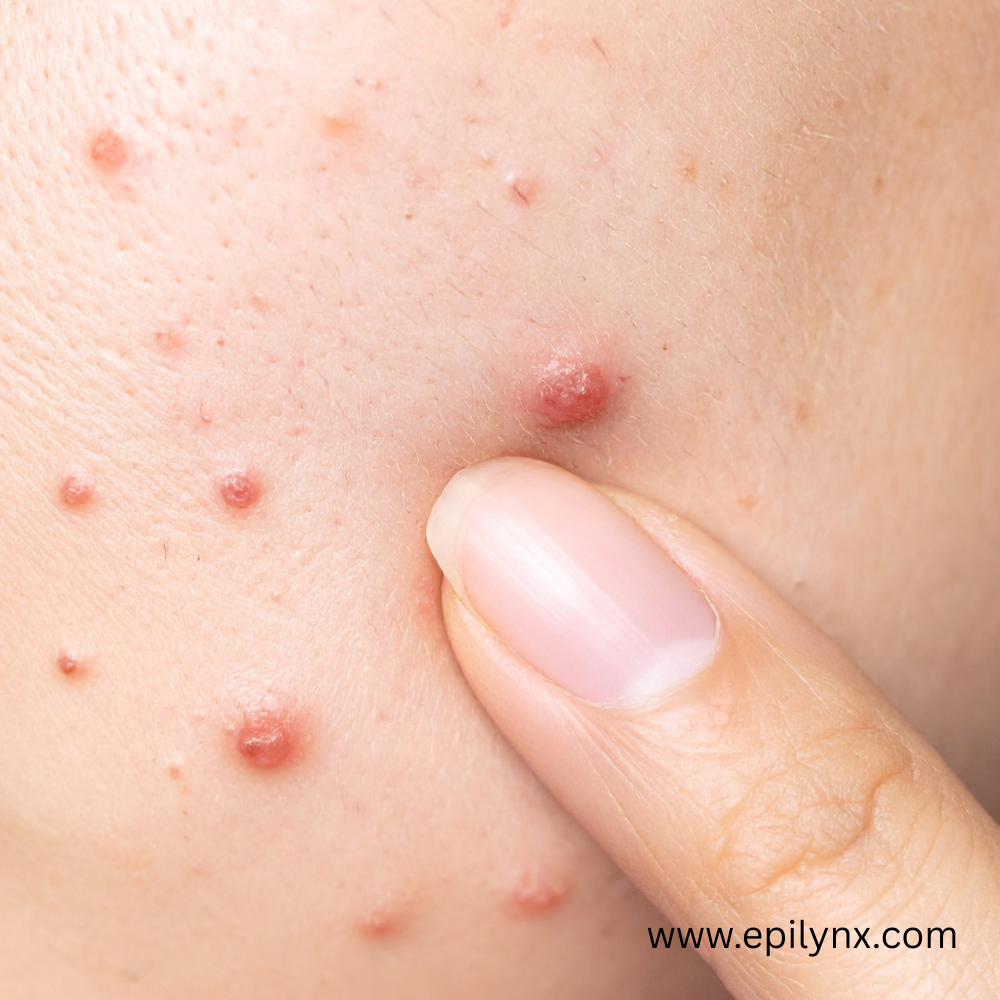
You made it through your teens and twenties with clear skin. You're 43 and suddenly breaking out on your jawline like you're 16 again. Except nothing you used at 16 is touching it — and everything you're trying is making your sensitive skin worse. Perimenopause acne is not teenage acne in an older body. It's a fundamentally different condition that requires a completely different approach.
The Hormone Science: Why Perimenopause Creates Acne Even When Androgens Are "Normal"
Here is the thing that most physicians don't explain clearly enough, and that causes enormous frustration: perimenopause acne is not caused by high androgens. Your testosterone levels may come back completely normal on a blood panel. And your jawline is still breaking out.
The mechanism is subtler and more important than absolute androgen levels: it's about the ratio of estrogen to androgens.
Estrogen normally acts as a counterbalance to androgenic activity in sebaceous glands — it suppresses androgen receptor sensitivity, reduces sebum production, and maintains the anti-inflammatory skin environment that keeps acne in check. When estrogen declines during perimenopause, androgens don't need to increase to become dominant. They simply become unopposed. Their existing levels now drive sebaceous gland activity without estrogen's moderating influence.
The result: sebaceous glands become hypersensitive to normal androgen levels and produce excess sebum. This is why hormone panels in perimenopausal women with acne often look completely unremarkable — the issue is androgen receptor sensitivity in the context of estrogen withdrawal, not androgen excess.
Add to this: perimenopausal skin barrier is already weakened by estrogen loss, the skin microbiome is dysbiotic, mast cells are destabilized and producing excess histamine, and systemic inflammation is elevated from hormonal flux. The result is acne that is more inflammatory, more persistent, and more resistant to conventional treatment than anything you dealt with in your teens.
Why Teen Acne Treatments Make Perimenopause Acne Worse
This is where most women get trapped. They recognize the breakouts as acne and reach for the acne treatments that worked (or should have worked) in their teens: benzoyl peroxide washes, salicylic acid toners, drying spot treatments. And their skin gets worse.
The reason is mechanistic. Teen acne is primarily a sebum-overproduction + C. acnes bacteria problem. Aggressive drying treatments work because they address the sebum surplus and kill the bacteria colonizing it.
Perimenopause acne is primarily an inflammation + hormonal sebum dysregulation + barrier compromise problem. Aggressive drying treatments:
- Further disrupt a skin barrier already compromised by estrogen loss
- Trigger reactive sebum production — the barrier-disrupted skin produces more oil to compensate, worsening breakouts
- Introduce allergens (fragrance in acne products, benzoyl peroxide as a sensitizer) that trigger immune reactions on a skin already primed toward hyperreactivity by perimenopausal mast cell destabilization
- Create or worsen post-inflammatory hyperpigmentation — perimenopausal skin heals more slowly, and every inflammation event leaves a darker, longer-lasting mark
The paradigm shift required: treat perimenopausal acne as an inflammatory condition requiring barrier repair, not a hygiene condition requiring aggressive cleansing.
The Celiac and Food Allergy Amplification
For women with celiac disease and food allergies, perimenopause acne arrives on an inflammatory foundation that's already elevated. Two compounding effects make this population particularly affected:
Systemic Inflammation Amplification
Celiac disease maintains chronic systemic inflammation through ongoing immune activation — even in women on strict gluten-free diets, the baseline inflammatory cytokine levels are often measurably elevated compared to non-celiac women. This pre-existing inflammatory state amplifies the hormonal inflammation driving perimenopause acne. The acne lesions are more inflamed, heal more slowly, and leave more significant post-inflammatory hyperpigmentation.
The Allergen-Acne Loop
Many conventional acne products — particularly those marketed for adult hormonal acne — contain allergens that worsen inflammation in this population: fragrance (in cleansers, spot treatments, toners), wheat-derived conditioning agents (in acne moisturizers), and preservatives like methylisothiazolinone. For women with celiac disease and food allergies whose skin is already in a reactive state, these ingredients create a loop: acne triggers product purchase, product allergens trigger immune reaction, immune reaction worsens acne, more products are purchased. Breaking this loop requires allergen-free acne treatment from the start.
The Allergen-Free Perimenopause Acne Routine
Step 1: Gentle Barrier-First Cleanser
Switch from any foaming, SLS-based acne cleanser to a gentle, pH-balanced, SLS-free, fragrance-free cleanser. Cleanse twice daily — no more, no less. Over-cleansing strips barrier lipids that are already depleted by estrogen loss, triggering the reactive sebum production that feeds acne.
Shop EpiLynx allergen-free gentle cleansers →
Step 2: Niacinamide Serum (10%) — The Perimenopause Acne MVP
Niacinamide addresses every dimension of perimenopause acne simultaneously:
- Regulates sebum production — reduces the androgen-driven oil overproduction without drying
- Anti-inflammatory — reduces the inflammatory component that makes perimenopausal acne so persistent
- Prevents post-inflammatory hyperpigmentation — critical when skin heals more slowly after 40
- Strengthens the skin barrier — reduces the reactive oil cycle triggered by barrier disruption
- Zero irritation risk — unlike benzoyl peroxide or high-strength retinoids on reactive skin
Shop EpiLynx allergen-free niacinamide serums →
Step 3: Azelaic Acid (10%) — The Anti-Inflammatory Acne Treatment
Azelaic acid is exceptional for perimenopause acne because it addresses both the acne and the redness/hyperpigmentation that accompany it — without the barrier disruption of benzoyl peroxide. Anti-bacterial against C. acnes, anti-inflammatory, and a gentle brightener for the dark marks that perimenopausal acne leaves behind. Apply in the PM after cleansing, before moisturizer.
Step 4: Lightweight Ceramide Moisturizer — Non-Negotiable Even on Acne-Prone Skin
The biggest mistake in perimenopause acne management: skipping moisturizer to "dry out" breakouts. A moisture-depleted, barrier-compromised skin produces more reactive sebum. A ceramide moisturizer applied after treatment steps seals in actives, repairs the barrier, and reduces the reactive oil cycle that perpetuates acne.
Shop allergen-free lightweight ceramide face creams →
Step 5: Mineral SPF Daily
Perimenopausal skin heals more slowly, and UV exposure dramatically worsens post-acne hyperpigmentation. Daily mineral SPF is acne treatment — it prevents the sun-darkened marks that make acne scarring look so much worse after 40.
Shop allergen-free mineral SPF →
💡 What to Add If You Want More:
Bakuchiol (evening): the retinol alternative safe for reactive, allergy-prone skin — normalizes follicular keratinization that drives comedone formation, and addresses the collagen loss happening simultaneously. No irritation, no barrier disruption. Start 2–3 nights per week and build from there.
Frequently Asked Questions
Why do women get acne during perimenopause?
As estrogen declines, androgens become proportionally dominant — sebaceous glands become hypersensitive to unbalanced androgens and produce excess sebum. Combined with weakened barrier, dysbiotic skin microbiome, and elevated histamine-driven inflammation, the result is inflammatory acne on the jawline and chin that didn't exist in your 30s.
Why doesn't standard acne treatment work for perimenopause acne?
Teen acne is a sebum-bacteria problem. Perimenopause acne is an inflammation-barrier-hormone problem. Aggressive drying treatments further disrupt the already-compromised perimenopausal barrier, triggering reactive oil production and worsening inflammation. Niacinamide, azelaic acid, and ceramides address the actual mechanism.
Is perimenopause acne worse if I have celiac disease or food allergies?
Yes — pre-existing systemic inflammation amplifies hormonal acne, and the mast cell destabilization of perimenopause hits harder when the immune system is already primed toward hyperreactivity. Allergen-free skincare is essential to break the allergen-acne inflammation loop.
What are the best ingredients for perimenopause acne on sensitive skin?
Niacinamide (10%), azelaic acid (10–15%), ceramides, and mineral SPF. All fragrance-free and allergen-free. See EpiLynx's acne collection →
Acne in Your 40s Deserves a Different Approach
EpiLynx is pharmacist-formulated, allergen-free, gluten-free — built for the skin that conventional acne products keep making worse. Find your perimenopause acne routine in 2 minutes.
Find My Routine → Shop Acne Collection →Use code EPILYNXGLOW35 for 35% off · Free shipping on orders $24+