Article: Nickel Allergy and Your Beauty Routine: The World's Most Common Contact Allergen
Nickel Allergy and Your Beauty Routine: The World's Most Common Contact Allergen
Nickel is the most common contact allergen in the world. Estimates put sensitization at roughly 10 to 20% of women, and once you are sensitized it is permanent. Most people who know they have it think of it as a jewellery problem — earrings, belt buckles, the button on a pair of jeans.
It is also, quietly, a beauty routine problem, and this is the part that goes unrecognised for years.
Where nickel hides in a beauty routine
Tools — the most overlooked source
- Eyelash curlers. Metal, pressed against the eyelid margin daily. A classic cause of stubborn eyelid dermatitis that survives every skincare change.
- Tweezers, held against the brow and lip for minutes at a time.
- Nail clippers and cuticle tools.
- Razors and epilator heads.
- Facial hair removers and beauty devices with bare metal heads pressed to the face. This is why hypoallergenic plating matters — gold-plated rather than bare nickel alloy. Ours is 18K gold-plated for exactly this reason.
- Metal makeup brush ferrules, the band where bristles meet handle.
- Metal compact and palette casings, held against the face.
- Hair pins, clips and grips — a frequent cause of scalp and hairline dermatitis.
In products themselves
Nickel is not added to cosmetics deliberately, but it occurs as a trace contaminant in mineral pigments — iron oxides, titanium dioxide, mica, and particularly dark pigments. That means eyeshadow, eyeliner, mascara and some foundations can contain small amounts. Because it is a contaminant rather than an ingredient, it will never appear on the label.
For most people with nickel allergy this trace level is too low to matter. For the highly sensitized it is not, and it is the explanation when someone reacts to every dark eyeshadow they own regardless of brand.
Elsewhere
- Phone screens and cases — held to the cheek and jaw. A well-described cause of unilateral facial dermatitis.
- Spectacle frames, at the nose bridge and behind the ears.
- Zips, bra hooks, hair ties with metal joins.
- Keys, handled then touching the face.
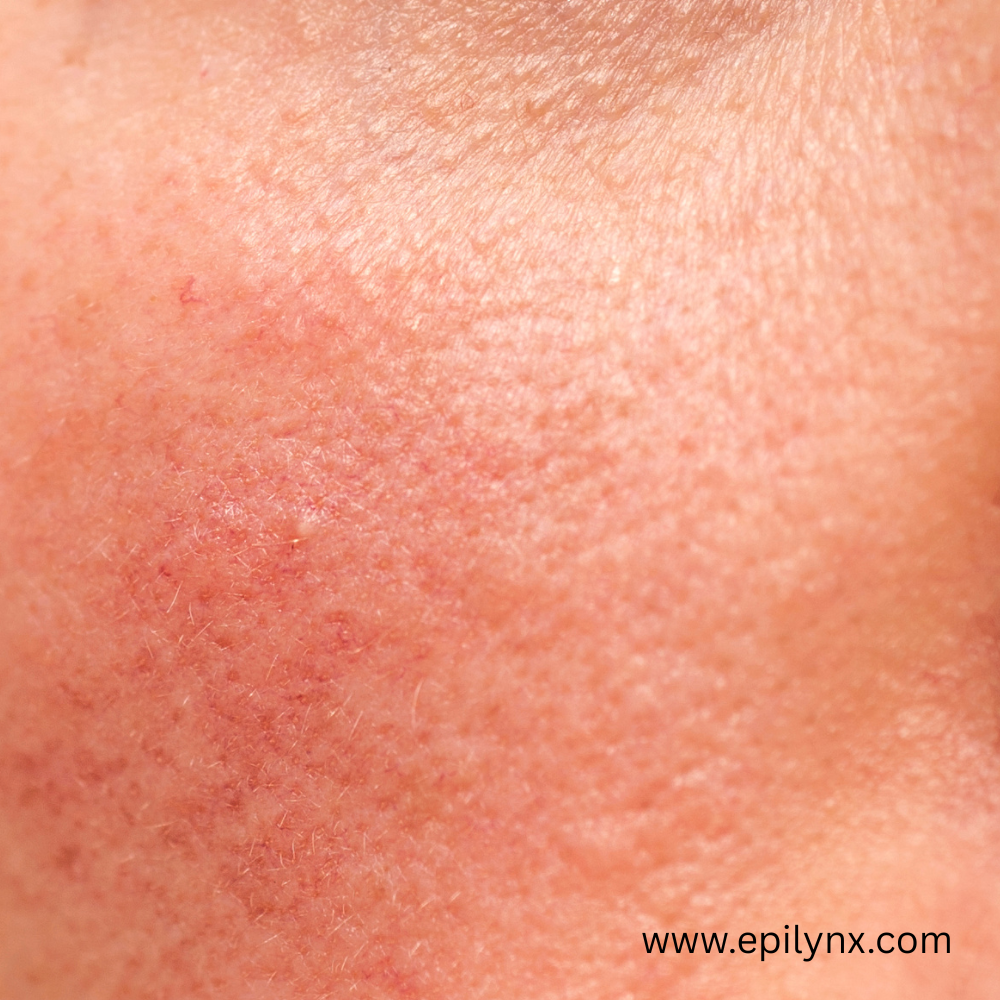
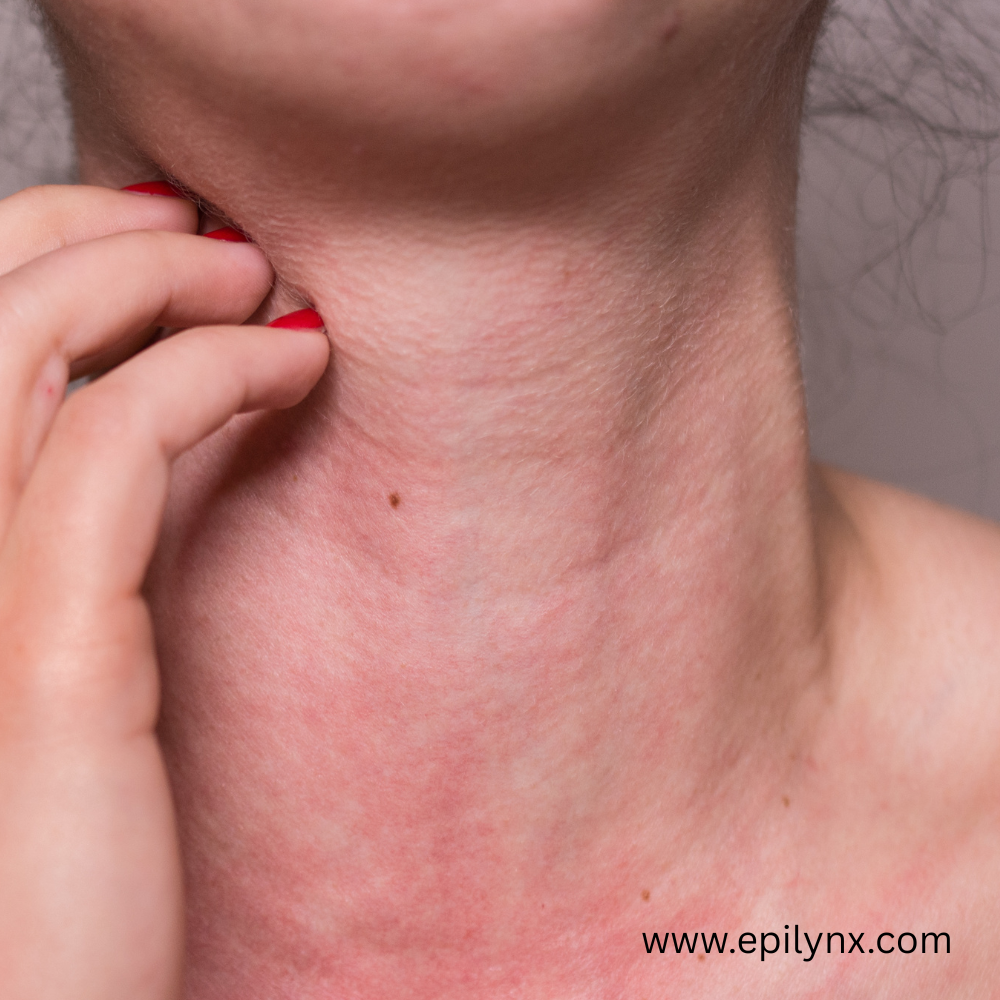
What a nickel reaction looks like
- Itchy, red, sometimes bumpy or blistering
- Appears 24 to 72 hours after contact — which is why the connection is so rarely made
- Shaped like the object: a line under the lashes, a band at the brow, a patch on one cheek
- Can become chronic, thickened and scaly with ongoing exposure
- Occasionally spreads beyond the contact site
The single most useful clue is asymmetry or shape. Dermatitis on one cheek, or in a band exactly where a tool touches, is a contact pattern rather than a skincare reaction. Skincare goes everywhere; tools do not.
What to do about it
- Get patch tested to confirm. Nickel sulfate is on every standard panel. See Patch Testing.
- Replace metal tools with plastic, silicone, titanium, surgical stainless steel, or gold-plated alternatives.
- Use a nickel spot test kit — dimethylglyoxime. It is inexpensive, available online, and turns pink on contact with nickel-releasing metal. Test every tool in your bag; it takes ten minutes and is genuinely revealing.
- Coat what you cannot replace. Clear nail polish over a metal contact point works as a temporary barrier, reapplied regularly.
- Wipe your phone and use a non-metal case.
- Ask about titanium or plastic spectacle frames.
- If you react to all dark eye makeup, try lighter mineral shades and see whether it changes. That is an informative experiment.
The dietary question
A small number of people with severe nickel allergy develop systemic nickel allergy syndrome, reacting to dietary nickel in chocolate, nuts, legumes, whole grains, canned food and some shellfish. It is uncommon, and a low-nickel diet is restrictive and nutritionally awkward — do not attempt it without a specialist. Most people with nickel contact allergy do not need to change what they eat at all.
Two things that make it worse
Sweat. Nickel release increases with moisture and salt, which is why reactions worsen in summer and during exercise — and why a metal tool used on damp skin is worse than on dry.
A damaged barrier. Sensitization and reaction both happen more readily through compromised skin. If you are also over-exfoliating, you are making a nickel problem worse without touching any metal.
What I actually reach for
- 18K Gold-Plated Painless Facial Hair Remover — plated specifically to avoid bare nickel alloy against the face.
- Soft-Glide Kajal Eyeliner — for defined eyes without a metal curler.
- Ultra Renewal Depuffing Eye Cream — for lids that are already irritated.
- Rich Calming Cream — barrier repair, which reduces reactivity overall.
- Allergy-Safe Collection and Beauty Devices
Related reading
Educational information from a pharmacist, not medical advice.