Men's Skincare for Celiac Disease and Food Allergies: The No-Nonsense Allergen-Free Guide
The Men's Skincare Boom — And the Allergy Gap
Men's skincare has crossed definitively into mainstream consumer culture in 2026. Driven by social media normalization, dermatologist visibility, and a generation of men who grew up watching YouTube skincare content, the male consumer is now purchasing moisturizers, serums, SPF, and eye creams in numbers that were unthinkable a decade ago. The global men's skincare market exceeded $18 billion in 2025 and continues to grow at double-digit rates.
The celiac and food allergy community within this growing male consumer segment is completely underserved. Men with celiac disease — who represent approximately 40% of the celiac patient population — and men with tree nut, sesame, or coconut allergies are entering a skincare market where neither the products nor the educational content were built with them in mind. The allergens hiding in "men's" aftershave balm, shaving cream, and face moisturizer are the same wheat proteins, almond oils, and coconut-derived surfactants found in every other category. The guidance available for men navigating this landscape is essentially zero.
What's Different About Men's Skincare From an Allergen Standpoint
Men's skincare has several category-specific products that require specific allergen attention:
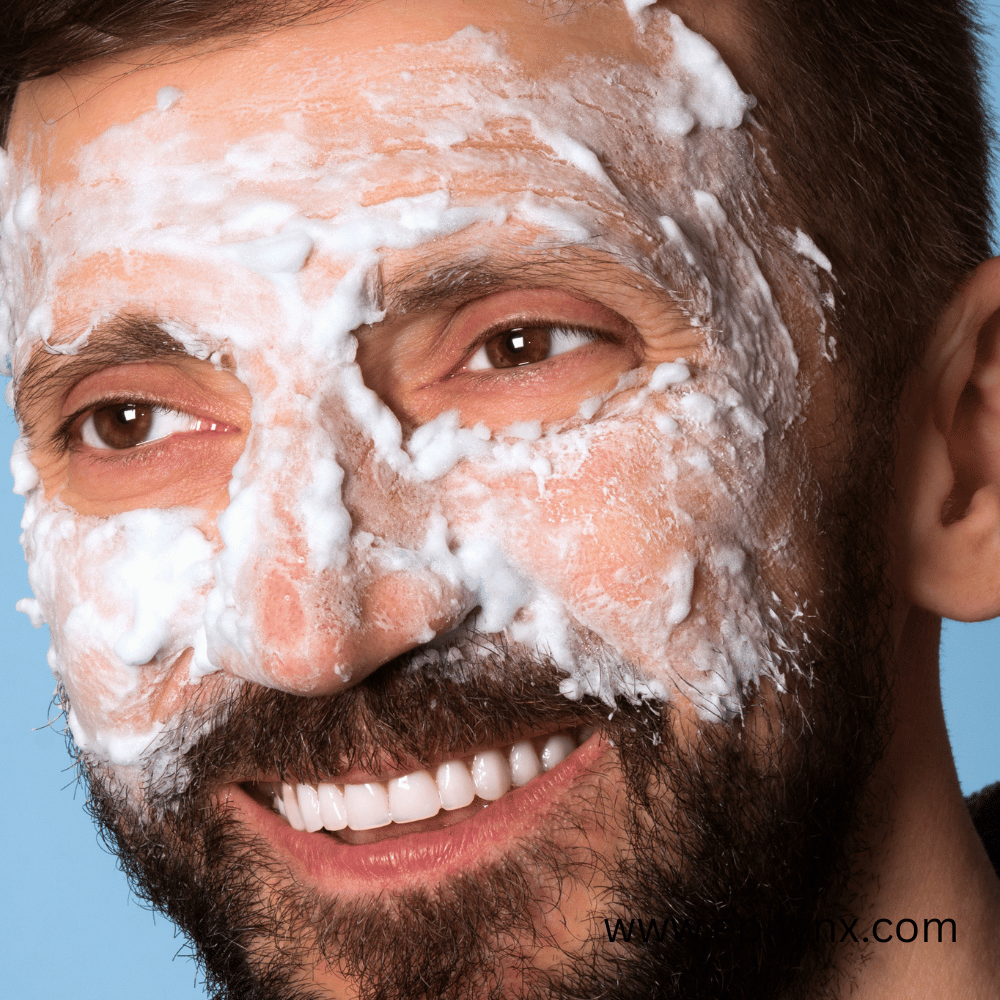
Shaving cream and shaving gel: Most commercial shaving products use either CAPB or coconut-derived surfactants as the foaming agent, and many "sensitive" shaving products use oat extract or wheat protein as a soothing additive. Additionally, the act of shaving creates micro-abrasions on the skin surface — dramatically increasing percutaneous absorption of whatever products are applied immediately after. The post-shave barrier is temporarily compromised, making any allergen in the shaving product or post-shave application more bioavailable than the same ingredient on intact skin.
Aftershave balm: "Aftershave balm" for sensitive skin frequently contains colloidal oatmeal, aloe combined with oat extract, or shea butter as the primary soothing emollient. Almond oil appears in many "non-irritating" aftershave formulas as a quick-absorbing emollient. Applied immediately post-shave to compromised, micro-abraded skin, these ingredients achieve higher systemic absorption than in any other product application context.
Men's face wash/cleanser: Men's cleansers across price points overwhelmingly use CAPB or SLS as the primary surfactant, with "sensitive" versions adding oat extract or wheat protein. The performance expectation in men's cleansers — significant foam, skin-feeling-clean result — drives formulators toward aggressive surfactant use.
Eye cream (increasingly common in men's routines): The "de-puff" and "reduce dark circles" positioning of men's eye products heavily emphasizes caffeine (genuinely effective for transient vasoconstrictive effects on periocular puffiness) — but the carrier base almost universally uses almond oil or coconut-derived emollients. For men with celiac disease and the dark-circle-from-iron-deficiency pattern, the eye cream is the highest-priority allergen-audited product.
The Clinical Presentation of Food Allergy in Men's Skin
Men with celiac disease present with the same cutaneous manifestations as women — dermatitis herpetiformis, zinc-deficiency-related skin barrier compromise, vitamin C malabsorption-driven collagen thinning — but with some differences in clinical presentation and treatment-seeking behavior:
- Perioral DH lesions on the beard area may be mistaken for folliculitis or razor burn — delayed diagnosis is common
- Periocular dark circles from iron deficiency are frequently attributed to "not sleeping enough" and not associated with celiac malabsorption
- Post-shave irritation in celiac men using wheat-protein-containing shaving products may be misattributed to razor sensitivity
- Men are less likely to seek dermatological consultation for skin concerns and more likely to self-manage — making accessible, accurate educational content particularly important
The Allergen-Free Men's Skincare Protocol
Shaving: Use a fragrance-free, CAPB-free, oat-free shaving cream (look for amino acid-based or glycerin-water-based formulas). Post-shave — the highest-allergen-risk application window — use a fragrance-free, nut-free, coconut-free aftershave balm or the same allergen-free cleanser as a post-shave rinse.
Cleanser (AM + PM): Fragrance-free, CAPB-free, no oat or wheat derivatives. The post-shave cleanser must be particularly gentle as the barrier is temporarily compromised.
Vitamin C serum: The celiac man's most critical daily active — bypasses the intestinal vitamin C malabsorption that depletes the prolyl hydroxylase cofactor for collagen synthesis. Apply after cleansing, before moisturizer.
Eye cream: For the celiac man with iron-deficiency dark circles, a peptide eye cream addressing collagen density and pigmentation is the appropriate treatment — not caffeine-in-almond-oil. The mechanism must address the root cause (collagen thinning, melanin deposition) rather than transiently constricting vessels.
Face exfoliation (2–3× weekly): Men's skin has higher sebum production and thicker stratum corneum than women's — regular exfoliation with jojoba beads (not walnut shell, not coconut shell) maintains the smooth surface that allows actives to penetrate and prevents follicular congestion in the beard area.
Mineral SPF: Non-negotiable for anti-aging and hyperpigmentation management — applied daily, including on non-shaving days.
EpiLynx by Dr. Liia's Brightening Vitamin C Glow Serum, Anti-Aging Peptide Eye Cream, and Gentle Exfoliating Face Scrub are formulated without wheat, nuts, coconut, or fragrance — for the male celiac patient who has been told by the skincare industry that he doesn't exist as a customer.
Use code EpiLynxglow25 for 25% off sitewide. Free shipping on orders $54+.