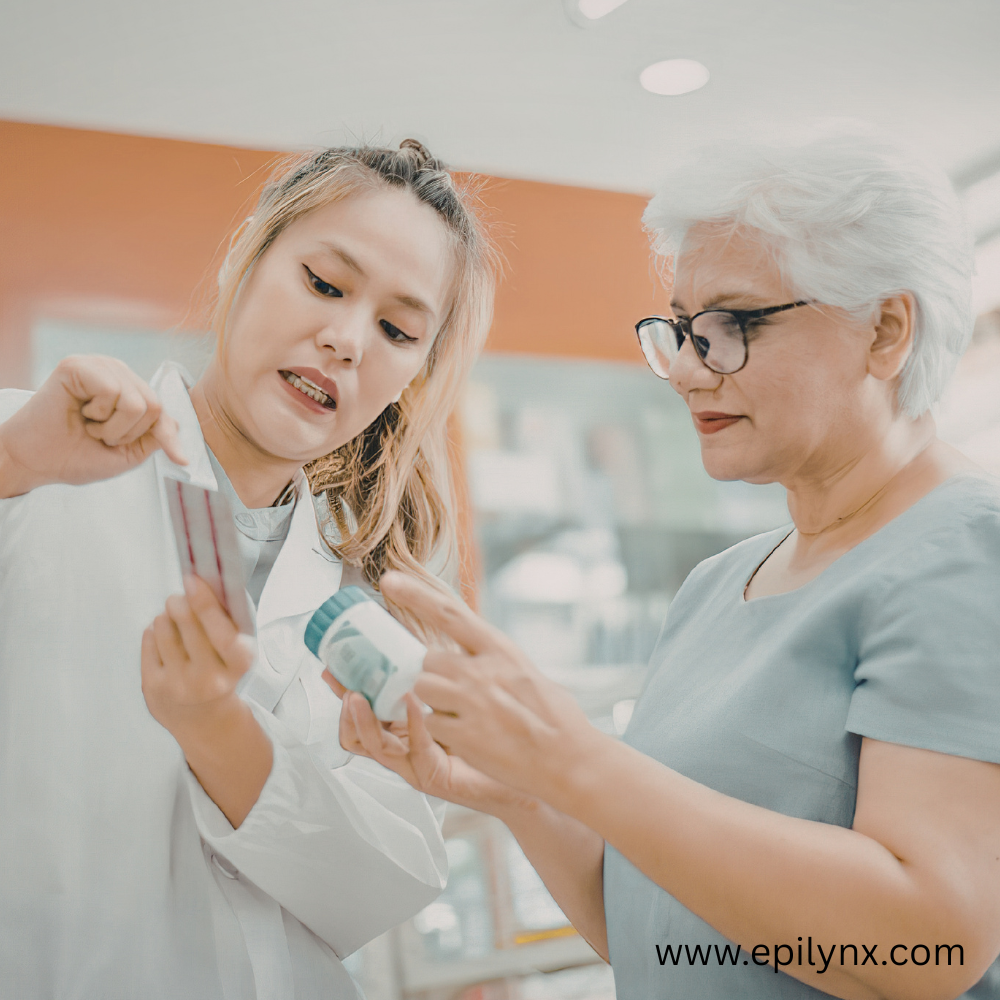
You pick up a moisturizer. You flip it over. You see something that looks like this: "Water (Aqua), Glycerin, Caprylic/Capric Triglyceride, Cetearyl Alcohol, Glyceryl Stearate, Prunus Amygdalus Dulcis Oil, Niacinamide, Phenoxyethanol, Parfum, Tocopherol, Sodium Hyaluronate, Xanthan Gum, Citric Acid." You put it down because you genuinely cannot tell if it's safe for you. This is a problem tens of millions of people with allergies, celiac disease, and skin sensitivities face every time they try to buy a new skincare product. The solution isn't a simpler industry — it's learning the code. Once you know the rules, you can audit any product in under two minutes.
Rule #1: Ingredients are listed in descending order of concentration
This is the most important rule in cosmetic labeling, and it's universal. By law in the US, EU, and most regulated markets, cosmetic ingredients must be listed from highest to lowest concentration — down to 1%. Ingredients present at less than 1% can be listed in any order after the 1% threshold.
What this means practically:
- The first 3–5 ingredients make up the bulk of the product — often 70–90% of the formula
- If water (Aqua) is first, it's a water-based formula — most moisturizers and serums
- If an oil or butter is first, it's an oil-based or anhydrous formula
- An active ingredient listed 15th in a 20-ingredient list is present at trace concentration — probably less than 0.5%
- The "hero ingredient" on the front of the package can legally be present at a concentration so low it has no meaningful effect
Allergen implication: An allergen in the top 5 ingredients is a much more significant concern than one appearing near the end of the list. However, for contact allergies, even trace amounts can trigger reactions in sensitized individuals — so the position doesn't eliminate the risk, it just indicates the scale of exposure.
Rule #2: INCI names are not the same as common names
INCI stands for International Nomenclature of Cosmetic Ingredients. It's the standardized system used globally to name cosmetic ingredients — and it's the source of most consumer confusion, because INCI names often bear no resemblance to the ingredient's common name.
This is critical for allergy identification because allergens routinely hide behind INCI names that give no hint of their true identity:
| INCI Name | Common Name | Allergy Concern |
|---|---|---|
| Prunus Amygdalus Dulcis Oil | Sweet almond oil | Top-9 tree nut allergen |
| Triticum Vulgare Germ Oil | Wheat germ oil | Contains gluten — celiac trigger |
| Hydrolyzed Wheat Protein | Wheat-derived conditioning agent | Contains gluten — celiac trigger |
| Avena Sativa Kernel Extract | Oat extract | Gluten-related; not celiac-safe for many |
| Macadamia Integrifolia Seed Oil | Macadamia nut oil | Tree nut allergen |
| Corylus Avellana Seed Oil | Hazelnut oil | Tree nut allergen |
| Juglans Regia Shell Powder | Walnut shell | Tree nut allergen |
| Cera Alba | Beeswax | Not vegan; some contact sensitivity |
| Lanolin | Sheep wool wax | Common contact allergen |
| Tocopherol | Vitamin E — often wheat-derived | Can be gluten-containing depending on source |
| Parfum / Fragrance | Synthetic or natural fragrance blend | Black box; can contain hundreds of allergens |
| Methylisothiazolinone (MI) | Preservative | Major contact allergen; EU restricted |
| Carmine (CI 75470) | Crushed beetle pigment | Not vegan; some contact sensitivity |
| CI 77891 | Titanium dioxide (white pigment) | Generally safe; a mineral pigment not an allergen |
Rule #3: The 1% cliff means the end of the list can be unpredictable
As noted above, ingredients present at less than 1% can be listed in any order. This has two important implications:
- Active ingredients can be anywhere after the 1% cliff — you cannot tell from position alone whether an "active" in the final third of the list is at 0.5% or 0.001%
- Allergens can appear at the end in any order — fragrance is almost always in trace amounts (less than 1%) and appears near the end, but it's one of the most potent contact allergens regardless of its low concentration
This is why reading the entire ingredient list — not just the top five — matters for allergy identification. Fragrance appearing as ingredient #18 in a 20-ingredient list can still cause a severe reaction in a sensitized individual.
Rule #4: "Fragrance" and "Parfum" are black boxes
The words "Fragrance" or "Parfum" on an ingredient list are legally classified as a single ingredient — but they can represent a mixture of hundreds of individual chemical compounds, most of which are not disclosed. This legal loophole (maintained to protect proprietary formulas) means:
- A product can list one ingredient ("Fragrance") that actually contains cinnamal, limonene, linalool, eugenol, and dozens of other documented sensitizers — none of which appear on the label
- There's no way to know from the label what specific fragrance compounds are present
- A product labeled "only 1% fragrance" could still expose you to sensitizing concentrations of specific compounds
The EU has responded to this by requiring disclosure of 26 specific fragrance allergens when present above threshold concentrations — so EU-compliant products may list individual fragrance components like "Linalool," "Limonene," or "Citronellol" alongside the word "Parfum." In the US, this disclosure is not required.
The only safe approach for fragrance-sensitive or allergy-prone skin: choose fragrance-free products. Not unscented (which can use masking fragrance to achieve a neutral smell), but fragrance-free — meaning no fragrance compounds were added at all. Every EpiLynx product is fragrance-free in this stricter sense.
Rule #5: Mineral pigments use CI numbers
Color additives are listed by their Color Index (CI) number rather than a descriptive name. This can look alarming if you don't know the system:
| CI Number | What It Is | Notes |
|---|---|---|
| CI 77891 | Titanium dioxide (white) | Mineral pigment; also an SPF ingredient; generally safe |
| CI 77491, CI 77492, CI 77499 | Iron oxides (red, yellow, black) | Mineral pigments; well-tolerated; no significant allergen concerns |
| CI 77742 | Manganese violet | Mineral pigment; generally well-tolerated |
| CI 75470 | Carmine (red from beetles) | Not vegan; some contact sensitivity; allergen for some individuals |
| CI 42090 | FD&C Blue #1 (synthetic dye) | Synthetic; some sensitivity in certain individuals |
Your 2-minute label audit for allergen-prone skin
Here's the systematic approach to auditing any product in under two minutes:
Step 1: Scan for "Parfum" or "Fragrance" (10 seconds)
If it's present anywhere in the list, it's a potential trigger for fragrance-sensitive skin. For anyone with contact dermatitis, rosacea, eczema, or general skin reactivity — put it down.
Step 2: Scan for gluten-containing INCI names (20 seconds)
Search for: Triticum (wheat), Hordeum (barley), Avena (oats), Secale (rye), "Hydrolyzed Wheat," "Wheat Germ," or "Spelt." Any of these = not celiac-safe.
Step 3: Scan for nut-derived INCI names (20 seconds)
Search for: Prunus (almonds, plums), Macadamia, Corylus (hazelnut), Juglans (walnut), Anacardium (cashew), Bertholletia (Brazil nut). Any of these = nut oil present.
Step 4: Check for common sensitizer preservatives (10 seconds)
Search for: Methylisothiazolinone, Methylchloroisothiazolinone, Kathon CG, Quaternium-15, DMDM Hydantoin, Imidazolidinyl Urea. These are the most documented contact allergen preservatives.
Step 5: Check concentration clues (10 seconds)
For any concerning ingredient you found, check its position in the list. In the top 5? High concentration, significant exposure. Near the end? Lower concentration, but still relevant for contact allergens.
Total: about 70 seconds. Faster once you've memorized the key INCI names.
The EpiLynx label standard
Every EpiLynx product page publishes the complete INCI ingredient list exactly as it would appear on the label. There are no proprietary blends, no "fragrance" catch-alls, and no hidden ingredients. The entire formula is visible and auditable.
When you apply the 2-minute audit above to any EpiLynx product, you will find: no Parfum or Fragrance, no Triticum or gluten derivatives, no Prunus or nut oil derivatives, no Methylisothiazolinone or formaldehyde-releasing preservatives. Not because we're lucky — because those were deliberate formulation decisions made by a pharmacist who understood what they meant for the community this brand was built to serve.
Some examples of clean EpiLynx ingredient lists to study:
- Vitamin C Glow Serum — every ingredient serves a documented function; no allergens; full transparency
- EpiSilk Crystal Face Serum — peptide-rich; ceramides; Hyaluronic Acid; zero fillers or allergens
- Miracle Face Cream — Hemp Seed Oil, Ashwagandha, Ceramides; nothing hidden
- Tinted CC Moisturizer SPF 55 — full mineral SPF disclosure; mineral pigments listed by CI number; complete transparency
Useful tools for label checking
Beyond reading labels manually, several tools can help:
- EWG Skin Deep Database (ewg.org/skindeep) — searches ingredients by INCI name and provides hazard ratings; useful for researching unfamiliar ingredients
- CosDNA (cosdna.com) — paste an ingredient list and get individual ingredient analysis; particularly useful for identifying acne-triggering or sensitizing ingredients
- INCI Decoder (incidecoder.com) — translates INCI names into plain English with function and safety information
- SkinSAFE (skinsafeproducts.com) — developed with the Mayo Clinic; searches products by allergen exclusions including gluten-free, nut-free, fragrance-free
These tools are useful, but none of them replace actually reading the label. The skill pays dividends every time you're in a store without wifi, or evaluating a sample, or quickly checking a product someone recommends to you.
Frequently asked questions
Why do ingredient lists look different on different products for the same ingredient?
INCI names are standardized, but some brands use common names alongside or instead of INCI names on their labeling. The ingredient is the same — the name convention differs. If you see "Aloe Vera Leaf Juice" on one product and "Aloe Barbadensis Leaf Juice" on another, they're the same ingredient. When in doubt, search the INCI database for cross-references.
What does "aqua" mean vs. "water"?
Aqua is the INCI name for water. They're identical ingredients. Some brands use "Aqua" (standard INCI), some use "Water (Aqua)" to make it more consumer-friendly, some use just "Water." The regulatory requirement is Aqua, but additional common name disclosure is permitted.
Can I trust "allergen-free" claims on product packaging?
Treat them as a starting point, not a final answer. "Allergen-free" is not regulated in the same way as food allergen labeling in the US. A brand can claim "allergen-free" while still containing ingredients that cause reactions in specific individuals. Use the claim as a filter to identify candidates, then verify with the ingredient list using the techniques in this guide. For EpiLynx specifically: the allergen-free claim is backed by a published full ingredient list on every product page — which you can verify yourself using the INCI audit above.
The bottom line
Reading skincare ingredient labels is a learnable skill that takes about 5 minutes to understand and 2 minutes to apply. For people with celiac disease, food allergies, eczema, or skin sensitivities, it's one of the highest-return skills you can develop — giving you the ability to evaluate any product, anywhere, without relying on marketing claims that may not mean what you think they mean.
EpiLynx publishes every ingredient on every product page. Study our labels. Use them as your reference for what clean, allergen-free formulation looks like in practice. Then apply those same standards to everything else in your routine.
Shop EpiLynx — full ingredient transparency, every product. Use code EPILYNXGLOW35 for 35% off.
— Dr. Liia, PharmD, Founder of EpiLynx by Dr. Liia
,%20Glycerin,%20Caprylic/Capric%20Triglyceride,%20Cetearyl%20Alcohol,%20Glyceryl%20Stearate,%20Prunus%20Amygdalus...)