Coconut-Free Face Exfoliation: Why Jojoba Beads Beat Coconut Shell Powder
The Anatomy of a Standard Face Scrub
To understand why coconut allergy is such a significant barrier to facial exfoliation, it helps to deconstruct the architecture of a typical scrub formulation. Most commercial face scrubs consist of four functional components:
- Abrasive particle — the physical exfoliant that disrupts and removes desquamating corneocytes. Common choices: walnut shell powder, sugar crystals, coconut shell powder (frequently marketed as "natural"), jojoba wax beads, or microcrystalline cellulose.
- Emollient base — the carrier that delivers the abrasive to the skin surface and leaves skin hydrated post-rinse. Common choices: coconut oil, fractionated coconut oil (caprylic/capric triglyceride), shea butter, or mineral oil.
- Surfactant — enables water rinsability. Cocamidopropyl betaine (CAPB) is the most common choice in "natural" scrubs.
- Humectants and actives — hyaluronic acid, glycerin, niacinamide, aloe vera.
For a coconut-allergic patient, three of these four components — the abrasive, the emollient, and the surfactant — may be immunologically problematic. The result is that most face scrubs on the market are incompatible with coconut allergy.
The Stratum Corneum and Why Exfoliation Matters
The stratum corneum consists of approximately 15–20 layers of corneocytes embedded in a lipid matrix of ceramides, cholesterol, and free fatty acids. These cells undergo continuous desquamation as new keratinocytes differentiate and migrate upward — a cycle completing in approximately 28 days in healthy young adults and extending to 40–60 days in mature or inflamed skin.
This desquamation process is regulated by serine proteases — kallikrein-5 (KLK5) and kallikrein-7 (KLK7) — which cleave corneodesmosomes in the upper stratum corneum as environmental pH rises. Conditions that impair this system — low ceramide levels, chronic inflammation, UV damage — result in surface accumulation of incompletely desquamated corneocytes, creating dullness, uneven texture, and impaired penetration of topical actives.
Physical exfoliation supplements enzymatic desquamation, removing accumulated surface corneocytes mechanically and improving the penetration of subsequent actives (hyaluronic acid, vitamin C, peptides) by 20–40% in controlled studies.
Why Coconut Shell Powder Is Problematic for Allergic Skin
Coconut shell powder — marketed as "eco-friendly" and "natural" — has two distinct concerns for coconut-allergic patients:
- Protein residue: Mechanical processing of coconut shells does not fully eliminate protein from the organic matrix. The 2S albumin fraction — highly heat-stable and resistant to processing — is the specific concern for sensitized individuals.
- Irregular particle morphology: Unlike spherical jojoba beads, coconut shell powder particles have irregular, jagged edges visible under scanning electron microscopy. These sharp particles create microscopic surface lacerations during use — increasing transdermal penetration of any residual allergens and co-ingredients through barrier-disrupted pathways.
Why Jojoba Beads Are the Allergen-Safe Gold Standard
Jojoba wax beads are derived from the liquid wax esters of Simmondsia chinensis — a desert shrub native to the Sonoran Desert. Jojoba is neither a nut, grain, nor legume in its allergenic protein profile, and is not derived from any of the EU 14 food allergens.
Jojoba wax beads offer specific formulation advantages over coconut shell alternatives:
- Spherical morphology: Perfectly round particles create uniform mechanical pressure on the stratum corneum without the micro-laceration risk of irregular-edge particles.
- Biodegradable: Jojoba esters are biodegradable, unlike polyethylene beads, addressing environmental concerns simultaneously.
- Consistent particle size: Industrial processing produces consistent size distributions (typically 150–350 μm), allowing calibrated abrasion intensity.
- Chemical compatibility: Jojoba wax is miscible with a wide range of cosmetic emollient systems and does not interfere with hyaluronic acid, aloe vera, or vitamin C stability in the same formulation.
Hyaluronic Acid + Exfoliation: The Clinical Rationale
Combining physical exfoliation with hyaluronic acid in a single product provides a specific clinical benefit: exfoliation removes the desquamating barrier to penetration, while simultaneously applied hyaluronic acid penetrates more deeply than it could through intact accumulated corneocytes. Low-molecular-weight hyaluronic acid (50–100 kDa) achieves suprabasal penetration after effective stratum corneum preparation, contributing to the hydration gradient that keeps the stratum corneum supple and crack-resistant.
Exfoliation Frequency for Sensitive and Allergy-Prone Skin
- Intact, non-reactive skin: 2–3× per week
- Active rosacea, eczema flare, or post-allergen reaction: avoid entirely until resolution
- Mature skin (over 50): 1–2× per week, gentle pressure
- Concurrent retinol or acid use: reduce to 1× per week to prevent over-exfoliation and barrier compromise
- Active DH vesicles (celiac patients): do not exfoliate lesional skin
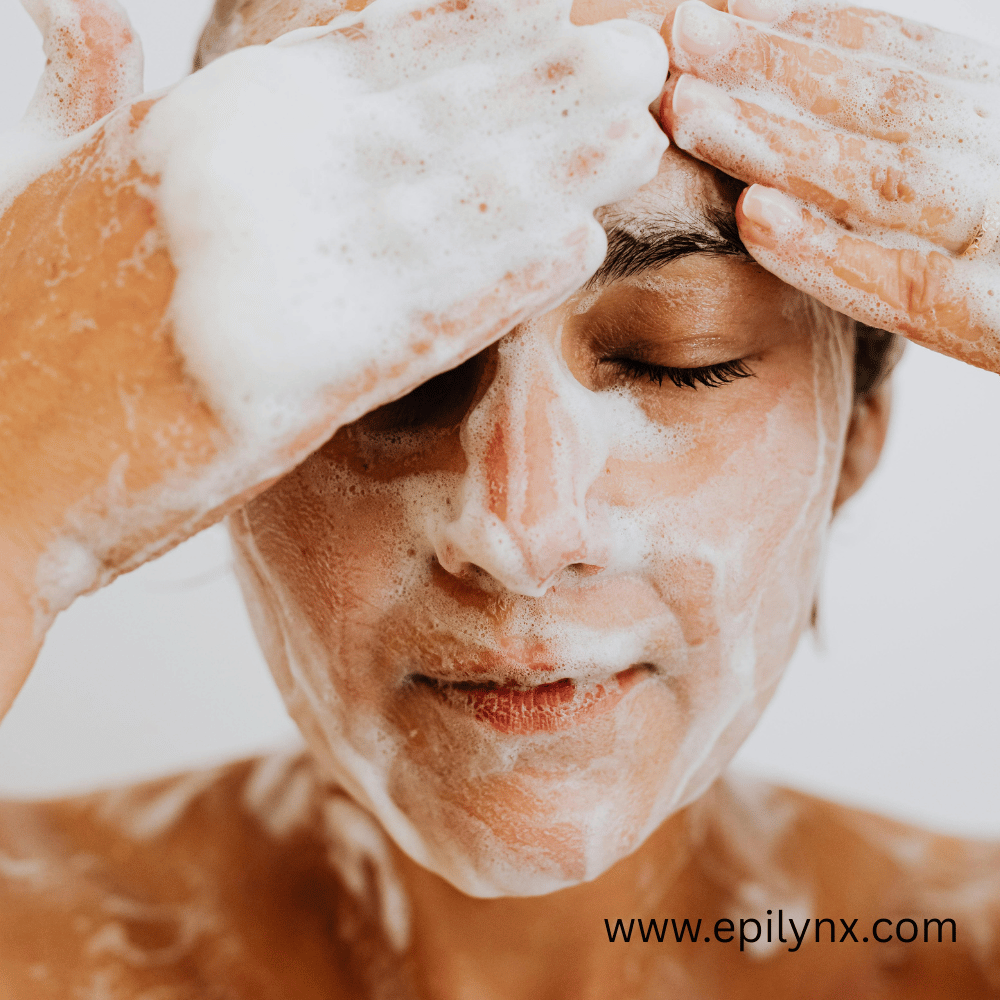
EpiLynx by Dr. Liia's Gentle Exfoliating Face Scrub uses biodegradable jojoba beads as the sole abrasive, in a hyaluronic acid and aloe vera base — with no coconut shell, no CAPB, no wheat derivatives, and no fragrance. This is the face scrub formulated for patients who have spent years unable to find a scrub their skin and their immune system could both tolerate at the same time.
Use code EpiLynxglow25 for 25% off sitewide. Free shipping on orders $54+.