By Dr. Liia, PharmD — Pharmacist & Founder, EpiLynx by Dr. Liia | May 6, 2026 | 6 min read
Clean Beauty Greenwashing: Is Your "Natural" Skincare Actually Safe for Celiac & Food Allergy Skin?
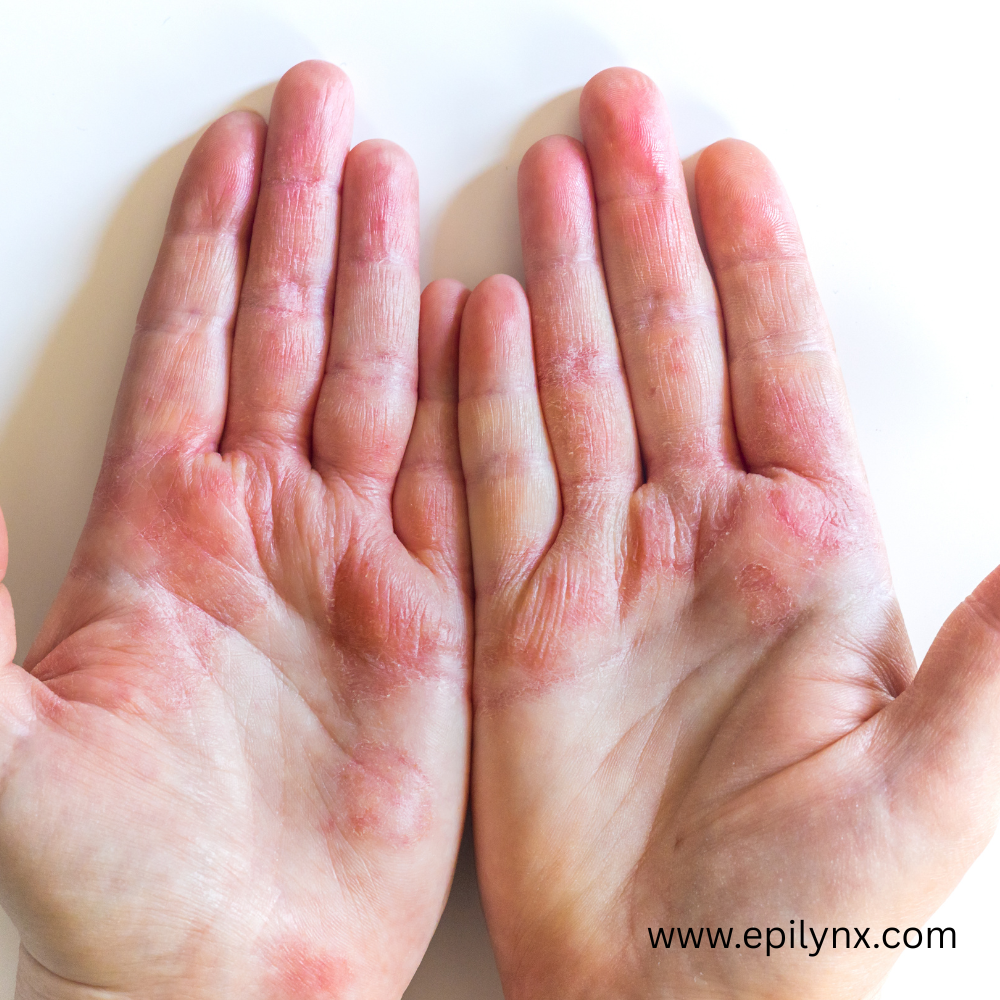
You switched to "clean," "natural," "non-toxic" skincare to protect your allergy-prone or celiac skin. And then you broke out in hives. Or your eczema flared worse than it did on conventional products. You are not imagining it — and you are not alone. Here's the pharmacist truth about clean beauty marketing, what it means (almost nothing, legally), and what actually matters for your immune system.
The Legal Reality: "Natural," "Clean," and "Non-Toxic" Mean Nothing in the US
This is the foundation of everything that follows: in the United States, the FDA has no legal definition for "natural," "clean," "non-toxic," "green," or "pure" in cosmetics.
Any brand can put any of these words on any product, regardless of what's actually inside. A product containing synthetic fragrance, wheat-derived proteins, alcohol, and parabens can legally be sold as "natural" and "clean." A product with 40 botanical ingredients — including high-allergen essential oils — can be marketed as "non-toxic."
The Federal Food, Drug, and Cosmetic Act regulates cosmetics primarily for safety and labeling of what IS in products. It does not regulate what marketing language brands use to imply what is NOT in their products. The clean beauty category is essentially self-regulated — meaning it is regulated by marketing departments.
For people with celiac disease, food allergies, eczema, and reactive skin who rely on label claims to make safe purchasing decisions, this regulatory gap is not an abstraction. It is a source of real harm.
The 5 Most Common Clean Beauty Greenwashing Patterns — And Why They're Dangerous for Allergy Skin
1. "Fragrance-Free of Synthetic Fragrance" — While Using Essential Oil Fragrance
This is perhaps the most widespread clean beauty sleight-of-hand. Brands market products as "fragrance-free" or "synthetic fragrance-free" — while heavily fragrancing them with lavender oil, rose oil, citrus extract, peppermint oil, and other essential oils.
Why this is dangerous: Essential oils contain the same contact allergen compounds (linalool, limonene, geraniol, eugenol) as synthetic fragrance — in highly concentrated form. For someone with a fragrance contact allergy or reactive immune system, lavender oil is not safer than synthetic "parfum." It's often more allergenic because of higher allergen compound concentrations in undiluted essential oil.
True fragrance-free means no fragrance of any kind — synthetic OR botanical. A product that smells like lavender is not fragrance-free.
2. "Wheat-Free" Claims While Using Wheat Derivatives Under INCI Names
Some brands market to celiac and gluten-sensitive audiences without actually removing gluten-derived ingredients — they simply don't list them prominently. Tocopherol (from wheat germ), hydrolyzed wheat protein (listed by its INCI name rather than "wheat protein"), and barley extract can all appear in products marketed as "clean" and "natural" without any red-flag disclosure.
Unless a brand explicitly states "gluten-free" with third-party verification — or is formulated by someone who understands the full INCI landscape — "natural" tells you nothing about gluten content.
3. Natural Oils That Are Food Allergens — Widely Used in "Clean" Skincare
The clean beauty movement has heavily promoted plant oils as superior alternatives to synthetic emollients. Many of these oils are common food allergens:
- Almond oil (Prunus amygdalus) — tree nut allergen; found in virtually every "natural" body oil and facial oil
- Coconut oil (Cocos nucifera) — widely used in "clean" products; tree nut classification varies by allergist
- Shea butter (Butyrospermum parkii) — found in the majority of "natural" body creams; tree nut cross-reactivity varies
- Wheat germ oil (Triticum vulgare) — extremely common in "nourishing" natural formulas; gluten for celiac
- Macadamia oil, walnut oil, hazelnut oil — all tree nut-derived; found in premium "clean" facial oils
For someone with a tree nut allergy, a "clean beauty" brand's product list can read like a list of their allergens.
4. "Free From" Lists That Miss the Actual Problem
Many clean beauty brands publish "free from" lists — 1,300 ingredients they don't use, parabens they've eliminated, sulfates they've removed. These lists are marketing tools. They typically exclude ingredients that are currently controversial in the wellness media cycle — not necessarily the ingredients that are most dangerous for reactive skin.
A brand can be "free from parabens" and "free from sulfates" while containing fragrance (the #1 contact allergen), wheat germ oil (gluten), almond oil (tree nut allergen), methylisothiazolinone (the most reactive common preservative), and high-allergen essential oils. The "free from" list gives a false sense of comprehensive safety.
5. "Dermatologist-Tested" and "Clinically Proven" Claims Without Specification
"Dermatologist-tested" means at least one dermatologist reviewed the product. It doesn't mean they tested it for allergen safety, celiac appropriateness, or efficacy in any specific condition. "Clinically proven" without a citation means essentially nothing — what was tested, in whom, over what time period, by whom?
For allergy-prone and celiac skin, the meaningful credential is specific: formulated by a pharmacist or physician with explicit expertise in food allergy and celiac disease, with full ingredient transparency and a named allergen exclusion policy. That's what EpiLynx provides.
What Actually Matters: The Pharmacist Standard for Allergen-Safe Skincare
Here's how to evaluate a brand beyond marketing language:
Ask the Right Questions
- Is it explicitly gluten-free? Not "natural" — specifically gluten-free, with INCI names audited by someone who knows what Triticum vulgare and Hordeum vulgare mean.
- Is it explicitly free from the top 8 FDA food allergens? Or at minimum, from your specific allergens in INCI form.
- Is it truly fragrance-free? No fragrance, parfum, OR essential oil fragrance blends. If it has any scent, it is not fragrance-free for allergy purposes.
- Who formulated it? A pharmacist, physician, or formulation scientist with specific celiac and allergy expertise — not a founder who went "clean" after reading a blog.
- Are full INCI ingredient lists published? Every product, complete list, accessible before purchase.
- Can the brand explain their preservative system? What preservatives are used and why — not just what's excluded.
Certifications Worth Knowing
- GFCO (Gluten-Free Certification Organization) — independent testing verifies <10 ppm gluten; the most reliable gluten-free cosmetic certification
- NSF Gluten-Free — another rigorous gluten-free certification standard
- Made Safe — tests for a broad range of known harmful ingredients; meaningful but does not cover food allergens specifically
- EWG Verified — rates ingredient safety against EWG's database; useful but does not specifically address food allergen cross-reactivity
Note: no single certification currently covers all dimensions of safety for the celiac and food allergy community. The most comprehensive approach remains pharmacist-reviewed formulation with explicit allergen exclusion — which is exactly the EpiLynx standard.
💡 The EpiLynx Difference — Beyond "Clean":
EpiLynx doesn't market itself as "clean" or "natural" — because for our community, those words mean nothing. We use specific, verifiable claims:
- Gluten-free — confirmed by pharmacist review of every INCI name
- Top 8 FDA food allergen-free — wheat, tree nuts, peanuts, soy, dairy, eggs, shellfish, fish
- Fragrance-free — no synthetic fragrance AND no essential oil fragrance
- Pharmacist-formulated — by Dr. Liia, PharmD, with specific expertise in celiac disease and food allergy skin
- Full INCI ingredient transparency — every product, complete list, published
How to Audit Any "Clean" Brand Before You Buy
- Ignore the front-of-label claims entirely. "Clean," "natural," "non-toxic," "pure" — these are marketing. Read past them.
- Go straight to the INCI ingredient list. If it's not easily accessible, that's a red flag.
- Run the 5-step allergen audit from our Skincare Label Reading Guide — check for fragrance, gluten INCI names, your food allergens, and reactive preservatives.
- Check if the product smells like anything. If it has any scent — lavender, citrus, floral, herbal — it contains fragrance. This disqualifies it for reactive and allergy skin regardless of other claims.
- Look for specific allergen exclusion statements — not general "clean" claims. "Free from top 8 FDA allergens" is a specific, verifiable claim. "Natural and non-toxic" is not.
- Contact the brand directly if in doubt: "Does this product contain any gluten-derived ingredients? Is it manufactured in a facility that processes [your allergen]?" If they can't answer specifically, move on.
Frequently Asked Questions
What is clean beauty greenwashing?
When brands use unregulated terms like "natural," "clean," "non-toxic," or "green" to imply safety without legal definition or third-party verification. In the US, there is no FDA definition for any of these terms in cosmetics. Many "clean" products contain significant allergens including essential oil fragrance, wheat-derived ingredients, and tree nut-derived oils.
Is natural skincare safe for people with food allergies and celiac disease?
Not automatically — and often riskier. Natural ingredients include essential oils (potent fragrance allergens), wheat germ oil (gluten), almond oil (tree nut), and shea butter (potential tree nut cross-reactivity). For celiac and food allergy skin, "allergen-free" is the meaningful safety standard — not "natural."
What certifications actually mean something for allergen-free skincare?
GFCO and NSF Gluten-Free for gluten-specifically verified products. Made Safe and EWG Verified for broader ingredient safety. No single certification covers all food allergens — pharmacist-formulated, explicitly allergen-free brands with full INCI transparency provide the most comprehensive safety for this community.
How can I tell if a skincare brand is genuinely allergen-safe vs. just marketing?
Genuinely safe: publishes complete INCI lists, names specific allergens excluded, has medical/pharmaceutical founder expertise, doesn't rely on "clean" as its safety claim. Marketing-first: leads with "natural" without specifics, uses essential oil fragrance while claiming "fragrance-free of synthetics," cannot specify allergen exclusions. See EpiLynx's transparent formulation approach →
Beyond "Clean." Actually Safe.
EpiLynx doesn't hide behind marketing terms. We use specific, verifiable, pharmacist-backed claims — gluten-free, allergen-free, fragrance-free — because our community deserves to know exactly what they're putting on their skin.
Shop All Products → Ingredients Glossary →Use code EPILYNXGLOW35 for 35% off · Free shipping on orders $24+