Psoriasis and Celiac Disease: The Gut-Skin Protocol Your Dermatologist and Gastroenterologist Never Discussed Together
The Psoriasis-Celiac Connection: Why These Conditions Co-Occur
The association between psoriasis and celiac disease is not coincidental. Population studies have consistently documented prevalence rates of celiac disease in psoriasis patients of 2–4% — two to four times higher than in the general population. Conversely, psoriasis appears at elevated rates in celiac disease cohorts compared to age-matched controls. This bidirectional co-occurrence reflects shared biological foundations:
Shared HLA associations: Psoriasis is strongly associated with HLA-Cw6 (the primary psoriasis susceptibility allele) and moderately associated with HLA-DQ2 and HLA-DQ8. Celiac disease requires HLA-DQ2 or HLA-DQ8 for pathogenesis. Patients carrying HLA-DQ2 or DQ8 have elevated susceptibility to both conditions, explaining the epidemiological overlap.
Shared Th17 inflammatory pathway: Psoriasis is a Th1/Th17-driven inflammatory disease. The keratinocyte hyperproliferation, acanthosis, and parakeratosis of psoriatic plaques are driven by TNF-α, IL-17A, IL-22, and IL-23 — cytokines produced by activated Th1 and Th17 cells. Active celiac disease also involves significant Th1 and Th17 activation (IFN-γ, IL-17 in intestinal biopsies). Systemic Th17 cytokine elevation from celiac disease may lower the threshold for psoriatic flare in genetically predisposed individuals.
Shared gut-skin axis disruption: Both conditions involve intestinal dysbiosis. Celiac disease produces gut permeability and LPS-mediated innate immune activation (as described in the rosacea/celiac content). Psoriasis patients also demonstrate altered gut microbiome composition, with increased Firmicutes-to-Bacteroidetes ratio and reduced Akkermansia muciniphila — a microbiome pattern associated with gut permeability and systemic inflammation. The same gut-skin axis that worsens rosacea in the context of celiac may also worsen psoriasis.
The Evidence for Gluten-Free Diet in Psoriasis
For psoriasis patients with confirmed celiac disease or anti-gliadin antibodies (elevated AGA-IgA or AGA-IgG without full celiac histology), the clinical evidence for gluten-free diet benefit in psoriasis is meaningful:
- Multiple case series document psoriasis improvement following gluten-free dietary adherence in celiac + psoriasis patients, with some achieving near-complete remission of psoriatic plaques independent of other treatment changes
- A 2018 systematic review found statistically significant improvement in PASI (Psoriasis Area and Severity Index) scores in psoriasis patients following GF diet — with the strongest effect in patients with positive anti-gliadin antibodies
- The proposed mechanism: GF diet reduces systemic Th17 and TNF-α activation from gut-derived antigen stimulation, lowering the inflammatory baseline that drives psoriatic keratinocyte hyperproliferation
The clinical implication: for psoriasis patients, anti-gliadin antibody testing (not just celiac serology) is warranted. Positive anti-gliadin antibodies without celiac disease may still indicate that gluten is contributing to systemic inflammation driving psoriatic flares.
Skincare Challenges Specific to Psoriasis + Celiac
Patients managing both conditions face compounded skincare challenges:
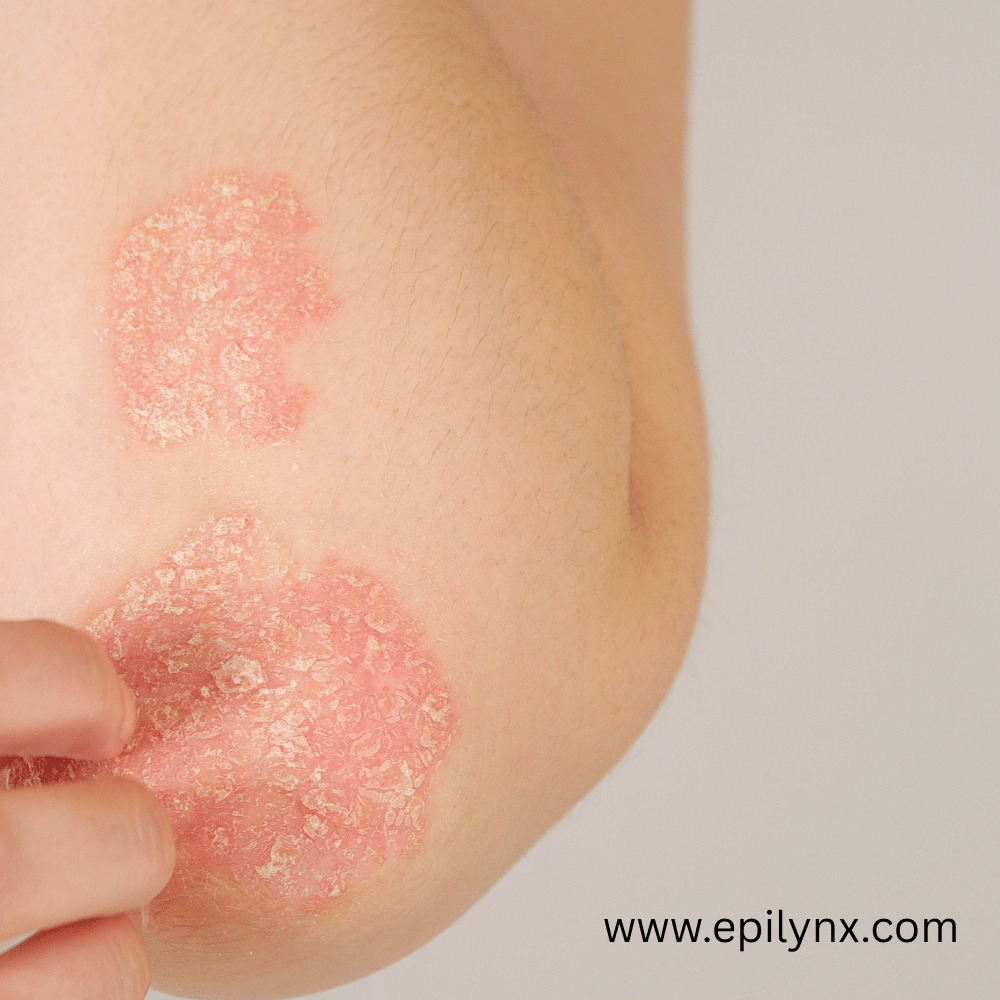
Psoriatic plaques as high-absorption sites: Psoriatic plaques are characterized by disrupted barrier function — the abnormal keratinocyte differentiation and hyperproliferation produces a stratum corneum that is structurally different from normal skin and significantly more permeable. Any allergen-containing product applied to a psoriatic plaque (including the scalp, a common psoriasis site) achieves dramatically higher systemic absorption than on normal skin. For celiac patients, this means plaque skin is the highest-risk site for topical gluten exposure.
Biologics and immune modulation: Many psoriasis patients use biologic treatments (TNF-α inhibitors, IL-17 blockers, IL-23 blockers) that modulate the same inflammatory pathways involved in celiac disease. These treatments may influence the cutaneous manifestations of celiac disease (including DH) in patients with both conditions — potentially improving or masking celiac-related skin signs while active. Allergen-free skincare remains important regardless of biologic treatment status.
Coal tar products in psoriasis: Coal tar shampoos and topical products are common in psoriasis management. Most contain multiple potential contact sensitizers and should be used only on psoriatic areas, with allergen-free products used for the surrounding non-psoriatic skin.
The Allergen-Free Skincare Protocol for Psoriasis + Celiac
For psoriatic plaques: Apply only medications prescribed by your dermatologist. Do not apply any general skincare — including allergen-free skincare — to actively inflamed psoriatic plaques without dermatologist guidance.
For perilesional and non-psoriatic skin:
- Allergen-free, fragrance-free, CAPB-free cleanser daily
- Vitamin C serum on non-psoriatic areas for antioxidant support and brightening of post-plaque hypopigmentation
- Gentle jojoba bead exfoliation for scaling control on non-active perilesional skin (never on active plaques)
- Peptide eye cream for periocular care (psoriasis frequently affects the periocular region in eyelid psoriasis variants)
- Mineral SPF daily — UV is simultaneously therapeutic for psoriatic plaques and damaging to perilesional skin; clinical guidance on UV balance should come from the treating dermatologist
EpiLynx by Dr. Liia's complete product line — Brightening Vitamin C Glow Serum, Anti-Aging Peptide Eye Cream, Gentle Exfoliating Face Scrub, and Waterproof Liquid Eyeliner — meets the allergen-free standard required for both the psoriasis and celiac aspects of this dual presentation: free of all gluten-containing cereals, all tree nut emollients, all coconut derivatives, and fragrance.
Use code EpiLynxglow25 for 25% off sitewide. Free shipping on orders $39+.