
By Dr. Liia, PharmD — Pharmacist & Founder, EpiLynx by Dr. Liia | May 3, 2026 | 7 min read
Skincare for Kids with Eczema & Food Allergies: A Pharmacist's Complete Guide
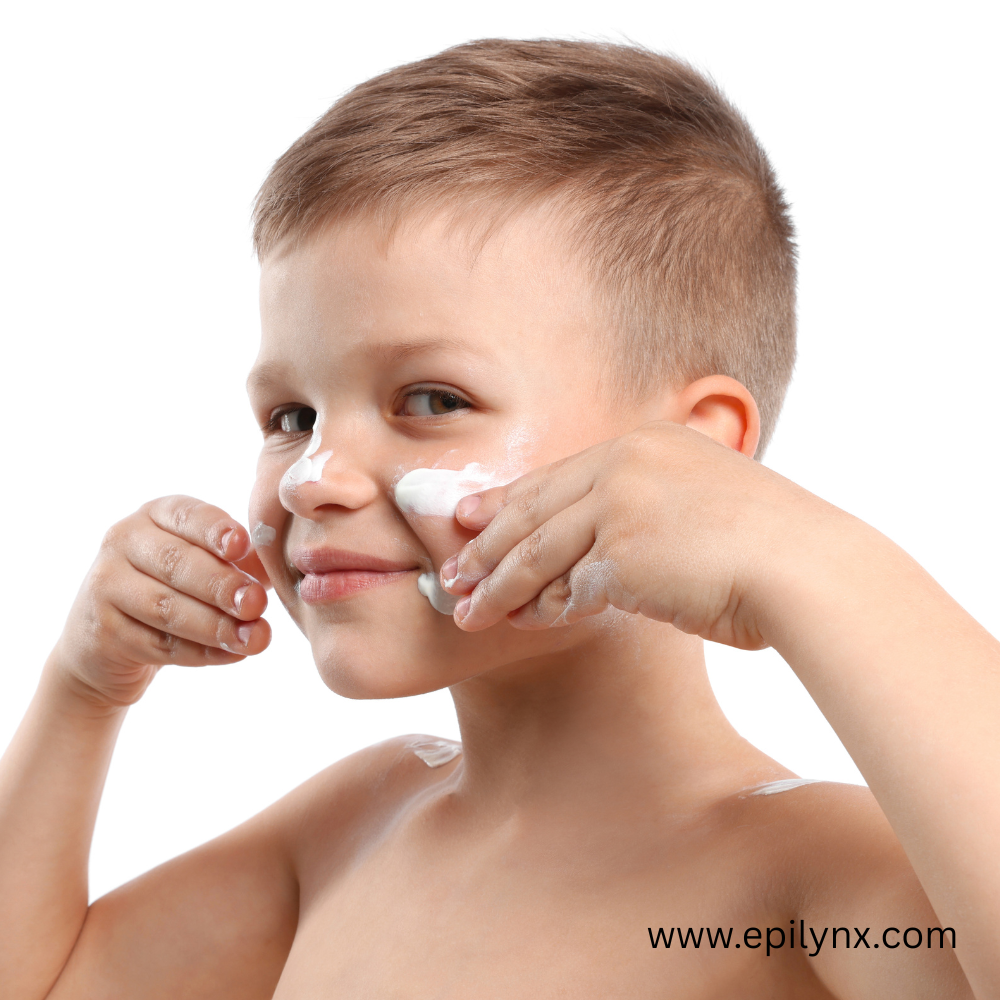
Watching your child scratch, redden, and flare is exhausting — especially when you're reading labels at midnight wondering what's safe. As a pharmacist who has formulated skincare specifically for allergy-prone and celiac skin, here's everything I wish every parent knew.
Why Children with Food Allergies Are More Vulnerable to Eczema (and Vice Versa)
Eczema (atopic dermatitis) and food allergies are deeply connected in children — more so than most parents realize. The medical term for this relationship is the "atopic march": a progression that often begins with eczema in infancy and advances to food allergies, asthma, and allergic rhinitis as a child grows.
The mechanism is now well understood: eczema compromises the skin barrier, creating microscopic gaps through which food proteins — peanut, egg, milk, wheat, soy — can penetrate the skin and trigger immune sensitization. This is called epicutaneous sensitization, and it's one reason why children with moderate-to-severe eczema have significantly higher rates of food allergy.
The implication for skincare is powerful: keeping a child's skin barrier intact and allergen-free is not just a comfort measure — it's a genuine allergy prevention strategy.
Conversely, food allergies worsen eczema. When a sensitized child encounters their allergen (through eating or through poorly formulated skincare), their immune system triggers systemic inflammation — which flares their skin.
This is why EpiLynx's kids collection is built around two simultaneous goals: barrier repair and total allergen elimination.
Special Concern: Children with Celiac Disease and Skin
If your child has been diagnosed with celiac disease, their skin deserves the same rigorous gluten-free attention as their diet. Here's why:
- Cross-contamination risk. Children touch their faces constantly. Hand lotions containing wheat protein get into their mouths. Bath products with barley extract transfer to their skin and then to food during mealtimes.
- Dermatitis herpetiformis risk. Children with celiac disease can develop DH — an intensely itchy, blistering skin rash triggered by gluten ingestion. If your child has recurrent unexplained skin rashes, DH is worth raising with your pediatrician or pediatric gastroenterologist.
- Compromised barrier. Celiac disease's effect on nutrient absorption (particularly zinc, essential fatty acids, and Vitamin E) affects skin barrier integrity — making allergen-free, barrier-supporting skincare especially important.
Shop the EpiLynx Kids Skincare Collection — gluten-free & allergen-free →
Ingredients to Completely Avoid in Kids' Skincare (Especially with Eczema or Food Allergies)
Fragrance & Parfum
The #1 thing to eliminate. Most baby and children's skincare products are heavily fragranced — "baby fresh," "lavender calm," "chamomile soothe." These all contain fragrance compounds that are potent contact allergens and barrier disruptors. Children's skin is thinner and more permeable than adult skin, making them even more vulnerable. Even "natural" fragrance from essential oils is problematic for eczema-prone kids.
Sodium Lauryl Sulfate (SLS) in Bath & Body Products
SLS is the foaming agent in most conventional bubble baths, shampoos, and body washes. It strips the skin's natural lipids with every wash — exactly what a child with a compromised eczema barrier cannot afford. Switch to SLS-free alternatives without exception.
Allergen-Specific Ingredients Based on Your Child's Profile
- Celiac / wheat allergy: hydrolyzed wheat protein, Triticum vulgare, tocopherol from wheat germ, malt extract
- Peanut allergy: Arachis hypogaea (peanut oil) — surprisingly common in some "natural" baby products
- Tree nut allergy: almond oil (Prunus amygdalus), shea butter (Vitellaria paradoxa) — very common in "natural" moisturizers; verify tree nut safety with your allergist
- Soy allergy: Glycine soja (soybean) oil or extract
- Milk/dairy allergy: whey protein, lactose, casein in some creams
- Oat sensitivity: Avena sativa (colloidal oatmeal) — wildly popular in eczema products, but a cross-contamination risk for celiac and sensitizing for some oat-allergic children
Artificial Dyes
Pink lotions, purple shampoos, colorful bubble baths — synthetic dyes (CI numbers on labels) are common sensitizers in children's skin. Opt for dye-free products.
Harsh Preservatives
Methylisothiazolinone (MI), formaldehyde-releasing preservatives (DMDM hydantoin, imidazolidinyl urea). These are common in conventional children's products and are among the most reactive preservatives available. MI is particularly problematic — it has caused widespread allergic contact dermatitis.
The Best Ingredients for Kids with Eczema & Food Allergies
Ceramides
The most important ingredient for eczema-prone children's skin. Ceramides are the lipids that form the skin barrier's "mortar" — and children with eczema have measurably lower ceramide levels. Ceramide-based moisturizers are the first-line, evidence-backed recommendation from pediatric dermatologists for managing eczema. Apply within 3 minutes of bath time for maximum barrier-sealing benefit.
Colloidal Oatmeal (Only If Oat/Gluten Safe)
Colloidal oatmeal is FDA-approved as an OTC skin protectant for eczema. It's anti-inflammatory, soothing, and effective. However: oats are a high cross-contamination risk for celiac disease, and some children with wheat allergy are also oat-sensitive. Only use oat-based products if your allergist has confirmed oat safety for your specific child. EpiLynx avoids oat derivatives entirely to remove this risk.
Hyaluronic Acid
Safe and effective for children. Hyaluronic acid is a naturally occurring compound in human skin — it's not a foreign ingredient. It draws moisture into the skin and is non-irritating even for the most reactive pediatric skin.
Glycerin
One of the oldest and safest humectants. Glycerin is highly effective, very gentle, and appropriate for all ages including infants. It draws water into the skin and helps maintain hydration between moisturizer applications.
Zinc Oxide
The gold standard for diaper rash, irritation, and sun protection in children. Zinc oxide is a physical mineral that sits on top of the skin — no absorption, no sensitization risk — and provides both anti-inflammatory and protective benefits.
The EpiLynx Pediatric Eczema Routine
Here's the pharmacist-designed daily protocol for children with eczema, celiac disease, or food allergies:
Bath Time (Lukewarm, Max 10 Minutes)
- Use a fragrance-free, SLS-free, dye-free body wash — check our Kids Collection
- Lukewarm water only — hot water worsens eczema by stripping lipids
- Pat (don't rub) skin dry — friction is a direct irritation trigger
Immediately Post-Bath (Within 3 Minutes — This Is Critical)
- Apply ceramide-rich moisturizer while skin is still slightly damp — this is the most important step for eczema management
- On active eczema patches, apply prescribed topical medication first if relevant, then moisturizer over the top
Morning
- Reapply allergen-free moisturizer to face and any dry/prone areas
- Apply fragrance-free, mineral SPF (zinc oxide-based) before outdoor time — sun exposure can trigger eczema flares
Throughout the Day
- Reapply moisturizer after handwashing — this is especially important for children with celiac who handle food
- Keep nails short and trimmed to minimize scratch damage during nighttime flares
- Dress in soft, breathable natural fibers (cotton, bamboo) — synthetic fabrics trap heat and worsen itch
🌿 EpiLynx Kids Collection:
- All Kids Skincare — gluten-free, allergen-free, pharmacist-formulated
- Dry Skin / Eczema Collection — for children and adults with compromised barriers
- Sensitive Skin Collection — maximum gentleness for reactive skin
Use code EPILYNXGLOW35 for 35% off.
Frequently Asked Questions
Is eczema in children linked to food allergies?
Yes — strongly. There is clinical evidence linking atopic dermatitis and food allergies in children, particularly to peanuts, eggs, milk, wheat, tree nuts, and soy. A compromised skin barrier allows food proteins to penetrate and cause immune sensitization. Managing both conditions together — including using allergen-free skincare — is the most effective approach.
What skincare ingredients should I avoid for a child with eczema?
Avoid: fragrance, SLS, alcohol denat., parabens, methylisothiazolinone, synthetic dyes, and any ingredient derived from your child's specific food allergens (wheat protein for celiac, peanut oil for peanut allergy, etc.).
How often should I moisturize a child with eczema?
Minimum twice daily — morning and immediately post-bath within 3 minutes of toweling off. During active flares, moisturize up to 4–5 times daily on affected areas.
Is EpiLynx safe for children with celiac disease and eczema?
Yes. EpiLynx's Kids Collection is formulated to be gluten-free, allergen-free, fragrance-free, and vegan — pharmacist-designed for pediatric skin sensitivity. Shop the Kids Collection →
Your Child Deserves Skincare You Can Actually Trust
EpiLynx Kids is the only pharmacist-formulated, gluten-free, allergen-free kids skincare line built for children with celiac disease, food allergies, and eczema.
Shop Kids Collection →Use code EPILYNXGLOW35 for 35% off · Free shipping on orders $24+