
Gluten in Skincare: A Celiac Disease Ingredient Guide
The Celiac-Cosmetic Blind Spot
Most patients diagnosed with celiac disease receive dietary counseling within weeks of diagnosis. They learn to read food labels, avoid cross-contaminated facilities, and eliminate barley, rye, and wheat from every meal. But the same consultation rarely includes a single word about shampoo, serum, or eyeliner — and this omission has clinical consequences.
Gluten-containing ingredients appear in an estimated 25–30% of cosmetic and personal care products on the U.S. market. For the majority of celiac patients with intact skin and no dermatitis herpetiformis, topical wheat proteins are unlikely to trigger systemic immune activation. But "majority" is not "all," and the mechanisms governing the exceptions are important to understand.
How Gliadin Proteins Behave on the Skin
The immunogenic fraction of gluten — gliadin — consists of proline- and glutamine-rich peptides that resist complete enzymatic digestion. In the intestinal lumen of celiac patients, tissue transglutaminase (TG2) deamidates gliadin glutamine residues to glutamate, dramatically increasing peptide affinity for HLA-DQ2 and HLA-DQ8 molecules on antigen-presenting cells. The resulting CD4+ T-cell activation drives IL-15, IFN-γ, and TNF-α secretion, leading to villous atrophy and crypt hyperplasia.
Topically, intact gliadin peptides exceeding 500 Da do not readily penetrate an intact stratum corneum. However, several conditions substantially alter this dynamic:
- Hydrolyzed wheat protein — the cosmetically ubiquitous form — consists of peptide fragments of 500–2,000 Da, small enough to traverse a compromised skin barrier. Patients with eczema, rosacea, psoriasis, or any condition that impairs barrier function are at increased penetration risk.
- Perioral and periocular application — products applied near the mouth (lip balm, lower face cream) or near the eyes (eyeliner, mascara, eye cream) create direct mucosal proximity and can result in low-level ingestion via hand-to-mouth contact or lacrimal drainage to the nasal mucosa.
- Damaged skin barrier — atopic dermatitis, chronic rosacea, or even over-exfoliation increases transepidermal permeability, allowing larger peptide fragments to cross the barrier.
Every Name Wheat Uses on a Skincare Label
The INCI (International Nomenclature of Cosmetic Ingredients) system uses Latinized botanical names and chemical descriptors that rarely say "wheat." Celiac patients should recognize the following as gluten-containing or gluten-derived:
- Triticum vulgare germ oil, germ extract, flour, starch, bran extract — common wheat in all forms
- Hydrolyzed wheat protein — the most widely used and most bioavailable form
- Hydrolyzed wheat gluten — direct gliadin source
- Wheat amino acids — hydrolysate derivative
- Secale cereale — rye
- Hordeum vulgare — barley
- Avena sativa — oat (cross-reactive in 10–15% of celiac patients due to avenin homology with gliadin)
- Phytosphingosine — occasionally wheat-derived; source varies by manufacturer
- Tocopherol (vitamin E) — can be wheat-germ derived; request source confirmation
Highest-Risk Product Categories for Celiac Patients
Not all product formats carry equal risk. Risk stratification by category:
- Highest risk: Lip products (direct ingestion risk), leave-on facial serums, eye area products (periocular absorption), facial cleansers (daily exposure)
- Moderate risk: Face creams and moisturizers, powder foundations (inhalation risk), eyeliners applied to the waterline
- Lower risk: Rinse-off body washes, shampoos (unless significant scalp condition), hand soaps
Dermatitis Herpetiformis: The Patient Who Needs Extra Vigilance
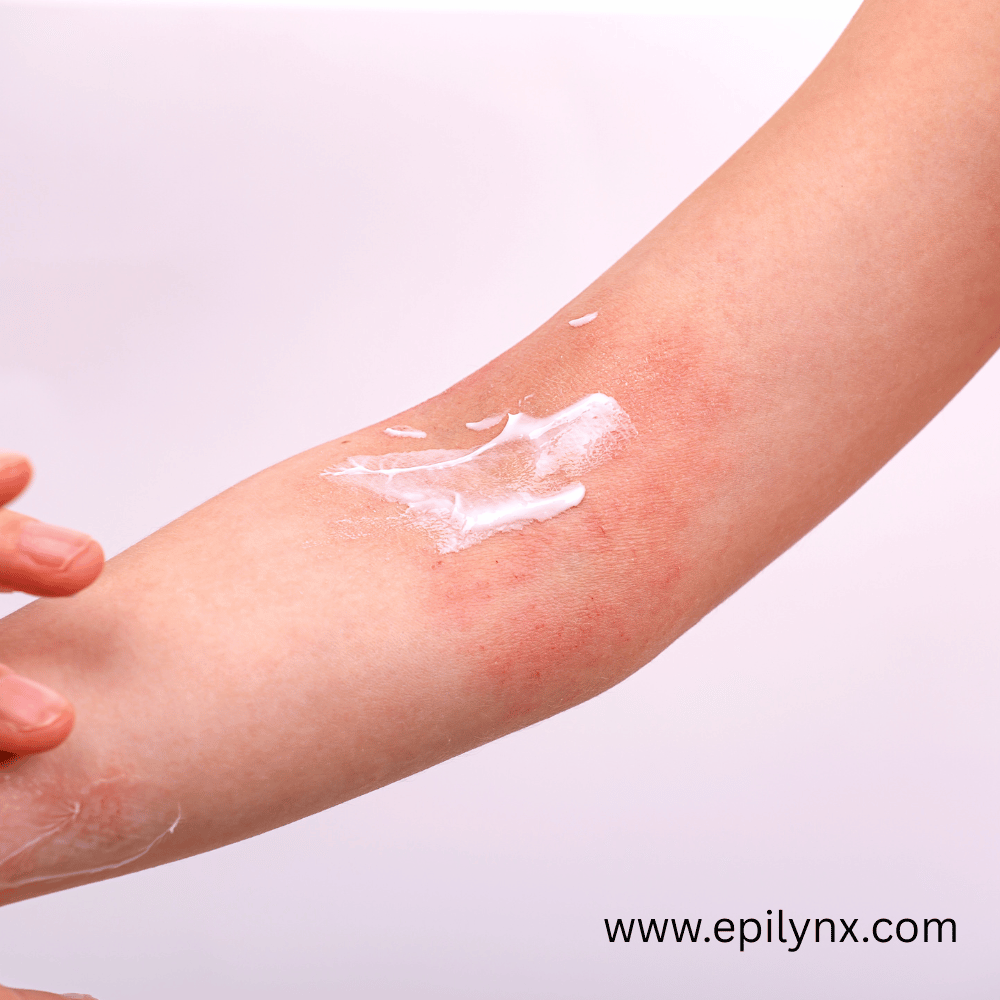
Patients with dermatitis herpetiformis (DH) — the cutaneous manifestation of celiac disease — carry particularly elevated risk from topical products. DH is driven by IgA antibodies against transglutaminase 3 (TG3), the skin-specific isoenzyme. These IgA-TG3 immune complexes deposit in the papillary dermis, activating complement and recruiting neutrophils via IL-8 signaling, producing intensely pruritic vesicles on elbows, knees, and scalp.
For DH patients, topical gluten exposure at barrier-disrupted lesion sites may represent a more direct route to immunological activation than in patients with intact skin. Clinical reports have documented localized DH flares following application of gluten-containing emollient products to active lesions.
Why Fragrance-Free Is Part of the Celiac Standard
Wheat-containing skincare products frequently co-occur with fragrance formulation — a double insult for celiac patients. Celiac disease involves systemic immune dysregulation that increases susceptibility to secondary sensitization. Fragrance compounds (limonene, linalool, eugenol, cinnamal, isoeugenol) are among the most prevalent contact allergens in cosmetics. For a population already managing an immune condition, fragrance-free formulation removes an entirely avoidable sensitization risk.
What Celiac-Safe Skincare Requires
The celiac-safe standard should include: explicit gluten-free labeling, absence of all EU 14 food allergens (which include cereals containing gluten), formulation in dedicated allergen-aware facilities to reduce cross-contamination risk, and a fragrance-free base. Patients with DH or concurrent wheat IgE sensitization should additionally confirm that vitamin E (tocopherol) is from a non-wheat source.
EpiLynx by Dr. Liia formulates every product to be free of all 14 EU food allergens — including all gluten-containing cereals — in an allergen-aware facility in Los Angeles. The Brightening Vitamin C Glow Serum and Waterproof Liquid Eyeliner are formulated with fully celiac-safe INCI lists — produced by a pharmacist who understands that "close enough" is not a standard that applies to immune-mediated conditions.
Use code EpiLynxglow25 for 25% off sitewide. Free shipping on orders $54+.