
By Dr. Liia, PharmD — Pharmacist & Founder, EpiLynx by Dr. Liia | May 3, 2026 | 6 min read
Fragrance-Free Skincare: Why It Matters — And How to Build Your Complete Routine
Your moisturizer smells like roses. Your serum smells like citrus. Your cleanser smells like "fresh linen." And your skin is perpetually red, reactive, or inexplicably breaking out. This is not a coincidence. As a pharmacist who formulates skincare specifically for allergy-prone and sensitive skin, this is the conversation I have most often — and it changes everything when people finally hear it.
Fragrance: The #1 Contact Allergen in Skincare (And Why Nobody Tells You)
Here's the fact that should be on the front of every beauty product: fragrance is the leading cause of allergic contact dermatitis from cosmetics. Not parabens. Not sulfates. Fragrance.
The word "fragrance" (or "parfum") on an ingredient list is a legal loophole. Under US law, fragrance is classified as a proprietary trade secret — which means brands can use it as an umbrella term for hundreds of individual chemical compounds without disclosing a single one. A product with "fragrance" listed could contain 200 different chemical molecules, including known allergens, hormone disruptors, and respiratory irritants — and you would never know.
The European Union has identified 26 specific fragrance allergens that must be individually declared when present above certain concentrations. The US has no equivalent requirement.
For people with sensitive skin, eczema, rosacea, food allergies, celiac disease, or autoimmune conditions — populations whose immune systems are already primed to react — fragrance exposure is like striking a match near a gas leak. The fire was coming eventually; fragrance just lights it.
"But I Use Natural / Clean / Organic Products" — And Why That Doesn't Protect You
This is the most common misconception I encounter. Natural fragrance is not safer than synthetic fragrance for reactive skin.
Essential oils — lavender, rose, citrus, eucalyptus, peppermint, tea tree, chamomile — are concentrated plant extracts that contain some of the highest-allergen compounds found in cosmetics. Specifically:
- Lavender oil — contains linalool and linalool hydroperoxide; one of the most common fragrance allergens
- Citrus oils (bergamot, orange, lemon, grapefruit) — contain limonene; highly allergenic AND phototoxic (can cause sun-triggered burns and pigmentation)
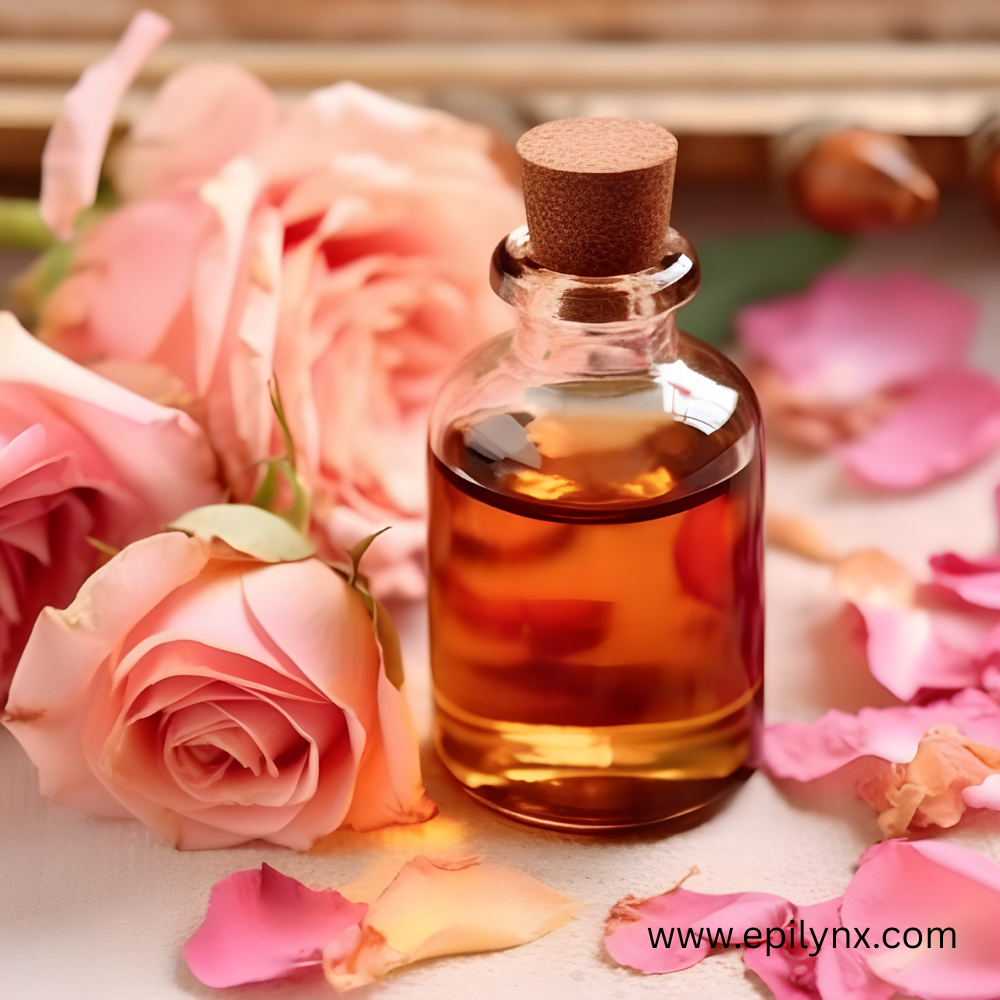
- Rose / geranium — contain geraniol and citronellol; common contact allergens
- Peppermint / menthol — immediate vasodilator and irritant; triggers flushing in rosacea skin
- Cinnamon / clove — contain cinnamal and eugenol; among the most potent contact allergens identified
Clean beauty brands frequently use these essential oils as their fragrance source — often marketing them as skin-beneficial "botanicals." For sensitive skin, they are triggers wearing a wellness costume.
"My rule at EpiLynx: if a product smells like anything — floral, herbal, citrus, 'fresh,' 'spa-like' — it contains fragrance. I formulate every EpiLynx product to be odor-neutral, because your skin doesn't need to smell like a garden. It needs to function without triggering your immune system."
— Dr. Liia, PharmD
"Unscented" vs. "Fragrance-Free": A Critical Difference
These two terms are not interchangeable — and the difference matters enormously for sensitive skin.
- "Fragrance-free" means the product contains no fragrance ingredients of any kind — neither synthetic nor natural. This is what you want.
- "Unscented" means the product has no perceptible odor — but it may contain fragrance (including masking fragrance added to cover the smell of other ingredients) that doesn't produce a strong scent. This is not necessarily safe for reactive skin.
Always look for the explicit word "fragrance-free" — not "unscented," "naturally scented," "lightly scented," or "contains no added fragrance" (which can mean fragrance is present as a functional ingredient rather than purely for scent).
How to Audit Your Current Skincare for Hidden Fragrance
Pick up your cleanser, toner, serum, moisturizer, SPF, and eye cream. On each one, scan the ingredient list for these terms:
Obvious Red Flags
- Fragrance / parfum
- Any named essential oil (lavender oil, tea tree oil, rose oil, eucalyptus oil, etc.)
- Natural fragrance / botanical fragrance / aroma
Hidden Fragrance Ingredients (Often Not Recognized as Fragrance)
- Linalool — a fragrance compound found in lavender; listed as an individual ingredient in some formulas
- Limonene — from citrus peel; common in "brightening" products
- Geraniol — from rose and geranium
- Citronellol — from rose and eucalyptus
- Eugenol — from clove and cinnamon
- Benzyl alcohol — used as both a fragrance and preservative; can be irritating for reactive skin
- Cinnamal / Cinnamyl alcohol — from cinnamon; high allergenicity
If you find any of these in products you're currently using, that product is a candidate for replacement with a truly fragrance-free alternative.
The Complete Fragrance-Free Skincare Routine by Dr. Liia
Here's a full, fragrance-free, allergen-free routine — every step linked to EpiLynx products that meet this standard:
Step 1: Cleanse
Fragrance-Free, SLS-Free Cleanser — removes makeup, SPF, and daily grime without stripping the barrier. Fragrance-free cleansing is especially important because cleansers stay on longer than marketed and penetrate a warm, post-wash barrier more readily.
Step 2: Treat (Serum)
Fragrance-Free Vitamin C or Hyaluronic Acid Serum — active treatment without allergen exposure. Apply to slightly damp skin for best absorption.
Step 3: Moisturize
Fragrance-Free, Ceramide-Rich Face Cream — the foundation of barrier repair and hydration maintenance. No floral smell, no herbal scent. Just ingredients that work.
Step 4: Eye Care
Fragrance-Free Eye Cream — the eye area has the thinnest skin on the face and the highest sensitivity to fragrance. This step is non-negotiable for reactive skin.
Step 5: Sun Protection (Morning Only)
Fragrance-Free, Allergen-Free SPF — many SPF products are heavily fragranced; mineral zinc oxide-based SPF is typically the least irritating option for reactive skin.
For the Body
Fragrance-Free Body Care — don't forget that body lotions, shower gels, and hand creams are often the most heavily fragranced products in a person's routine. For anyone with food allergies or celiac disease, hand products deserve particular attention since hands touch food.
Makeup (If You Wear It)
Fragrance-Free, Allergen-Free Makeup — foundation, mascara, eyeshadow, and lip products should all be fragrance-free for sensitive skin. EpiLynx makeup is formulated to meet this standard.
🌿 Not sure where to start? Take the EpiLynx Skin Quiz:
Dr. Liia will match you with a complete fragrance-free, allergen-free routine based on your specific skin type and concerns — in under 2 minutes.
Find My Routine →Use code EPILYNXGLOW35 for 35% off.
The Fragrance-Free Switch: What to Expect
When people switch to a fully fragrance-free routine, they sometimes go through a short adjustment period. Here's what's normal and what isn't:
- Normal: Products feel "boring" — no pleasant smell, no tingle. This is a feature, not a bug. Tingle means irritation. Smell means allergen.
- Normal: Skin may feel calmer within days as chronic fragrance-driven inflammation subsides
- Normal: Some redness or dryness as previous fragrance-induced barrier damage heals
- Not normal / see a doctor: A new product causes a burning sensation, hives, or a rash immediately or within 24–48 hours. This may indicate a separate allergy to another ingredient — patch test systematically to identify it
Most people who fully commit to a fragrance-free routine for 4–6 weeks report significantly calmer, more tolerant skin — with less baseline redness, fewer random flares, and greater ability to use other active ingredients without irritation.
Frequently Asked Questions
Why is fragrance bad for sensitive skin?
Fragrance is the #1 cause of allergic contact dermatitis from cosmetics. The word "fragrance" can represent hundreds of undisclosed chemical compounds. Even natural fragrance from essential oils contains potent allergens like linalool, limonene, and geraniol. For sensitive, eczema, rosacea, and allergy-affected skin, fragrance is the single most impactful ingredient to eliminate.
Is "natural fragrance" or essential oils safe for sensitive skin?
No — natural does not mean non-allergenic. Essential oils contain high concentrations of known contact allergens. If you have sensitive or reactive skin, avoid both synthetic fragrance AND natural fragrance/essential oils.
How do I know if a product is truly fragrance-free?
Look for the explicit words "fragrance-free" — not "unscented." Read the full ingredient list for: fragrance, parfum, linalool, limonene, geraniol, eugenol, cinnamal, and any named essential oils. EpiLynx products are pharmacist-verified fragrance-free.
Does fragrance cause eczema?
Fragrance doesn't cause eczema, but it is one of the most common eczema flare triggers and causes allergic contact dermatitis. Eliminating fragrance is typically the first intervention recommended by dermatologists for reactive skin. Shop EpiLynx fragrance-free sensitive skin collection →
Skincare That Smells Like Nothing — And Works Like Everything
EpiLynx is 100% fragrance-free, allergen-free, gluten-free, and pharmacist-formulated. No tricks. No hidden scents. Just skin that finally gets to calm down.
Shop Sensitive Skin → Find My Routine →Use code EPILYNXGLOW35 for 35% off · Free shipping on orders $24+