Contact Dermatitis vs. Eczema vs. Rosacea: How to Tell the Difference (And Why It Matters for Your Skincare)
You have redness on your face. It is itchy. Sometimes it is worse than other times. A product you tried made it flare. You have been told at various points that you have eczema, that you have rosacea, and that you might have an allergy. You are not sure which one is right — or whether all three might somehow be true simultaneously.
This confusion is extremely common, and it has real consequences for how you manage your skin. Eczema, rosacea, and allergic contact dermatitis share visual similarities but have different underlying mechanisms, different triggers, different treatments, and different relationships with the skincare products you use. Using a rosacea treatment on eczema can worsen it. Using an eczema approach on contact dermatitis without identifying the allergen misses the point entirely.
This is the guide to telling them apart — and understanding what each one means for your skincare choices.
Allergic Contact Dermatitis (ACD): The Immune Reaction
What it is: Allergic contact dermatitis is an immune-mediated delayed hypersensitivity reaction. The immune system has been sensitised to a specific allergen — a fragrance component, a preservative, a metal, a plant extract — and on re-exposure, mounts an inflammatory response at the site of contact.
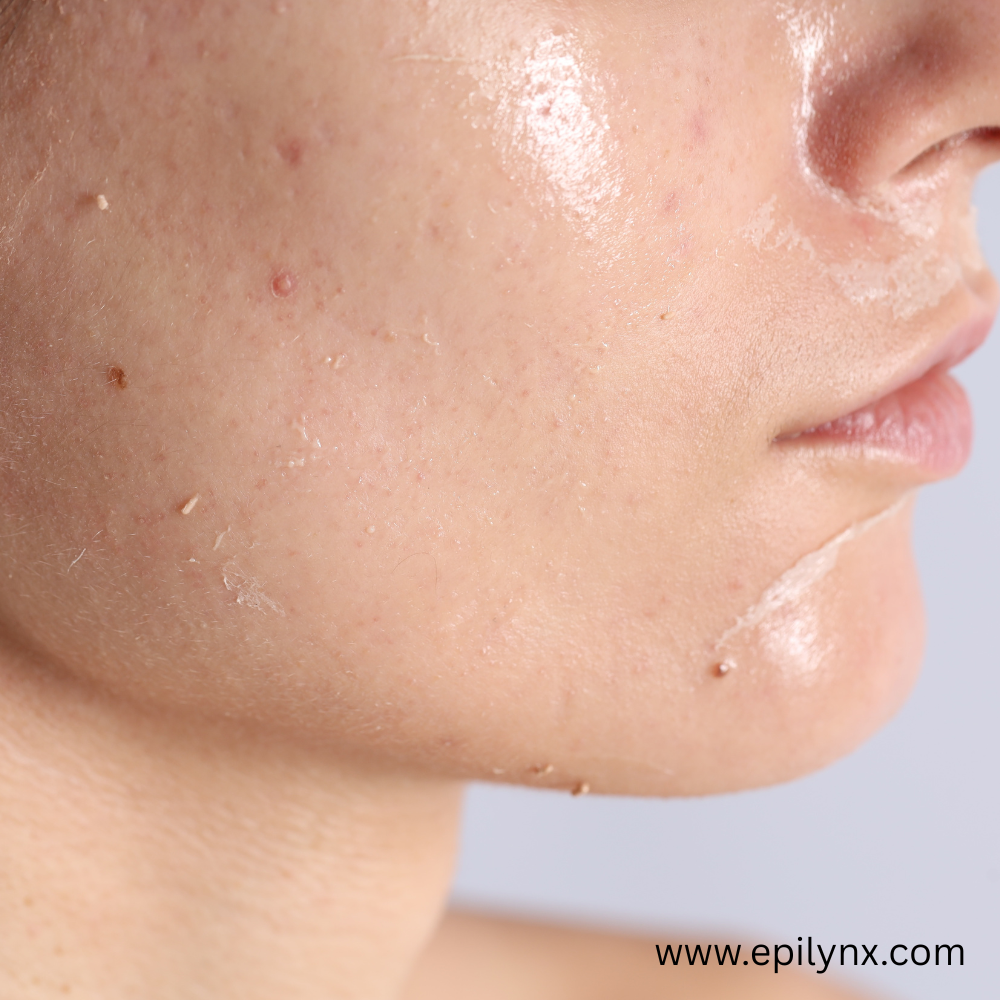
How it looks: The classic presentation is redness, swelling, and itching at the site of contact with the allergen. In mild cases, this may be diffuse redness. In more severe cases, small fluid-filled blisters (vesicles) form, weep, and crust over as they heal. In chronic cases of repeated low-level exposure, the skin becomes thickened and leathery (lichenification) with persistent itch.
Key distinguishing features:
- The reaction follows the pattern of product application — it occurs where you applied the offending product, not randomly
- There is typically a 12–72 hour delay between exposure and visible reaction (this delay is what makes identifying the cause so difficult)
- Removing the allergen resolves the reaction — often within 1–3 weeks
- The same reaction will recur reliably upon re-exposure to the allergen
Common triggers: Fragrance, preservatives (MI, MCI, parabens, formaldehyde releasers), nickel, hair dye (PPD), latex, lanolin, propylene glycol.
Diagnosis: Formal patch testing by a dermatologist or allergist is the gold standard. Patch test panels apply a standardised set of allergens under occlusive patches for 48 hours, with readings at 48 and 72–96 hours.
Skincare approach: Identify and eliminate the specific allergen. Comprehensive allergen-free formulations like EpiLynx eliminate the most common contact allergens entirely, making systematic identification easier. Once the allergen is removed, the skin can heal — and keeping it hydrated with a gentle moisturiser accelerates barrier repair.
Atopic Dermatitis (Eczema): The Barrier and Immune Disorder
What it is: Atopic dermatitis (commonly called eczema) is a chronic inflammatory skin condition driven by a combination of genetic barrier dysfunction (often involving filaggrin gene mutations) and immune dysregulation. It is part of the "atopic triad" alongside asthma and allergic rhinitis, and people with one often have the others.
How it looks: In adults, eczema typically presents as patches of dry, red, intensely itchy skin — most commonly on the inner elbows, behind the knees, on the face (particularly around the eyes and mouth), the hands, and the neck. During flares, these areas can become weeping and crusted. Between flares, the skin may appear dry and slightly roughened but not acutely inflamed.
Eczema skin has a characteristic itch-scratch-itch cycle: itching leads to scratching, which damages the barrier, which increases inflammation, which increases itch.
Key distinguishing features:
- Chronic condition present from childhood in most cases (though adult-onset eczema is real and increasingly common)
- Symmetrical distribution — both inner elbows, both behind knees, both sides of the face
- Intense itch is the cardinal symptom — "the itch that rashes," as it is sometimes called
- Associated with personal or family history of asthma, hay fever, or food allergies
- Flares and remissions; not continuously present
- Responds to topical corticosteroids and newer biologics (dupilumab)
Relationship to contact dermatitis: Eczema skin is significantly more susceptible to developing contact allergies than normal skin, because the compromised barrier allows more allergen penetration. Many people with eczema also have contact dermatitis to one or more ingredients — meaning they have both conditions simultaneously, each exacerbating the other.
Skincare approach: Twice-daily emollient therapy (generous application of fragrance-free, allergen-free moisturiser) is the cornerstone of eczema management. Avoid all known triggers — fragrance, soap/SLS, rough textures, extreme temperatures. Prescription treatment (topical corticosteroids, calcineurin inhibitors, biologics) for flares.
Rosacea: The Vascular and Inflammatory Condition
What it is: Rosacea is a chronic inflammatory vascular condition affecting the central face. Unlike eczema (a barrier disorder) or contact dermatitis (an allergic reaction), rosacea is primarily a disorder of vascular regulation and innate immune activation — the small blood vessels of the face are hyper-reactive, dilating easily in response to a range of triggers.
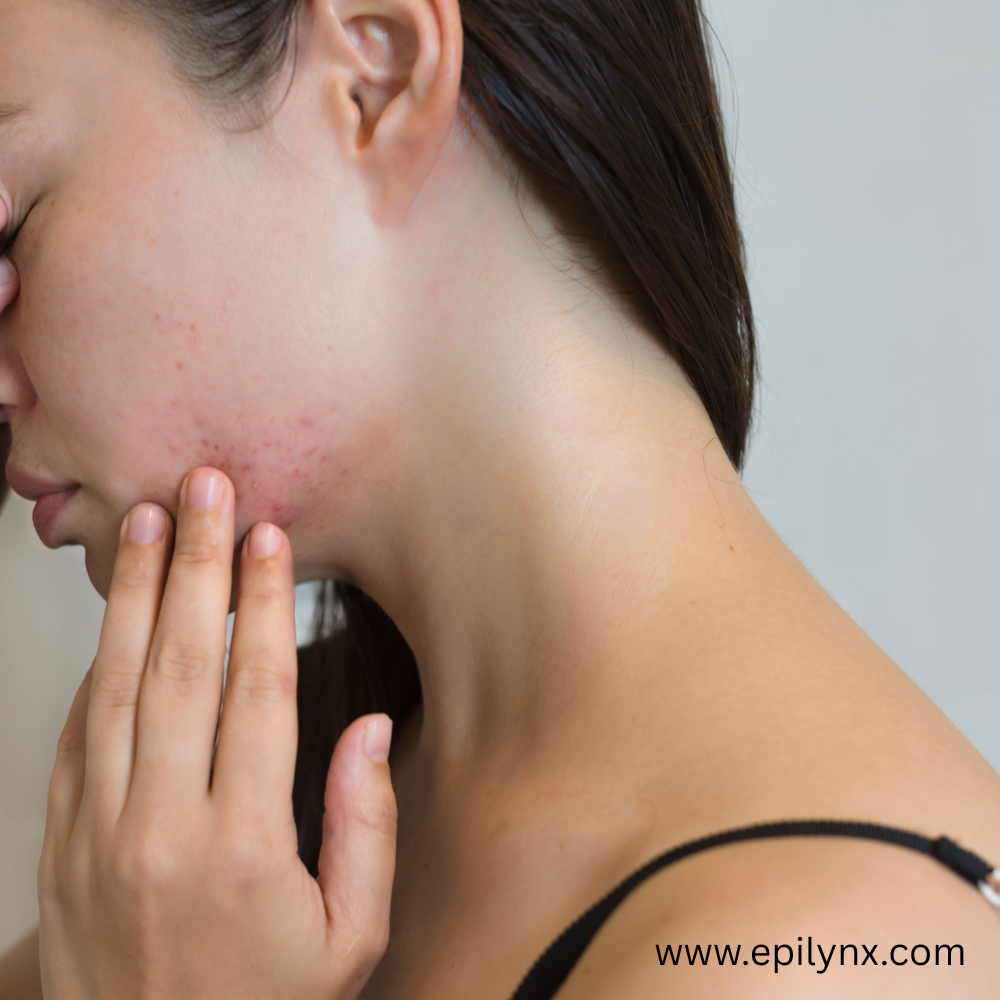
How it looks: The hallmark of rosacea is persistent central facial redness — across the cheeks, nose, forehead, and chin. This redness is vascular in origin (dilated blood vessels beneath the skin surface) rather than inflammatory scaling as in eczema. In more developed rosacea, visible broken capillaries (telangiectasia) appear. Papulopustular rosacea includes acne-like bumps that can be mistaken for adult acne. Rosacea rarely extends below the jawline.
Key distinguishing features:
- Central face distribution — specifically the cheeks, nose, and sometimes forehead and chin
- No itch (or very mild itch) — rosacea is more often described as burning, stinging, or flushing than itching
- Flushing — temporary, often intense redness triggered by heat, alcohol, spicy food, sun, and stress
- Not associated with asthma or food allergies
- Does not follow the pattern of product application (it is a systemic vascular response, not a localised contact reaction)
- Typically onset in the 30s–50s; uncommon in childhood
Relationship to contact dermatitis: Rosacea skin, with its compromised barrier, is significantly more susceptible to contact sensitisation. Contact dermatitis can present identically to a rosacea flare — and both conditions can be present simultaneously. Many people who think they are managing a worsening of their rosacea are actually experiencing a contact allergy to a product they recently introduced.
Skincare approach: Eliminate vascular triggers (heat, alcohol, spicy food). Identify and remove contact allergens from all skincare. Use only mineral SPF — UV is the most consistent rosacea trigger. Prescription treatments (topical metronidazole, azelaic acid, ivermectin, brimonidine) for active disease.
Side-by-Side Comparison
| Feature | Contact Dermatitis | Eczema (Atopic) | Rosacea |
|---|---|---|---|
| Primary cause | Specific allergen | Barrier/immune genetics | Vascular dysregulation |
| Onset pattern | Follows allergen contact | Flares and remissions | Persistent with triggers |
| Location | Where product was applied | Flexures, face, hands | Central face only |
| Main symptom | Itch + redness | Intense itch | Redness + flushing |
| Associated with allergies? | Sensitisation only | Yes (atopic triad) | Not typically |
| Resolves without allergen? | Yes, within weeks | No (chronic) | No (chronic) |
| Onset age | Any age | Usually childhood | Usually 30s–50s |
Can You Have All Three at Once?
Yes — and this combination is more common than most people realise. A person with rosacea has a compromised skin barrier that makes them more susceptible to developing eczema-like patches (especially in the periorbital area) and more susceptible to contact sensitisation. Each condition amplifies the inflammatory state of the others.
If you suspect you have more than one of these conditions, a referral to a dermatologist — ideally one with experience in contact allergy and patch testing — is the most efficient path to correct diagnosis and effective treatment.
The Common Thread: All Three Benefit from Allergen-Free Skincare
Despite their different underlying mechanisms, eczema, rosacea, and allergic contact dermatitis share one management principle: the skincare products used on them should be as free as possible from the most common contact allergens. For eczema and rosacea, this reduces the inflammatory burden on already-reactive skin. For contact dermatitis, it eliminates the triggers entirely.
This is the foundation of the EpiLynx approach — not formulating differently for each condition, but formulating to a standard that serves all three by eliminating the full spectrum of the 14 most common contact allergens across every product in the range.
Not sure which condition is affecting your skin? Take the EpiLynx Skin Quiz at epilynx.com — Dr. Liia's pharmacist-formulated routine recommendations are designed for the complexity of sensitive, reactive skin that does not fit neatly into one diagnosis.