By Dr. Liia, PharmD & Cancer Researcher — Founder, EpiLynx by Dr. Liia | June 1, 2026 | 5 min read
Best Face Cleanser for Sensitive Skin in 2026 — The One Step That Can Make or Break Your Entire Routine
Your cleanser is the most foundational product in your routine. It's the first thing you apply and the last thing that gets rinsed off. But here's the pharmacist truth: most people with sensitive skin are using a cleanser that is actively working against their skin — stripping their barrier before a single serum or moisturizer can do any good. Here's how to get it right.
Why Your Cleanser Matters More Than You Think
The cleanser's job is deceptively simple: remove surface debris without damaging what's underneath. The "what's underneath" part is where most cleansers fail sensitive skin:
- The skin's natural acid mantle (pH 4.5–5.5) is a critical part of barrier defense — alkaline cleansers (including many natural soap bars) disrupt this pH, allowing pathogenic bacteria to proliferate and triggering inflammatory reactions
- The skin's surface microbiome — the beneficial bacterial community that moderates immune responses — is partially disrupted with every cleanse; harsh surfactants kill beneficial bacteria alongside the debris you're trying to remove
- The skin's barrier lipids — ceramides, fatty acids, and cholesterol — are partially solubilized by surfactants; SLS removes these lipids aggressively, creating the "squeaky clean" feeling that actually signals over-stripping
For sensitive, eczema, celiac, and allergy-prone skin, a barrier-disrupting cleanser used twice daily means every product that follows — serum, moisturizer, SPF — is being applied to a compromised, inflamed surface. The downstream reactive events are often attributed to those products when the real cause is the cleanser setting everything up for failure.
"The first question I ask when a patient with reactive skin says their routine isn't working is: what cleanser are you using? Nine times out of ten, it contains SLS, fragrance, or an allergen that's perpetuating the reactive cycle before the first active ingredient can do its job."
— Dr. Liia, PharmD & Cancer Researcher
The Ingredients to Avoid in a Cleanser for Sensitive Skin
Sodium Lauryl Sulfate (SLS)
SLS is the "classic" surfactant in most conventional cleansers — it produces rich foam and feels satisfying to use. It is also one of the most well-documented causes of barrier disruption in dermatological research. A single application of SLS-containing cleanser measurably increases TEWL and skin pH for up to 24 hours in sensitive skin subjects. Used twice daily on eczema or reactive skin, it creates a cycle of barrier disruption that prevents healing. SLS is a dealbreaker for sensitive skin — full stop.
Fragrance (Synthetic and Botanical)
Cleansers spend more active time on the skin than they might seem — typically 30–60 seconds of massage plus rinsing — and some amount of fragrance compounds are absorbed even during that window. More importantly, any fragrance in a cleanser applied to eczema-affected or allergy-prone skin can trigger contact reactions that persist long after the product is rinsed away. "Calming" herbal cleansers scented with lavender, chamomile, or rose are among the worst offenders — these botanical fragrance sources are potent contact allergens.
Gluten-Derived Ingredients
For celiac disease and wheat allergy: hydrolyzed wheat protein is a common "conditioning" additive in cleansers — it improves the feel of the skin after rinsing. Avena sativa (oat) extract appears in many "sensitive skin" cleansers for its soothing properties. Check every cleanser's INCI list for these ingredients — they represent ingestion exposure risk as cleanser easily contacts the lips during face washing.
Methylisothiazolinone (MI)
MI is one of the most reactive preservatives in personal care products and is particularly dangerous in rinse-off products like cleansers because, counterintuitively, brief exposure is sufficient to trigger sensitization. Once sensitized, extremely low concentrations cause reactions. A single MI-containing cleanser used daily can produce progressive sensitization that takes months to resolve after discontinuation.
What Makes the EpiLynx Cleanser Different
EpiLynx offers two facial cleansers, both designed by Dr. Liia for sensitive, celiac, and allergy-prone skin:
🧼 EpiLynx Face Cleansers — Gentle, Allergen-Free, Pharmacist-Formulated
Gentle Hydrating Facial Cleanser — Aloe, Cucumber & Antioxidants
- SLS-free surfactant system — cleans without barrier stripping
- Aloe vera, cucumber, and blackberry seed oil — soothing + antioxidant
- Gluten-free, allergen-free, fragrance-free — safe for celiac, eczema, allergy skin
- pH-balanced to preserve the skin's acid mantle and microbiome
Gentle Exfoliating Face Scrub — Hyaluronic Acid, Aloe & Biodegradable Jojoba Beads
- Biodegradable jojoba beads — physical exfoliation without plastic microbeads or barrier-disrupting acids
- Hyaluronic acid + ginseng — hydrates while cleansing
- Gluten-free, allergen-free, fragrance-free — reef-safe and eco-friendly packaging
- Suitable for 2–3x weekly use on sensitive skin alongside a gentle daily cleanser
Use code EPILYNXGLOW25 for 25% off
The Correct Cleansing Protocol for Sensitive Skin
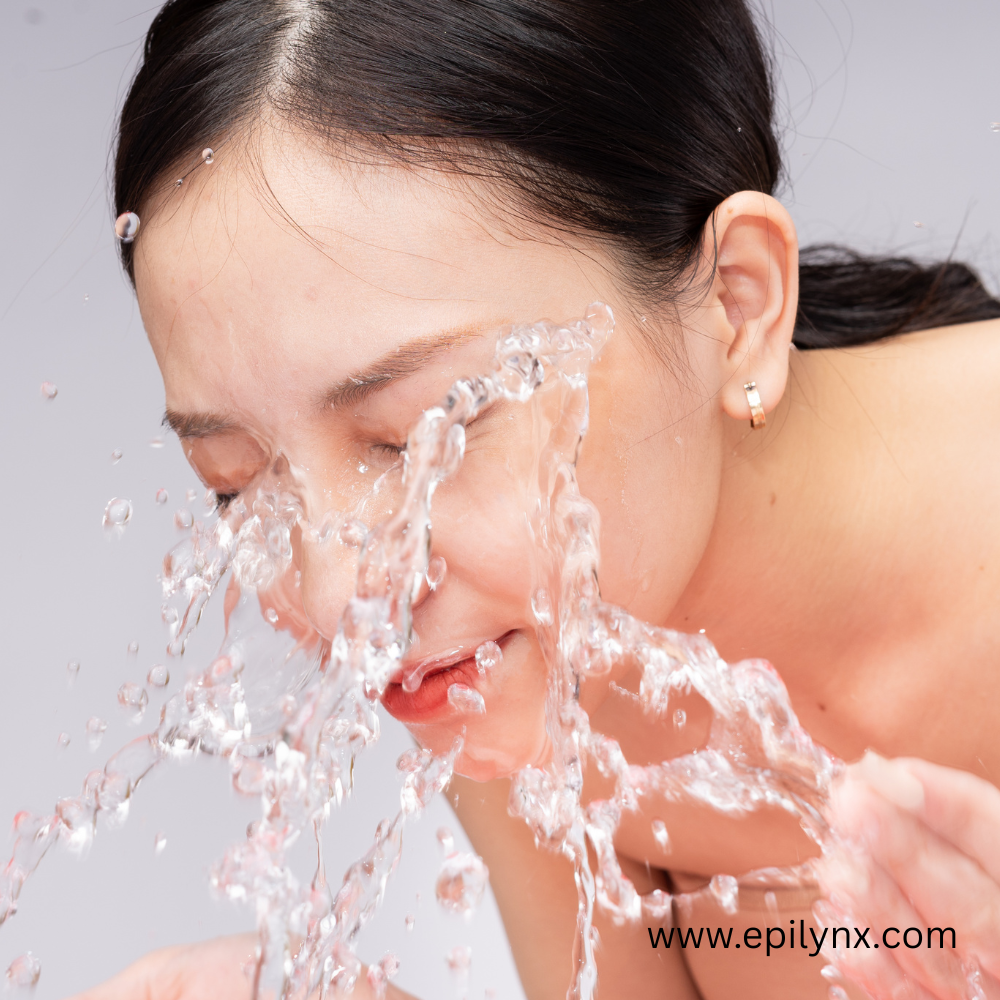
- Lukewarm water only. Hot water is one of the most common and overlooked eczema and rosacea triggers — it strips barrier lipids, dilates blood vessels, and raises skin temperature in ways that persist for hours after washing.
- 20–30 seconds maximum massage time. Longer massage doesn't equal cleaner — it equals more barrier disruption. Work the cleanser gently in circular motions; do not scrub.
- Pat dry — never rub. A soft, clean towel, patted gently. The vigorous rubbing many people do with a towel is a direct mechanical barrier-disruption event.
- Apply moisturizer within 60 seconds. Post-cleanse skin has elevated TEWL — moisture is evaporating faster than at any other point in the day. Sealing with a ceramide moisturizer within 60 seconds of patting dry captures hydration that would otherwise be lost.
- Once or twice daily. Some sensitive skin types do well with just a water-rinse in the morning and a single full cleanse in the evening. If your skin is particularly reactive, experiment with morning water-only to reduce total daily surfactant exposure.
Frequently Asked Questions
What should I look for in a face cleanser for sensitive skin?
SLS-free, fragrance-free, pH-balanced (4.5–6), gluten-free, free from MI and harsh preservatives, and free from your specific food allergens. Shop EpiLynx cleansers →
Is SLS-free cleanser better for sensitive skin?
Yes. SLS measurably increases TEWL and skin pH for up to 24 hours after use in sensitive skin. Gentle glucoside-based surfactants achieve effective cleansing without the barrier disruption that perpetuates reactive skin cycles.
Should I use the same face cleanser morning and evening on sensitive skin?
Yes — one gentle, allergen-free cleanser used consistently is better than alternating. For makeup and SPF removal in the evening, use a double-cleanse technique: gentle micellar or oil first, then your regular cleanser. This removes heavy product load without over-stripping.
Start Your Routine Right — With a Cleanser That Protects, Not Disrupts
EpiLynx cleansers: SLS-free, fragrance-free, gluten-free, allergen-free — pharmacist-formulated to set every subsequent step up for success.
Shop Cleansers →Code EPILYNXGLOW25 — 25% off · Free shipping $54+