By Dr. Liia, PharmD — Pharmacist & Founder, EpiLynx by Dr. Liia | May 6, 2026 | 6 min read
Best Body Lotion for Eczema & Allergy-Prone Skin: The Pharmacist's Guide to Head-to-Toe Allergen-Free Moisturizing
Most people with eczema and food allergies have a carefully curated face routine — and a body lotion they haven't looked at in years. Body lotions are the most allergen-dense product category in most people's routines: heavily fragranced, full of botanical allergens, and applied over large areas of skin multiple times a day. Here's how to get it right.
Why Body Lotion Matters More Than You Think for Allergy-Prone Skin
The skin on your body has the same barrier function, the same allergen vulnerability, and the same eczema-flare potential as your face — but it covers about 95% more surface area. For people with celiac disease, food allergies, and eczema, body lotion is often the single product creating the most allergen exposure in their daily routine, for three reasons:
1. Surface Area = Total Allergen Load
A fragranced body lotion applied head-to-toe means fragrance allergens — linalool, limonene, geraniol — are absorbing into your skin over your entire body surface, continuously. For an immune system already primed to react, this is a substantial ongoing allergen burden even without any acute "reaction."
2. Hand-to-Mouth Allergen Ingestion
This is the body lotion concern most specific to the food allergy and celiac community. If your body lotion — or hand lotion — contains wheat germ oil, almond oil, soy-derived emollients, or other food allergen-derived ingredients, every time you prepare food, eat, or touch your mouth after applying lotion, you introduce those allergen proteins to your oral mucosa. This is a real ingestion pathway, particularly for hand products applied frequently throughout the day.
3. Body Eczema is Real and Common
Eczema doesn't confine itself to the face. Body eczema — on the arms, legs, torso, and back — is extremely common in people with atopic dermatitis and often flares in response to the same triggers as facial eczema: dry conditions, allergen exposure, heat, and synthetic fabric friction. Body eczema needs the same barrier-repair approach as facial eczema — not just a scented drugstore lotion applied after showering.
What's Actually in Most Body Lotions (And Why It's a Problem)
Fragrance — The Most Pervasive Offender
The overwhelming majority of conventional body lotions are fragranced — lavender, vanilla, floral, citrus, "fresh linen," "ocean breeze." Every one of these contains fragrance allergen compounds. For people with reactive skin, this means most of the body lotion aisle at any drugstore is off-limits without careful label reading.
"Natural" body lotions aren't exempt. Essential oil-fragranced body creams — lemon, eucalyptus, rose, peppermint — contain the same allergenic linalool, limonene, and geraniol compounds in high concentrations.
Gluten in Body Lotion — The Hidden Exposure
Wheat derivatives are common in body lotion for their emollient and film-forming properties:
- Wheat germ oil (Triticum vulgare) — rich in tocopherols; frequently used in "nourishing" and "firming" body creams
- Hydrolyzed wheat protein — used for skin-feel and conditioning
- Tocopherol/Vitamin E — very frequently wheat germ-derived; nearly universal in body lotions as an antioxidant
- Oat derivatives (Avena sativa) — colloidal oatmeal is FDA-approved for eczema and extremely popular in body care; but presents cross-contamination risk for celiac and oat-sensitive individuals
For celiac disease: these ingredients in a body lotion become ingestion risks through hand-to-mouth contact. A hand lotion with wheat germ oil applied in the morning is present on your hands all day — through every meal, every snack, every time you touch your face.
Tree Nut and Soy Allergens in "Natural" Body Care
- Almond oil (Prunus amygdalus) — extremely common in "natural" body products; tree nut allergen
- Shea butter (Butyrospermum parkii) — technically a tree fruit; consult your allergist regarding tree nut cross-reactivity
- Coconut oil (Cocos nucifera) — classified differently by different allergists for tree nut cross-reactivity; discuss with your specific allergist
- Soy-derived emollients (Glycine soja) — widespread in "moisturizing" body lotions
SLS in Body Washes (The Starting Problem)
Before the lotion even matters: if your body wash or shower gel contains sodium lauryl sulfate, it strips your barrier lipids before you have a chance to repair them with lotion. The most effective body care routine for eczema starts with a SLS-free, allergen-free body wash — then seals with a ceramide-rich body lotion immediately post-bath.
The Best Ingredients for Body Lotion for Eczema and Allergy-Prone Skin
Ceramides — The Non-Negotiable
Ceramides are the lipids that form the structural "mortar" of the skin barrier. Body eczema involves measurably lower ceramide levels throughout the body skin — not just at lesion sites. Ceramide-rich body lotion is the most clinically validated approach for eczema management and prevention. Apply generously, especially to elbows, knees, and any areas prone to flares.
Glycerin — The Safest, Most Effective Humectant
Glycerin is one of the oldest, best-studied, and most universally tolerated skincare ingredients in existence. It draws water from the deeper skin layers and from the environment into the upper layers, providing sustained hydration. Suitable for all ages, all skin types, and all allergy profiles. It's also profoundly non-allergen — an ideal choice when your allergy list is long and your safe ingredient list is short.
Hyaluronic Acid in Body Lotion
Body formulas with hyaluronic acid are increasingly common and genuinely effective — particularly for body eczema where significant TEWL (transepidermal water loss) is occurring. HA draws moisture into skin and provides a sustained hydration effect. Apply to slightly damp skin for best absorption.
Colloidal Oatmeal (With Important Caveats)
Colloidal oatmeal is FDA-approved as an OTC skin protectant for eczema with strong evidence for soothing and anti-inflammatory benefit. However: for celiac disease and oat-sensitive individuals, oat-based products are not appropriate unless your allergist has specifically cleared oats for your regimen. EpiLynx body products do not contain oat derivatives specifically to protect this community.
Squalane — The Universal Safe Oil
Squalane (plant-derived, typically from sugarcane or olives) is one of the most universally safe and non-allergenic oils available. It's a natural component of human sebum, making it biomimetic and exceptionally well-tolerated. No tree nut concerns, no gluten concerns, no soy concerns. Excellent for very dry, compromised eczema skin that needs oil-phase support.
The Pharmacist-Designed Body Moisturizing Protocol for Eczema and Allergy Skin
Bath and Shower
- Use lukewarm water — hot water strips barrier lipids aggressively in eczema skin
- Limit bathing to 10–15 minutes maximum
- Use an allergen-free, SLS-free, fragrance-free body wash only — no conventional soap bars (most are alkaline pH and stripping)
- For active eczema areas: don't scrub; use your hand gently rather than a loofah or washcloth
The Soak and Seal (Most Important Step)
- Pat (don't rub) dry with a soft, clean towel
- Apply allergen-free body lotion within 3 minutes of toweling off — this is the clinical standard for eczema barrier management; the damp skin traps residual moisture as the moisturizer seals over it
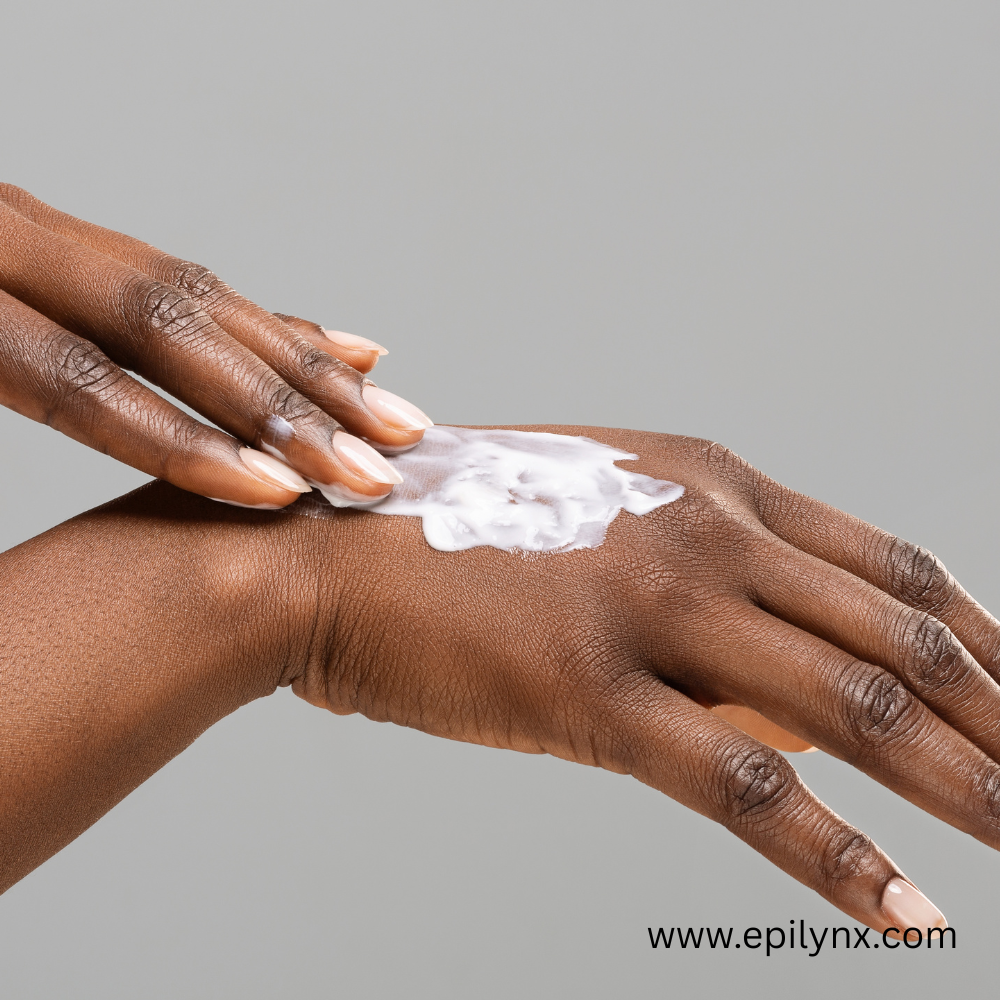
- Apply generously — use enough that your skin looks slightly shiny before it absorbs; underapplication is one of the most common eczema management mistakes
- Pay particular attention to elbows, knees, shins, and any area prone to eczema
Throughout the Day
- Reapply to hands after every handwashing — for celiac disease particularly, hands transfer allergens to food constantly
- Keep a small allergen-free hand lotion at your desk, in your bag, and in the kitchen
- Apply to active eczema areas 2–4 times daily during flares, not just post-bath
Fabric Considerations
- Synthetic fabrics (polyester, nylon) trap heat and increase itch on eczema skin — cotton and bamboo are preferred
- New clothing often contains sizing chemicals — wash before wearing
- Fabric softeners frequently contain fragrance — switch to fragrance-free detergents and skip fabric softener entirely for eczema skin
🌿 EpiLynx Body Care — Allergen-Free, Gluten-Free, Pharmacist-Formulated:
- Allergen-Free Body Collection — gluten-free, top 8 allergen-free, fragrance-free body care
- Eczema & Dry Skin Collection — barrier-repair formulas for body eczema
- Sensitive Skin Collection — maximum gentleness for reactive skin, face and body
Use code EPILYNXGLOW35 for 35% off.
Frequently Asked Questions
What should I look for in a body lotion for eczema and allergy-prone skin?
Ceramides, glycerin or hyaluronic acid, fragrance-free formulation, SLS-free and alcohol-free base, and absence of your specific food allergens (check INCI names for wheat, tree nuts, soy, etc.). Apply within 3 minutes of bathing while skin is still slightly damp for maximum barrier-sealing effect.
Is there gluten in body lotion?
Yes — wheat germ oil (Triticum vulgare), hydrolyzed wheat protein, barley extract, and oat derivatives are common body lotion ingredients. For celiac disease, these create hand-to-mouth ingestion risk during food preparation. All EpiLynx body products are certified gluten-free. Shop gluten-free body care →
When is the best time to apply body lotion for eczema?
Within 3 minutes of toweling off after a lukewarm bath or shower — the "soak and seal" technique. Apply generously while skin is still slightly damp to trap residual moisture. Reapply to hands after every handwashing and to active eczema areas 2–4 times daily during flares.
Can body lotion containing soy or tree nuts cause reactions in people with food allergies?
Yes — through hand-to-mouth contact during food preparation and eating. Check body lotion INCI names for Glycine soja (soy), Prunus amygdalus (almond), and other tree nut-derived oils. EpiLynx body products are formulated free from all top 8 FDA food allergens.
Head-to-Toe Protection. Zero Allergens.
EpiLynx body care is pharmacist-formulated — gluten-free, allergen-free, fragrance-free, and specifically designed for the skin that needs to know every ingredient. From your face to your feet.
Shop Body Care → Shop Eczema Collection →Use code EPILYNXGLOW35 for 35% off · Free shipping on orders $24+